

Yes, in many patients, treating the sinus infection can significantly reduce or completely cure headaches and facial pain, but only when these symptoms are truly coming from the sinuses. If pain continues despite good sinus infection treatment, it is often due to migraine, tension headache, or residual inflammation, and needs a focused ENT and headache evaluation.

Why do sinus infections cause headaches and facial pain?
Your sinuses are air-filled spaces behind your cheeks, forehead, nose, and around the eyes. When they get infected or inflamed (sinusitis), the lining swells, mucus gets trapped, and pressure builds up inside these cavities.
This pressure and swelling can cause:
- Dull or heavy pain in the cheeks, forehead, or around the eyes
- Pain that worsens when you bend forward, cough, or lie down
- Tenderness when you press over the sinuses or upper teeth
Studies from India and worldwide show that chronic rhinosinusitis is very common and significantly affects quality of life, often presenting with nasal blockage, discharge, and facial pressure or headache. In one analytical study, many patients with maxillary sinusitis reported headache with facial heaviness or pain.
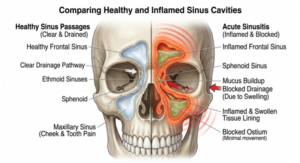
How does sinus pressure turn into pain?
- Swollen lining: Inflammation narrows the natural drainage pathways of the sinuses.
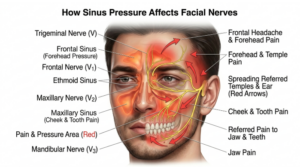
- Trapped mucus and air: This increases internal pressure, which irritates nearby nerves in the cheeks, forehead and around the eyes.
- Referred pain: The same nerve pathways also serve the teeth, jaw, and parts of the head, so you may feel pain in the upper teeth, temples, or around the eyes.
When this inflammation settles with proper treatment, the pressure and pain usually improve or disappear.
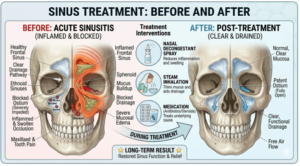
How sinus infection treatment relieves headaches and facial pain?
If your headache and facial pain are truly due to sinusitis, treating the infection and opening the sinus passages often gives strong relief.
Common ENT treatment steps include:
- Nasal saline rinses or sprays – help wash out thick mucus, allergens, and crusts, improving drainage.
- Nasal steroid sprays – reduce swelling inside the nose and sinuses over time, so pressure and pain go down.
- Decongestants (carefully, and short-term) – temporarily shrink swollen tissue and open the nose.
- Antibiotics (only when truly needed) – used when there is clear evidence of bacterial infection, such as persistent fever, thick discoloured mucus, and severe facial pain.
- Pain relievers – for short-term control of headache and facial pain while the sinus infection is settling.
- Allergy control – treating allergic rhinitis (nasal allergies) reduces repeated sinus flares.
For chronic or recurrent sinusitis not responding to medicines, ENT specialists may advise endoscopic sinus surgery to open blocked sinus pathways and allow long‑term drainage and ventilation, which can reduce repeated sinus-related headaches and facial pain.
When headaches may persist even after sinus infection treatment?
Sometimes, patients complete sinus infection treatment, their nasal symptoms improve, but the headache or facial pain continues. Common reasons include:
- Migraine mislabelled as “sinus headache”
Research shows that a very high proportion of people who think they have “sinus headache” actually have migraines. Migraine can cause:- One‑sided or throbbing head pain
- Nausea, vomiting, sensitivity to light and sound
- Watery eyes and nasal congestion, which imitate sinus symptoms
- Tension-type headache
This causes a band-like tightness or pressure on both sides of the head, often linked to stress, poor posture, or eye strain, and is not cured by sinus medicines. - Non-sinogenic facial pain
Some patients have facial pain that does not actually come from sinus disease, even if scans show mild sinus changes. In such cases, treating sinuses alone will not fully solve the pain. - Ongoing or structural sinus problems
Deviated nasal septum, narrow sinus openings, nasal polyps, or fungal sinusitis can cause repeated or persistent symptoms unless properly treated.
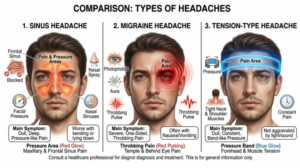
Sinus headache vs migraine vs tension headache
| Feature | Sinus headache (from sinusitis) | Migraine | Tension headache |
| Typical location | Cheeks, forehead, around eyes, upper teeth | One side or both sides of head, can involve face and eyes | Both sides of head, band‑like or tight feeling |
| Type of pain | Pressure, heaviness, fullness | Throbbing or pulsating | Dull, pressing or tightening |
| Nasal symptoms | Thick, coloured mucus, blocked nose, reduced smell | Often clear, watery discharge; may mimic allergy | Usually no nasal symptoms |
| Other key symptoms | Fever, bad breath, cough sometimes | Nausea, vomiting, light/sound sensitivity | Linked to stress, screen time, neck strain |
| Worsening with bending forward | Common | Can happen | May or may not |
| Response to sinus infection treatment | Often improves when infection and blockage clear | Does not fully improve with antibiotics or nasal sprays | Improves more with lifestyle, stress and posture care |
| Misdiagnosis risk | Many “sinus headaches” are actually migraine | Very frequently mistaken for sinus problems | Sometimes confused with “pressure” headaches |
When to see an ENT specialist in Nashik?
You should see an ENT specialist, as Dr. Sudarshen Aahire, Sinus Treatment Specialist at Aahire’s Superspeciality Center, if you notice any of the following:
- Headache or facial pain with blocked nose lasting more than 7–10 days
- Repeated “sinus infections” several times a year
- Thick, discoloured nasal discharge with cheek or forehead pain
- Facial swelling, pain around the eyes, or vision changes (an emergency)
- Headache that does not get better with regular medicines or keeps coming back
FAQs
1. Can sinus infection treatment completely cure sinus headaches and facial pain?
Yes, if your headache and facial pain are truly caused by sinus infection, proper treatment usually gives strong and lasting relief by reducing swelling and restoring drainage. If pain continues, another headache type like migraine may be present.
2. How long does sinus infection headache take to improve after starting treatment?
Many patients feel some relief in 3–5 days once medicines and nasal sprays reduce swelling, but full recovery from acute sinusitis may take 7–14 days. Chronic sinusitis may need several weeks of regular treatment.
3. How do I know if my headache is sinus or migraine?
Sinus headaches usually come with blocked nose, thick discoloured mucus, reduced smell, and pain over cheeks or forehead that worsens on bending. Migraine more often causes throbbing pain, nausea, and sensitivity to light and sound, and may not respond to sinus medicines.
4. Why do I still have facial pain after sinus surgery or treatment?
Persistent pain can be due to migraine, tension-type headache, nerve-related facial pain, or residual sinus disease. A detailed ENT and sometimes neurology review is needed to identify the exact cause.
5. Can sinus infection cause pain in teeth, jaw, or around the eyes?
Yes. The same nerves supply the sinuses, upper teeth, jaw, and around the eyes, so sinus inflammation can feel like dental or eye pain. This is especially common with maxillary sinusitis.
6. Are home remedies enough for sinus infection headaches?
Saline rinses, steam inhalation, and hydration can help mild congestion and pressure, but moderate to severe or long-lasting symptoms should be assessed by an ENT specialist. Delaying proper treatment can lead to chronic sinusitis.
7. Which doctor should I see in Nashik for sinus infection and facial pain?
You should consult an ENT specialist experienced in sinus disease, such as Dr. Sudarshen Aahire, Sinus Treatment Specialist in Nashik, who offers comprehensive evaluation, medical management, and surgical options when needed.
8. Can untreated sinus infection lead to serious complications?
In rare cases, untreated or severe sinus infections can spread to the eye or brain, causing swelling around the eyes, vision changes, or severe headache with fever, which are emergencies. Immediate ENT and hospital care is required in such situations.

Dr. Sudarshen Aahire is a young, talented, and vibrant ENT and Pediatric doctor in Nashik with 12 years of experience. Apart from routine ENT care and surgeries he specializes in the management of Snoring and obstructive sleep apnea surgeries, Endoscopic skull base surgeries, voice-related disorders, and voice surgeries, airway and swallowing disorders.