
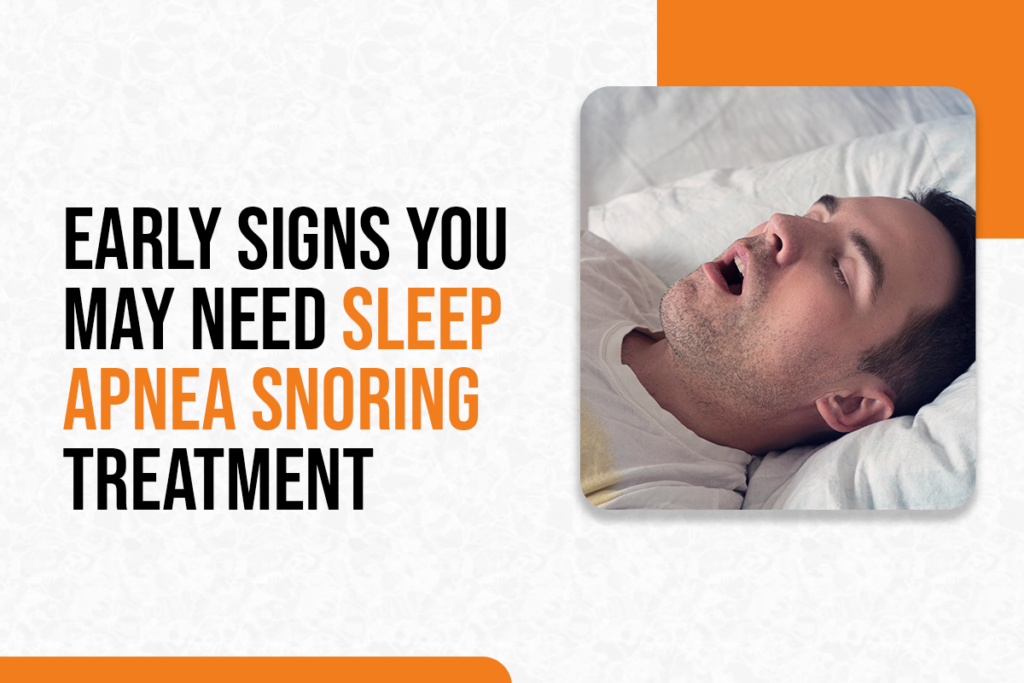
Does your partner often wake you up at night because you are snoring loudly? Do you still feel very tired in the morning even after sleeping for eight hours? If this happens to you, your body may be trying to tell you something important that you should not ignore.
Snoring is very common. Most people think of it as harmless or even funny. But when snoring comes with other symptoms, it can be an early sign of a condition called Obstructive Sleep Apnea, or OSA. Sleep apnea is a serious sleep disorder where your breathing repeatedly stops and starts throughout the night, without you even realizing it.
Did You Know? According to research published in the Indian Journal of Medical Research, over 13 crore Indians are estimated to have some form of sleep apnea. Yet nearly 80% of cases remain undiagnosed — because most people simply write it off as “just snoring.”
Dr. Sudarshen Aahire regularly sees patients who have lived with undiagnosed sleep apnea for years. The good news? When caught early, sleep apnea is very treatable.
What Is Sleep Apnea?
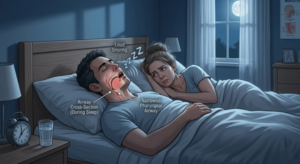
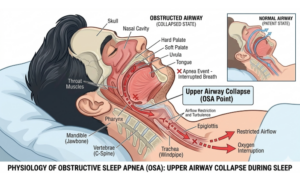
Sleep apnea happens when the muscles in the back of your throat relax too much during sleep. This causes your airway to narrow or completely block. When that happens, your brain senses the drop in oxygen and briefly wakes you up to restart breathing, sometimes dozens or even hundreds of times each night.
Most people do not remember these awakenings. They just know they feel terrible in the morning. Over time, this repeated disruption of sleep has serious effects on your heart, blood pressure, brain function, and overall quality of life.
The most common type , affecting the vast majority of patients, is Obstructive Sleep Apnea (OSA).
Early Warning Signs of Sleep Apnea You Should Not Ignore
The tricky part about sleep apnea is that most symptoms happen while you are asleep. You may not notice them yourself. Here are the key early signs to watch for:
1. Loud, Persistent Snoring — Especially with Gasping
Not all snoring means sleep apnea, but loud snoring accompanied by choking, gasping, or snorting sounds is a classic warning sign. If your partner has ever noticed you stop breathing for a few seconds during sleep, do not ignore it.
2. Waking Up with a Dry Mouth or Sore Throat
If you consistently wake up with a dry mouth or scratchy throat, it often means you were breathing through your mouth all night, a sign that your nasal airway may be partially blocked.
3. Morning Headaches
Waking up with a dull headache is one of the lesser-known signs of sleep apnea. When breathing is disrupted at night, oxygen levels in the blood drop slightly. This causes blood vessels in the brain to expand, triggering that familiar morning headache.
4. Extreme Daytime Sleepiness
Do you feel sleepy at your desk by mid-morning? Do you doze off while watching TV or even during conversations? Doctors call this “excessive daytime sleepiness,” and it is one of the most reliable signs that your sleep quality is being disrupted overnight.
5. Difficulty Concentrating or Memory Problems
Sleep is when your brain consolidates memories and clears out waste. When sleep apnea interrupts this process night after night, you may notice trouble focusing at work, forgetfulness, or persistent “brain fog.”
6. Mood Changes , Irritability, Anxiety, or Depression
Lack of quality sleep directly affects your mood. Many patients with undiagnosed sleep apnea report increased irritability, low motivation, or symptoms that look like anxiety and depression. Treating sleep apnea often brings remarkable improvement in mental wellbeing.
7. Frequent Urination at Night
Having to get up to urinate two or more times a night can sometimes be linked to sleep apnea. When breathing is obstructed, pressure changes in the chest trigger hormonal shifts that increase urine production. Many patients are surprised to learn their nighttime bathroom trips may be connected to a breathing problem.
8. High Blood Pressure That Is Hard to Control
If you are already on medication for blood pressure but it stays stubbornly high, sleep apnea could be a contributing factor. The repeated oxygen drops at night activate your body’s stress response, raising blood pressure. Sleep apnea is in fact one of the most common reversible causes of resistant hypertension.
Normal Snoring vs. Sleep Apnea: What Is the Difference?
| Feature | Normal Snoring | Sleep Apnea (OSA) |
| Sound | Steady, rhythmic snoring | Loud snoring with gasping or choking |
| Breathing Pauses | None | Yes, breathing stops repeatedly |
| Waking Up | Usually sleeps through | Wakes up gasping or choking |
| Daytime Sleepiness | Mild or none | Severe, affects daily function |
| Oxygen Levels | Normal | Drops during pauses |
| Morning Headache | Rare | Common |
| Risk to Health | Low | High, linked to heart, BP, diabetes |
| Needs Medical Attention | Usually not urgent | Yes ,see an ENT specialist |
How Is Sleep Apnea Diagnosed?
The most reliable way to diagnose sleep apnea is through a sleep study called polysomnography. This test monitors your breathing, oxygen levels, heart rate, and brain activity while you sleep.
In many cases, a portable home sleep test may also be recommended — a simpler version you can do in the comfort of your own home.
At our ENT clinic in Nashik, we begin with a thorough evaluation that includes:
- A detailed medical history and symptom review
- Examination of the nose, throat, and airway
- Assessment of nasal obstruction or enlarged tonsils and adenoids
- Coordination with sleep specialists for polysomnography if needed
- A discussion of your lifestyle factors and risk profile
Sleep Apnea Treatment Options: What Can Be Done?
Sleep apnea responds very well to treatment. The right approach depends on the severity of your condition and its underlying cause.
Lifestyle Changes For mild cases, losing weight, sleeping on your side, avoiding alcohol before bedtime, and quitting smoking can significantly reduce apnea episodes.
CPAP Therapy Continuous Positive Airway Pressure (CPAP) is the most commonly prescribed treatment for moderate to severe sleep apnea. It uses gentle air pressure to keep your airway open while you sleep. Many patients report a dramatic improvement in energy and mood within just a few days.
Oral Appliances Custom-fitted mouthpieces that reposition the jaw can be very effective for mild to moderate sleep apnea, especially for those who cannot tolerate CPAP.
Surgical Options In cases where anatomical issues, such as enlarged tonsils, a deviated nasal septum, or excess soft tissue, are responsible, surgical correction by an ENT specialist can provide long-lasting relief.
When Should You See a Doctor for Snoring?
See an ENT specialist if:
- Your snoring is loud enough to disturb others in the room
- You or your partner notice breathing pauses during sleep
- You wake up gasping or feeling short of breath
- You feel excessively tired during the day despite sleeping well
- You have morning headaches more than two to three times a week
- Your blood pressure is difficult to control despite medication
- You feel irritable, depressed, or unable to concentrate
Do not wait for things to get worse. Sleep apnea is a progressive condition , it tends to worsen over time if left untreated. Early treatment can protect you from serious complications including heart disease, stroke, and type 2 diabetes.
Take the First Step Toward Better Sleep
If you or someone you love is showing early signs of sleep apnea, do not brush it off as “just snoring.” Your body deserves the right attention.
Dr. Sudarshen Aahire, ENT Specialist in Nashik, offers comprehensive evaluation and personalised treatment for snoring and sleep apnea. With a patient-first approach and deep clinical expertise, Dr. Aahire helps patients breathe better, sleep deeper, and live healthier.
Book your appointment today and take the first step toward restful, healthy sleep.
Frequently Asked Questions
Q1. What are the early signs of sleep apnea?
The early signs of sleep apnea include loud snoring with gasping or choking sounds, waking up with a dry mouth or sore throat, morning headaches, extreme daytime sleepiness, difficulty concentrating, mood changes such as irritability or depression, frequent nighttime urination, and high blood pressure that is hard to control. If you notice two or more of these symptoms, consult an ENT specialist for a proper evaluation.
Q2. Is snoring always a sign of sleep apnea?
No. Simple snoring is usually steady and rhythmic, without breathing pauses. Sleep apnea-related snoring is louder, irregular, and interrupted by moments where breathing appears to stop. The key difference is whether breathing pauses occur. A sleep study can definitively distinguish between the two.
Q3. Can sleep apnea be treated without surgery?
Yes. Lifestyle changes such as weight loss and avoiding alcohol can help mild cases. CPAP therapy is the gold standard non-surgical treatment for moderate to severe sleep apnea. Oral appliances are effective for milder cases. Surgery is considered only when a specific anatomical obstruction , such as enlarged tonsils or a deviated septum, is identified as the primary cause.
Q4. How is sleep apnea diagnosed?
Sleep apnea is diagnosed through a sleep study called polysomnography, which monitors breathing, oxygen levels, heart rate, brain activity, and body movement during sleep. This can be done in a sleep lab or at home using a portable device. Dr. Sudarshen Aahire in Nashik conducts thorough clinical evaluations before recommending the appropriate diagnostic test.
Q5. What happens if sleep apnea is left untreated?
Untreated sleep apnea significantly raises the risk of high blood pressure, heart disease, stroke, irregular heart rhythm, type 2 diabetes, and obesity. It also causes impaired memory, poor concentration, depression, and severe daytime sleepiness, which can be dangerous when driving or operating machinery.
Q6. Who is most at risk for sleep apnea?
Sleep apnea is more common in adults over 40, particularly men, though women’s risk increases after menopause. Obesity is the biggest modifiable risk factor. Other risk factors include a family history of sleep apnea, chronic nasal congestion, enlarged tonsils, smoking, and regular alcohol or sedative use.
Q7. What is the difference between a home sleep test and a hospital sleep study?
An in-lab sleep study monitors over 20 parameters including brain waves, eye movement, heart rhythm, and breathing effort in a supervised setting. A home sleep test is a simplified version that monitors oxygen levels, airflow, and chest movement ,more convenient and less expensive, and suitable for patients with a moderate to high probability of obstructive sleep apnea. Your ENT doctor will recommend the right option based on your symptoms.
Q8. Can children have sleep apnea?
Yes. In children, sleep apnea is most commonly caused by enlarged tonsils and adenoids. Signs include loud snoring, restless sleep, mouth breathing, bedwetting, poor school performance, and behavioral problems. In many children, removing the enlarged tonsils and adenoids resolves the condition completely. If you notice these signs in your child, an ENT evaluation is strongly recommended.

Dr. Sudarshen Aahire is a young, talented, and vibrant ENT and Pediatric doctor in Nashik with 12 years of experience. Apart from routine ENT care and surgeries he specializes in the management of Snoring and obstructive sleep apnea surgeries, Endoscopic skull base surgeries, voice-related disorders, and voice surgeries, airway and swallowing disorders.