
Thyroid enlargement, commonly known as goiter or thyroid nodules, is a frequent health concern in India. While most thyroid swellings are non-cancerous, any visible lump or swelling in the front of the neck should never be ignored
Key takeaways
- Thyroid enlargement (goiter or thyroid nodules) is common in India and often benign, but a small percentage can be cancerous.
- See an ENT thyroid specialist urgently if neck swelling is increasing, painful, or causing voice, breathing, or swallowing problems.
- ENT specialists evaluate thyroid enlargement with neck examination, thyroid blood tests, ultrasound, and needle biopsy when needed.
- Most thyroid nodules are non‑cancerous; only about 5–15% turn out malignant, but all significant lumps deserve expert evaluation.
- Early ENT assessment helps decide whether you need only monitoring, medical thyroid treatment, or thyroid surgery in Nashik.

What is thyroid enlargement?
Thyroid enlargement means the thyroid gland in the front of your neck has become bigger than normal, either as a general swelling (goiter) or as one or more nodules (lumps). Thyroid disorders affect an estimated 42 million people in India, showing how common these problems are.
National Family Health Survey data suggest that around 2–3% of Indian adults report goiter or thyroid disorders, with rates higher in women and rising with age. Many of these enlargements are picked up only when a person notices a visible neck swelling, a tight collar, or pressure in the throat.
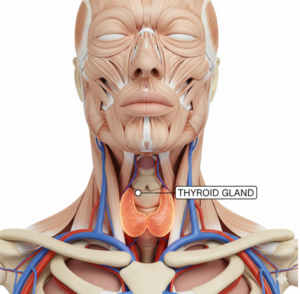
Early signs of thyroid enlargement
Early signs of thyroid enlargement include a visible or palpable lump in the front of the neck, a feeling of fullness or tightness around the collar, mild difficulty swallowing solids, and an unexplained sense of pressure when lying flat. Some people also notice subtle voice change or frequent throat clearing.
Common early thyroid enlargement symptoms:
- Painless swelling or lump low in the neck that moves up with swallowing
- Tight shirt collar or necklace that suddenly feels snug
- Intermittent difficulty swallowing hard or dry foods
- New, persistent hoarseness or voice fatigue, especially in voice users
When should you see an ENT doctor for thyroid swelling?
See an ENT doctor if a neck swelling is new, growing, feels hard or fixed, or is associated with hoarseness, breathing difficulty, choking, or pain. Prompt ENT evaluation helps rule out thyroid cancer, assess airway pressure, and decide whether monitoring, medication, or surgery is safest for you.
Situations where you should seek immediate review from an ENT specialist:
- Rapidly enlarging neck lump over weeks or months
- Swelling plus noisy breathing, shortness of breath, or waking up choking
- Sudden or persistent hoarseness without a cold or throat infection
- Difficulty swallowing even soft foods or liquids
- History of head‑and‑neck radiation or family history of thyroid cancer with any nodule
Is thyroid enlargement dangerous?
Most thyroid nodules and goiters are not cancerous ; about 90–95% of nodules are benign, and only roughly 5–15% prove malignant. Still, any thyroid enlargement can become dangerous if it compresses the windpipe or food pipe, or if biopsy shows cancerous change.
Benign goiters may simply need observation and thyroid function monitoring. However, large goiters, suspicious ultrasound features, or nodules causing pressure are reasons your ENT may advise biopsy or thyroid surgery in Nashik to protect breathing, swallowing, and long‑term safety.
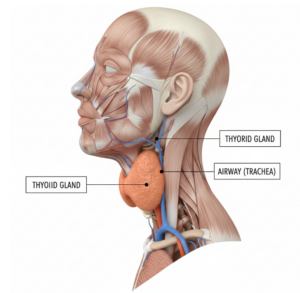
How an ENT thyroid specialist evaluates neck swelling
An ENT thyroid specialist begins with a focused head‑and‑neck examination, feeling the thyroid gland while you swallow to assess size, mobility, and any nodules. The doctor also checks lymph nodes and often inspects your voice box (larynx) with a thin scope to document vocal‑cord movement before any thyroid surgery.
Typical tests used in thyroid treatment include thyroid function blood tests, thyroid ultrasound to characterise nodules, and fine‑needle aspiration (FNA) biopsy of suspicious or large nodules. FNA is a quick OPD procedure where a thin needle draws cells for microscopic examination to distinguish benign from malignant lesions.
Can an ENT treat thyroid nodules?
Yes. ENT specialists (otolaryngologists / head‑and‑neck surgeons) routinely evaluate thyroid nodules, arrange ultrasound and biopsy, and perform thyroidectomy when cancer is suspected or the gland is causing pressure symptoms. They often co‑manage with endocrinologists, who focus on hormone control and long‑term thyroid medication.
For nodules that are benign but large or cosmetically distressing, an ENT may recommend surgery mainly to relieve pressure or improve appearance. For confirmed or strongly suspected cancer, surgery is usually the primary treatment, followed by endocrine management of hormones and any additional therapy.
Symptoms that require immediate ENT consultation
| Symptom | What you may notice | Why urgent ENT review is needed |
| Rapidly enlarging neck mass | Lump increasing in size over weeks | May signal aggressive goiter growth or thyroid cancer |
| Breathing difficulty or noisy breath | Shortness of breath, noisy or whistling sound when lying down | Suggests thyroid is compressing the windpipe (airway risk) |
| New persistent hoarseness | Voice suddenly rough, weak, or breathy for more than 2 weeks | Could indicate nerve involvement or tumour near the larynx |
| Trouble swallowing solids | Food “sticking” or pain on swallowing | May reflect thyroid or related mass pressing on the oesophagus |
| Neck swelling with pain or redness | Tender, warm, or acutely painful thyroid area | Can signal inflammation, bleeding into a nodule, or infection |
FAQs
1. Can thyroid enlargement go away on its own?
Some mild goiters related to temporary thyroid inflammation or mild iodine issues may shrink over time, especially when the underlying cause is treated. However, many nodules and long‑standing goiters remain stable or slowly enlarge, so periodic ENT and endocrine follow‑up in Nashik is important to track size, symptoms, and thyroid function.
2. Does thyroid swelling cause breathing problems?
Yes, a significantly enlarged thyroid can compress the windpipe, leading to breathlessness, noisy breathing, or difficulty lying flat. These symptoms are red flags that need urgent ENT review, as they may require imaging, laryngoscopy, and sometimes timely thyroid surgery in Nashik to prevent serious airway compromise.
3. Who is the right specialist for a thyroid lump?
For a structural neck lump or visible thyroid swelling, an ENT thyroid specialist or head‑and‑neck surgeon is usually the best first contact. They can assess your airway and voice box, arrange ultrasound and biopsy, and coordinate with an endocrinologist if there is a hormonal imbalance or long‑term medication requirement.
4. Is thyroid surgery painful?
Thyroidectomy is done under general anaesthesia, so there is no pain during the operation itself. After surgery, most patients experience mild to moderate neck discomfort and a sore throat for a few days, usually well controlled with pain medication and improving steadily during the first week of recovery.
5. How is thyroid biopsy (FNAC) done?
Thyroid biopsy, often called fine‑needle aspiration cytology (FNAC), uses a thin needle to draw cells from the nodule under palpation or ultrasound guidance. It is typically done in the OPD, takes only a few minutes, and most people feel only brief pricking or pressure, with very low risk of complications.
6. How long does thyroid surgery recovery take?
Most patients stay in hospital for a short period and return to light activities within a week, depending on the type of surgery and individual health. Voice or swallowing changes, if present, usually improve over weeks to months, and your ENT in Nashik will plan follow‑up visits and any needed thyroid hormone replacement.

Dr. Sudarshen Aahire is a young, talented, and vibrant ENT and Pediatric doctor in Nashik with 12 years of experience. Apart from routine ENT care and surgeries he specializes in the management of Snoring and obstructive sleep apnea surgeries, Endoscopic skull base surgeries, voice-related disorders, and voice surgeries, airway and swallowing disorders.