
If you lie down at night and suddenly find it impossible to breathe through your nose, you are not alone. Nasal congestion at night is one of the most common complaints that patients bring to an ENT clinic. According to research, over 30% of adults experience chronic nasal blockage that disrupts their sleep at least three nights a week. In India, allergic rhinitis , a leading cause of nasal congestion , affects approximately 20–30% of the population.
The good news? Many cases of blocked nose at night respond quickly to the right treatment. Dr. Sudarshen Aahire, ENT Specialist in Nashik, will walk you through the causes, instant remedies, and medical treatments for nasal congestion, so you can finally breathe easy and sleep well.
Why Does Nasal Congestion Get Worse at Night?
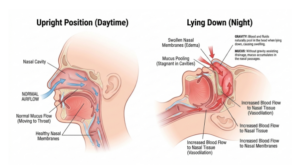
Nasal congestion that feels manageable during the day often becomes severe the moment you lie down. This happens due to a combination of physiological and environmental reasons.
1. Gravity and Blood Flow
When you are upright, gravity helps drain mucus and reduce swelling in the nasal passages. But when you lie flat, blood flow to the nasal membranes increases, causing them to swell and narrow the airway. This is why your nose feels more blocked in bed than when you are sitting or standing.
2. Dry Indoor Air
Air conditioning or closed windows at night reduce indoor humidity. Dry air irritates the nasal lining and thickens the mucus, making it harder to clear naturally.
3. Allergen Exposure
Pillows, mattresses, and bedding accumulate dust mites and allergens. For people with allergic rhinitis, exposure to these allergens while sleeping triggers nasal inflammation and congestion.
4. Sinus Infections and Colds
Bacterial or viral infections cause excessive mucus production. At night, this mucus does not drain as effectively, pooling in the nasal cavity and worsening the blocked feeling.
Instant Nasal Congestion Treatment at Home
For mild to moderate nasal blockage, several safe and effective home remedies can provide fast relief within minutes.
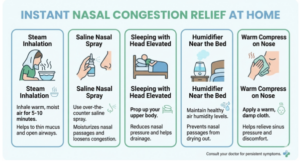
Steam Inhalation
This is one of the oldest and most effective instant nasal congestion treatments. Fill a bowl with hot water, lean over it with a towel draped over your head, and inhale the steam for 10–15 minutes. The warm, moist air loosens mucus and reduces inflammation in the nasal passages. Adding a few drops of eucalyptus oil enhances the effect. Do this 2–3 times before bedtime for best results.
Saline Nasal Spray or Rinse
A saline nasal spray or Neti pot rinse flushes out allergens, mucus, and irritants from the nasal passages. This is one of the safest nasal congestion treatments recommended by ENT specialists for both adults and children. Use sterile or boiled-and-cooled water for a nasal rinse. A saline spray can provide relief in as little as 5–10 minutes.
Elevate Your Head While Sleeping
Simply raising your head by 2–3 inches using an extra pillow can significantly reduce nasal congestion at night. This position allows gravity to assist mucus drainage and prevents blood from pooling in the nasal membranes.
Use a Humidifier
A humidifier adds moisture to indoor air and prevents the nasal lining from drying out. Place it near your bed and maintain indoor humidity between 40–60% for optimal nasal health. This is especially helpful during winter months or in air-conditioned rooms.
Warm Compress on Nose and Forehead
Applying a warm, damp cloth over your nose and forehead for 10 minutes helps reduce sinus pressure and promotes mucus drainage. This works particularly well for congestion caused by sinus infections.
Peppermint or Eucalyptus Oil
Apply diluted peppermint or eucalyptus oil below your nostrils or use it in a diffuser at night. The menthol in these oils creates a cooling sensation that opens up the nasal passages and provides a perception of easier breathing.
Medical Treatments for Severe Nasal Blockage
If home remedies do not provide lasting relief, or if your nasal congestion has persisted for more than 10 days, you need medical evaluation by an ENT specialist. Here are the evidence-based medical treatments recommended by Dr. Sudarshen Aahire based on the underlying cause.
Nasal Corticosteroid Sprays
Nasal corticosteroid sprays such as fluticasone or mometasone are the first-line medical treatment for allergic rhinitis and chronic nasal congestion. They reduce inflammation in the nasal lining, decrease mucus production, and improve airflow. Unlike oral steroids, they work locally in the nose with minimal systemic side effects.
Antihistamines for Allergic Rhinitis
If your blocked nose at night is triggered by allergies, antihistamines such as fexofenadine, cetirizine, or loratadine are prescribed to block histamine release and reduce nasal swelling, sneezing, and runny nose. Second-generation antihistamines are non-sedating and safe for long-term use.
Oral Decongestants and Nasal Decongestant Sprays
Medications like pseudoephedrine (oral) or xylometazoline (nasal spray) rapidly reduce nasal swelling and provide quick blocked nose relief. However, these should be used for a maximum of 3–5 days only. Prolonged use of nasal decongestant sprays causes rebound congestion, which worsens the blockage over time.
Antibiotics for Sinus Infections
Chronic sinusitis affects millions of Indians annually. If nasal congestion is accompanied by facial pain, thick yellow or green mucus, fever, or loss of smell, a sinus infection is likely. An ENT specialist will evaluate and prescribe the appropriate antibiotic regimen.
Allergy Testing and Immunotherapy
For patients with year-round allergic nasal congestion, allergy skin testing identifies specific triggers. Immunotherapy offers a long-term solution by desensitizing the immune system over 3–5 years.
Surgical Treatment for Structural Problems
When nasal blockage is caused by a deviated nasal septum, enlarged turbinates, or nasal polyps, surgical correction is the most effective and permanent solution. Dr. Sudarshen Aahire performs:
- Septoplasty – surgical correction of deviated nasal septum
- Functional Endoscopic Sinus Surgery (FESS) – for chronic sinusitis and nasal polyps
- Turbinate Reduction – for enlarged inferior turbinates causing chronic obstruction
These procedures are minimally invasive and most patients resume normal activity within a week.
Common Causes of Nasal Congestion
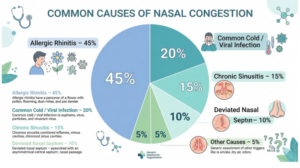
Based on ENT clinical data and published research, the leading causes of chronic nasal congestion are:
- Allergic Rhinitis : 45% of cases
- Common Cold / Viral Infection : 20% of cases
- Chronic Sinusitis : 15% of cases
- Deviated Nasal Septum : 10% of cases
- Nasal Polyps : 5% of cases
- Other (medications, hormonal, structural) : 5% of cases
Allergic rhinitis, triggered by dust mites, pollen, pet dander, and mold, is the single most common cause. This is why many patients notice that nasal congestion is worst at night precisely when allergen exposure during sleep is highest.
When Should You Visit an ENT Specialist for Nasal Congestion?
Not every blocked nose needs a doctor visit. But the following signs indicate that you should consult an ENT specialist promptly:
- Nasal congestion lasting more than 10 days without improvement
- Congestion accompanied by facial pain, pressure, or swelling
- Thick yellow or green nasal discharge suggesting sinus infection
- Recurrent nosebleeds along with blockage
- Loss of smell or taste
- Snoring, gasping, or waking up at night due to breathing difficulty
- Nasal congestion in children that affects feeding, sleep, or learning
- Congestion that only affects one nostril persistently
Dr. Sudarshen Aahire’s ENT clinic in Nashik offers complete nasal and sinus evaluation, including endoscopic examination, allergy testing, and imaging when required. Early diagnosis ensures faster, more effective treatment.
Frequently Asked Questions
Q1. What is the fastest way to unblock a nose at night?
The fastest instant nasal congestion treatments at home are steam inhalation (10–15 minutes), a saline nasal spray, and elevating your head while sleeping. These provide relief within minutes. If you need faster relief, a nasal decongestant spray works within 5–10 minutes but should not be used for more than 3–5 consecutive days.
Q2. Why is my nose only blocked at night and not during the day?
Nasal congestion worsens at night primarily due to gravity. When you lie flat, blood flow to nasal tissues increases, causing swelling and narrowing of the nasal passages. Allergens in bedding, dry air, and reduced body movement also contribute to worse nighttime congestion.
Q3. Is it safe to use a nasal decongestant spray every night?
No. Using over-the-counter nasal decongestant sprays for more than 3–5 days causes rebound congestion, a condition where the nose becomes even more congested after the spray wears off. For regular nighttime use, saline nasal spray is safe. Long-term, a nasal corticosteroid spray prescribed by an ENT doctor is the safest option.
Q4. Can a blocked nose at night cause sleep apnea?
Yes. Chronic nasal congestion forces you to breathe through your mouth, which increases the risk of snoring and obstructive sleep apnea. Studies show that nasal obstruction is present in up to 38% of sleep apnea cases. If you wake up frequently at night gasping or snoring loudly, consult an ENT specialist for a combined nasal and sleep assessment.
Q5. What is the best home remedy for nasal congestion due to sinusitis?
For sinusitis-related nasal congestion, the most effective home remedies are steam inhalation with eucalyptus oil, warm nasal compress, and saline nasal rinse using a Neti pot. These help drain sinus mucus and reduce pressure. However, if you have fever, facial pain, or symptoms lasting beyond 10 days, you need antibiotics and an ENT evaluation.
Q6. When does a blocked nose need surgery?
Surgery is recommended when nasal congestion is caused by a structural problem that cannot be corrected with medication, such as a deviated nasal septum, nasal polyps, or severely enlarged turbinates. Dr. Sudarshen Aahire evaluates each case with nasal endoscopy before recommending surgery.
Q7. Can children use the same nasal congestion treatments as adults?
Not all adult treatments are safe for children. Saline nasal drops and steam inhalation are generally safe for children of all ages. Nasal decongestant sprays should not be used in children under 6 years without medical advice. For persistent nasal congestion in children with snoring or mouth breathing, an ENT evaluation is essential to rule out enlarged adenoids or tonsils.
Q8. What is the difference between a cold and allergic nasal congestion?
Cold-related congestion is usually accompanied by fever, body aches, and sore throat, and resolves within 7–10 days. Allergic rhinitis causes clear watery discharge, sneezing, and itchy eyes, and recurs seasonally or with allergen exposure. An ENT specialist can confirm the diagnosis through clinical examination and allergy testing.

Dr. Sudarshen Aahire is a young, talented, and vibrant ENT and Pediatric doctor in Nashik with 12 years of experience. Apart from routine ENT care and surgeries he specializes in the management of Snoring and obstructive sleep apnea surgeries, Endoscopic skull base surgeries, voice-related disorders, and voice surgeries, airway and swallowing disorders.