

Glue ear – the everyday name for otitis media with effusion (OME) — happens when fluid collects behind the eardrum without any active infection. There’s no pain, no fever, no pus; just fluid quietly thickening and muffling sound. It’s most common in children aged one to six, largely because their Eustachian tubes are shorter and drain less efficiently than an adult’s. Most cases clear up within three months without treatment. When fluid lingers longer than that, or hearing loss starts affecting speech and learning, an ENT specialist may recommend grommets (small ventilation tubes) to restore normal hearing.
Key Takeaways
- Glue ear is fluid in the middle ear without infection — unlike an ear infection, it’s typically painless.
- It’s the leading cause of temporary hearing loss in young children.
- Most cases resolve naturally within three months.
- Persistent fluid can delay speech, disrupt school performance, and affect behavior.
- Ear grommets are considered when fluid or hearing loss persists beyond three months.
What Is Glue Ear?
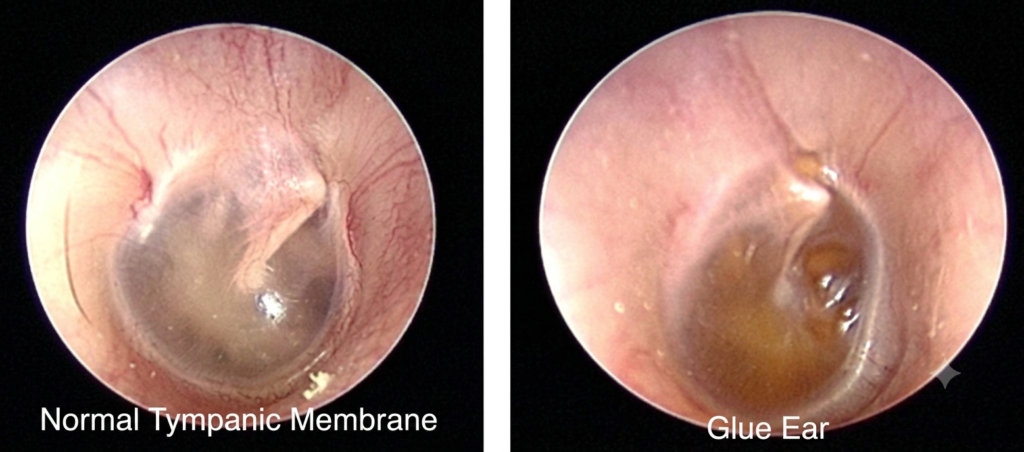
Glue ear is fluid that builds up in the middle ear — the air-filled space just behind the eardrum — without a bacterial or viral infection driving it.
As that fluid sits there, it gradually thickens into something closer to the consistency of glue, which is where the name comes from. Doctors call it otitis media with effusion, or OME.
It’s one of the most frequently diagnosed ear conditions in childhood, and the most common reason for temporary conductive hearing loss in kids.
In many children it clears on its own within a few weeks to a few months. In others, it lingers and needs active management — sometimes just watchful waiting, sometimes a minor surgical procedure.
How the Middle Ear Is Supposed to Work
To understand why glue ear happens, it helps to know how hearing normally travels through the ear.
Sound waves hit the eardrum, making it vibrate. Those vibrations pass through three tiny bones — the malleus, incus, and stapes — into the inner ear, where they’re converted into nerve signals the brain can interpret as sound.
For this chain to work properly, the middle ear needs to stay filled with air at a stable pressure. That job belongs to the Eustachian tube, a narrow channel connecting the middle ear to the back of the nose. It does three things:
- Equalizes air pressure on both sides of the eardrum
- Lets fresh air into the middle ear space
- Drains away normal fluid and secretions
Every yawn, swallow, or chew briefly pops the Eustachian tube open to keep this system balanced. In young children, that tube is shorter, narrower, and sits more horizontally than in adults — a combination that makes drainage far less efficient. That single anatomical difference is the main reason glue ear shows up so much more often in childhood than adulthood.
Why Fluid Builds Up in the First Place
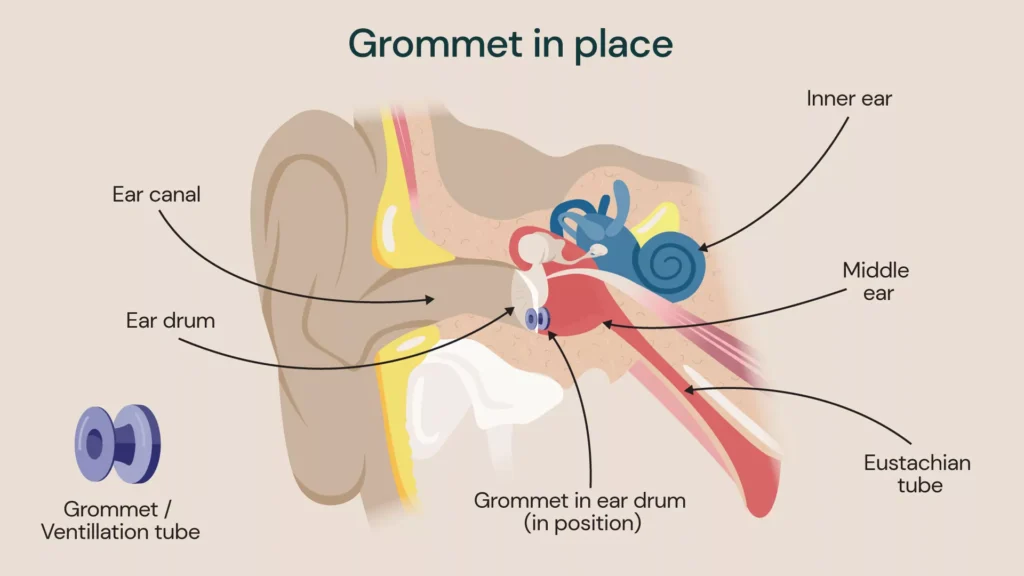
Glue ear starts when the Eustachian tube stops doing its job — either blocked outright or simply failing to open properly. Without fresh air getting in, the air already trapped in the middle ear gets gradually absorbed by surrounding tissue, and negative pressure builds up behind the eardrum.
That pressure difference pulls fluid out of nearby tissue and into the middle ear space. Left alone long enough, that fluid thickens into the “glue” that gives the condition its name.
A number of things can interfere with normal Eustachian tube function, including:
- Frequent colds and viral illnesses
- Enlarged adenoids
- Allergies
- Sinus problems
- Recurrent ear infections
- Structural differences in the nose or throat
Generally speaking, the longer the tube stays blocked, the thicker the fluid gets — and the more noticeable the hearing loss becomes.
Glue Ear vs. Ear Infection: Understanding the Key Differences
Glue ear and acute ear infections both involve the middle ear, but they’re not the same condition, and they’re not treated the same way.
| Feature | Glue Ear (OME) | Ear Infection (Acute Otitis Media) |
| Infection present? | No | Yes — bacterial or viral |
| Pain | Usually painless | Often significant pain |
| Fever | Rare | Common |
| Onset | Gradual | Sudden |
| Discharge | Rare, unless eardrum ruptures | Possible if eardrum ruptures |
| Hearing loss | Common, temporary | Common during active infection |
| Antibiotics needed? | Usually not | Sometimes, depending on severity |
The distinction matters practically: glue ear tends to resolve on its own without antibiotics, while an active ear infection may genuinely need medical treatment to clear.
Symptoms of Glue Ear
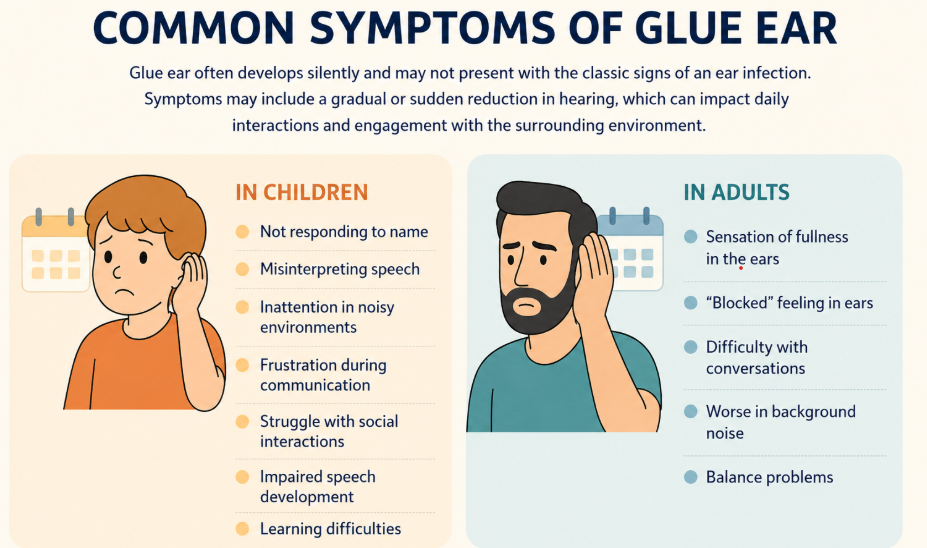
Because glue ear tends to creep in gradually, a lot of children never actually complain about their hearing — the first sign is usually a change in behavior that a parent or teacher notices.
Hearing Loss
This is the defining symptom. Sounds seem muffled or distant because trapped fluid blocks efficient sound transmission through the middle ear. Watch for a child who:
- Constantly asks people to repeat themselves
- Turns the TV up louder than usual
- Only responds when spoken to loudly
- Mishears words or simple instructions
- Struggles to follow conversation in noisy rooms
Adults with glue ear often notice the same pattern during meetings or phone calls.
A Feeling of Fullness
Many people describe pressure or fullness in the affected ear, sometimes with an occasional pop or click when swallowing or yawning. It’s rarely painful, but it can be a persistent, nagging sensation.
Delayed Speech Development
Toddlers and young children build speech almost entirely by listening. When hearing is muffled for weeks or months at a stretch, pronunciation and vocabulary growth can lag behind where they’d otherwise be. This is one of the strongest reasons early recognition matters.
Struggles at School
Kids with glue ear often can’t hear a teacher clearly, especially in a noisy classroom. That can look like inattentiveness or a behavioral issue on the surface, when the real cause is simply reduced hearing.
Balance Issues
Less common, but worth noting — the middle ear contributes to balance, so some children (and adults) notice mild clumsiness or unsteadiness while fluid is present. This typically resolves once the fluid clears.
Behavioral Changes
Reduced hearing can chip away at a child’s confidence in social situations. Some kids become withdrawn or frustrated; others seem unusually quiet or disengaged. These shifts are easy to miss as hearing-related unless you’re specifically looking for them.
Parent tip: Most children don’t realize their own hearing has changed, so they won’t tell you something’s wrong. If you notice repeated requests to repeat things, slower speech progress, or trouble following conversations, it’s worth getting their hearing checked rather than waiting to see if it improves.
How Glue Ear Is Diagnosed
Diagnosis usually combines a few simple steps:
- Medical history — recent colds, recurring ear infections, allergies, or snoring/mouth-breathing patterns that suggest enlarged adenoids
- Otoscopy — a direct look at the eardrum, which often appears dull, retracted, or discolored when fluid is present behind it
- Tympanometry — measures how the eardrum responds to changes in air pressure, which reliably detects fluid even when it can’t be seen directly
- Audiometry — a hearing test to measure how much, if any, hearing loss the fluid is causing
Together, these tests confirm whether fluid is present and how much it’s affecting hearing — information that shapes whether watchful waiting or active treatment is the right call.
Treatment Options for Glue Ear
Watchful Waiting
Because a large share of glue ear cases clear up on their own within about three months, many doctors recommend monitoring first rather than jumping straight to treatment — particularly if hearing loss is mild and speech development looks normal.
Treating Underlying Contributors
If allergies, sinus problems, or frequent colds are feeding the problem, managing those directly can help the Eustachian tube recover its normal function without further intervention.
Hearing Support During Recovery
While fluid clears, simple accommodations — sitting closer to the front of the classroom, reducing background noise during conversations, facing the child directly when speaking — can limit the practical impact on communication and learning.
Ear Grommets (Ventilation Tubes)
When fluid persists beyond three months, causes significant or bilateral hearing loss, or is clearly delaying speech and language development, an ENT may recommend grommets. These are tiny tubes surgically placed in the eardrum to keep air flowing into the middle ear and let fluid drain, bypassing a Eustachian tube that isn’t doing its job. It’s a short, well-established procedure, and most children experience an immediate improvement in hearing afterward. Grommets typically stay in place for six to twelve months before falling out naturally as the eardrum heals.
Adenoid Removal
In children with enlarged adenoids contributing to repeated Eustachian tube blockage, removing the adenoids — sometimes alongside grommet placement — can reduce the likelihood of glue ear returning.
Frequently Asked Questions
What is glue ear?
Glue ear (otitis media with effusion) is a condition where fluid builds up behind the eardrum without an active infection. The trapped fluid restricts eardrum movement, causing temporary hearing loss.
What causes glue ear?
Glue ear develops when the Eustachian tube becomes blocked or stops functioning properly. Common causes include colds, enlarged adenoids, allergies, sinus problems, and recurrent ear infections.
How is glue ear diagnosed?
Glue ear is diagnosed through a combination of medical history, an ear examination (otoscopy), tympanometry, and a hearing test (audiometry) to confirm the presence of fluid and assess its impact on hearing.
Can adults get glue ear?
Yes. Although glue ear is more common in children, adults can also develop it due to allergies, sinus disease, or Eustachian tube dysfunction. Persistent glue ear in one ear should always be medically evaluated.
When are ear grommets recommended?
Ear grommets are usually recommended when glue ear lasts longer than three months, causes significant hearing loss, delays speech and language development, or keeps recurring despite conservative treatment.