
Ear pain without an ear infection, also known as secondary or referred otalgia, occurs when pain originates from nearby structures such as the jaw (TMJ), teeth, throat, sinuses, neck, or nerves rather than the ear itself. Because these areas share sensory nerve pathways with the ear, the pain may feel like an earache even though the ear is completely healthy. An accurate diagnosis by an ENT specialist is essential to identify the underlying cause and recommend the right treatment.
Key Takeaways
- Ear pain does not always indicate an ear infection.
- TMJ disorders, dental problems, throat infections, sinus disease, and Eustachian tube dysfunction are common causes of referred ear pain.
- A normal ear examination does not mean the pain is imaginary; it often points to a condition outside the ear.
- Treatment depends on the underlying cause and may involve dental care, TMJ management, allergy treatment, or physiotherapy.
- Persistent ear pain, hearing loss, dizziness, or ear discharge should be evaluated by an ENT specialist.
What Is Ear Pain Without an Ear Infection?
Ear pain without an ear infection refers to discomfort in or around the ear when there is no evidence of infection within the ear canal or middle ear. In medical terms, this is often called secondary otalgia because the pain originates elsewhere and is referred to the ear through shared nerve pathways.
Unlike an ear infection, where inflammation affects the ear itself, secondary otalgia is linked to conditions involving the jaw, teeth, throat, sinuses, neck, or nerves. This is why an ENT specialist often examines not only the ear but also the surrounding structures to determine the actual source of pain.
Why Does Referred Ear Pain Happen?
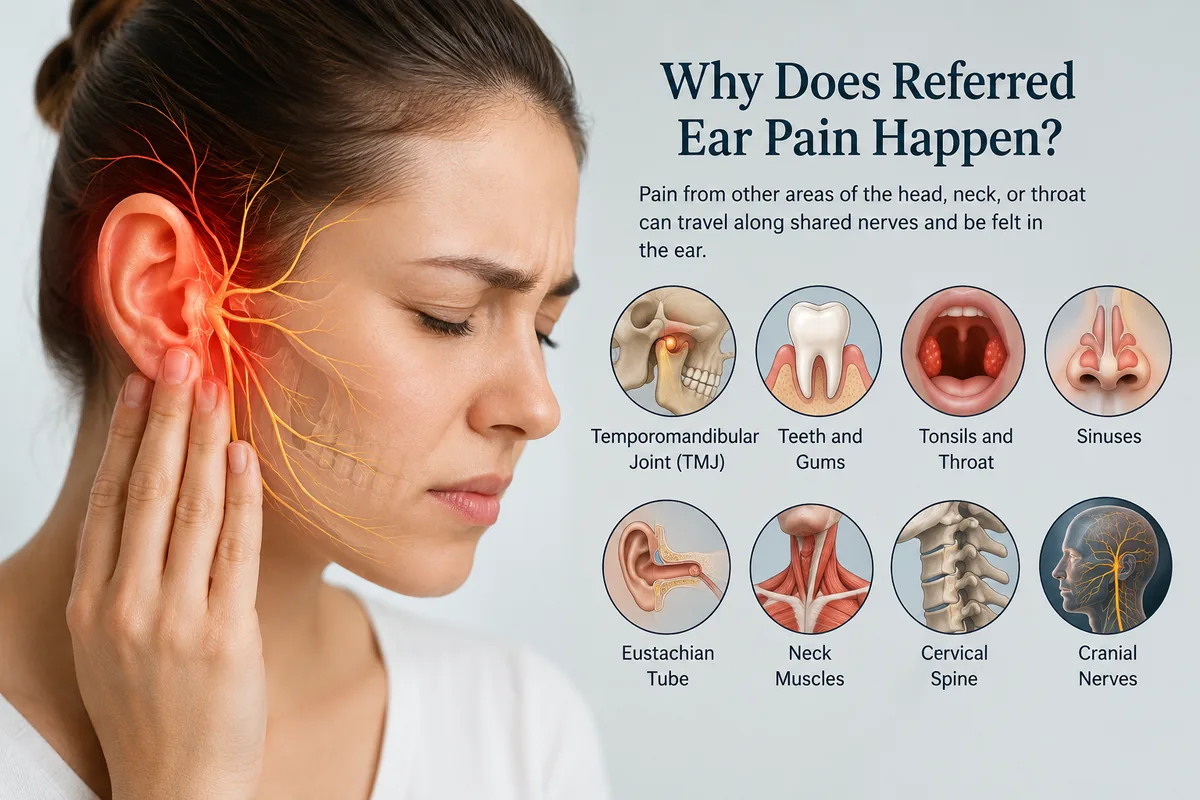
The ear receives sensory input from several cranial nerves that also supply nearby parts of the head and neck. When these structures become inflamed, injured, or infected, the brain may misinterpret the origin of the pain and perceive it as an earache.
The most common structures responsible for referred ear pain include:
- Temporomandibular joint (TMJ)
- Teeth and gums
- Tonsils and throat
- Sinuses
- Eustachian tube
- Neck muscles
- Cervical spine
- Cranial nerves
Because of these shared nerve connections, identifying the true source of pain requires a thorough clinical evaluation rather than focusing only on the ear.
Common Causes of Ear Pain Without an Ear Infection
Temporomandibular Joint (TMJ) Disorders
TMJ disorders are one of the leading causes of ear pain without an ear infection. The temporomandibular joint is located just in front of the ear and helps with chewing, speaking, and yawning. Inflammation, muscle tension, or joint dysfunction can easily radiate pain toward the ear.
Common symptoms include:
- Ear pain while chewing
- Jaw clicking or popping
- Pain during yawning
- Limited mouth opening
- Morning jaw stiffness
- Headaches
- Facial discomfort
People who grind their teeth (bruxism), clench their jaw during stress, or have bite alignment issues are at a higher risk of developing TMJ-related ear pain.
Dental Problems
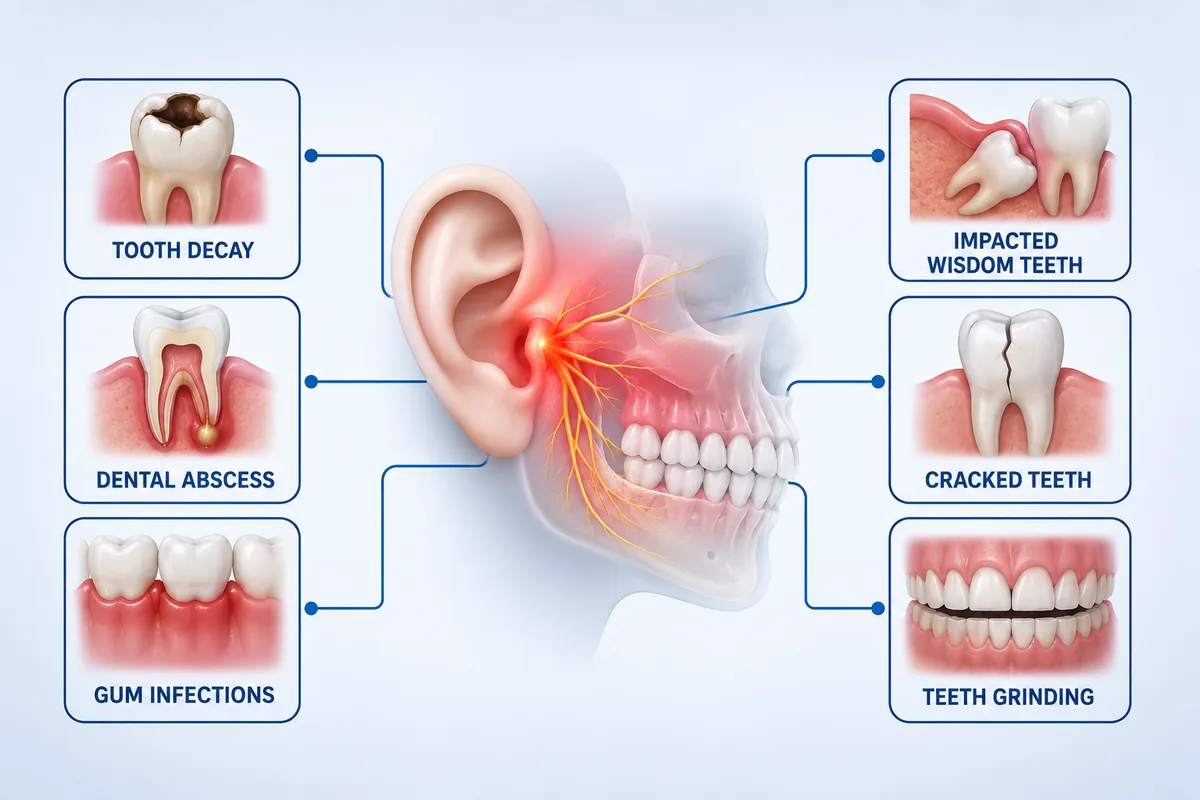
Dental conditions are another common cause of referred ear pain. Since the teeth, gums, and ear share sensory nerves, pain from the mouth may feel like it originates inside the ear.
Common dental causes include:
- Tooth decay
- Dental abscess
- Gum infections
- Impacted wisdom teeth
- Cracked teeth
- Teeth grinding
Dental pain often becomes worse while chewing or consuming hot and cold foods. Swelling, tooth sensitivity, or bad breath may also be present.
Throat Infections
The throat and ear are connected through shared nerves, making throat conditions a frequent cause of ear pain.
Conditions that may cause referred ear pain include:
- Tonsillitis
- Pharyngitis
- Viral sore throat
- Peritonsillar abscess
People usually experience a sore throat, painful swallowing, fever, swollen tonsils, or enlarged neck glands. As the throat infection improves, the ear pain typically resolves as well.
Eustachian Tube Dysfunction
The Eustachian tube connects the middle ear to the back of the nose and helps regulate air pressure within the ear.
When the tube becomes blocked due to allergies, a cold, or sinus inflammation, symptoms may include:
- Ear fullness
- Pressure inside the ear
- Mild pain
- Popping sensations
- Muffled hearing
Unlike an ear infection, Eustachian tube dysfunction usually does not cause severe pain or high fever.
Sinus Problems
Sinus infections and chronic sinus inflammation can create pressure around the cheeks, forehead, and eyes that extends toward the ears.
Common symptoms include:
- Blocked nose
- Facial pressure
- Thick nasal discharge
- Headache
- Reduced sense of smell
Treating the sinus condition often relieves the associated ear discomfort.
Impacted Ear Wax
Although ear wax is not an infection, excessive wax buildup can press against the ear canal or eardrum and cause pain.
Symptoms may include:
- Ear blockage
- Mild discomfort
- Hearing loss
- Ringing in the ears (tinnitus)
- Dizziness
Safe removal by a healthcare professional usually provides immediate relief.
Nerve-Related Pain (Neuralgia)
Certain nerve disorders can cause sudden, severe ear pain even when the ear appears completely normal. Conditions such as glossopharyngeal neuralgia and trigeminal neuralgia irritate the nerves that also supply the ear.
Symptoms may include:
- Sharp, stabbing pain
- Electric shock-like sensations
- Pain lasting a few seconds to minutes
- Pain triggered by swallowing, talking, coughing, or touching the face
These conditions require specialist evaluation and are treated differently from infections.
Neck and Cervical Spine Problems
The muscles, joints, and nerves in the neck can also refer pain to the ear. Poor posture, cervical spondylosis, muscle strain, or prolonged computer use may all contribute to discomfort.
Symptoms often include:
- Neck stiffness
- Shoulder pain
- Pain while turning the head
- Headaches
- Ear pain that worsens with neck movement
Improving posture and treating the underlying neck condition often relieves symptoms.
Symptoms That Help Identify the Cause
Although ear pain is the main complaint, associated symptoms often help identify the underlying problem.
|
Associated Symptom |
Possible Cause |
|
Jaw clicking, chewing pain |
TMJ Disorder |
|
Tooth sensitivity or swelling |
Dental Disease |
|
Sore throat, painful swallowing |
Tonsillitis or Pharyngitis |
|
Ear fullness, popping |
Eustachian Tube Dysfunction |
|
Facial pressure, blocked nose |
Sinusitis |
|
Neck stiffness |
Cervical Spine Disorder |
|
Sharp electric pain |
Neuralgia |
|
Hearing loss with blockage |
Impacted Ear Wax |
Because many of these symptoms overlap, a professional evaluation is often needed to determine the exact cause.
Ear Infection vs Referred Ear Pain
|
Ear Infection |
Referred Ear Pain |
|
Infection inside the ear |
Pain originates outside the ear |
|
Abnormal ear examination |
Ear examination is often normal |
|
Fever may be present |
Fever is usually absent |
|
Ear discharge may occur |
Usually no discharge |
|
Antibiotics may be needed |
Treatment depends on the underlying cause |
|
Pain is localized to the ear |
Pain may worsen while chewing, swallowing, or moving the neck |
Understanding this difference helps avoid unnecessary antibiotic use and ensures the correct condition is treated.
When Should You See an ENT Specialist?
While mild ear pain may improve as the underlying condition resolves, persistent or severe symptoms should never be ignored.
Seek medical attention if you experience:
- Ear pain lasting more than two to three days
- Sudden hearing loss
- Ear discharge or bleeding
- Persistent dizziness or balance problems
- Swelling around the ear or jaw
- Difficulty opening the mouth
- Severe sore throat with ear pain
- Facial weakness or numbness
- A lump in the neck
- Recurrent ear pain without an obvious cause
An ENT specialist can determine whether the pain is coming from the ear or another structure in the head and neck.
How Is Ear Pain Without an Ear Infection Diagnosed?
Diagnosis begins with a detailed medical history. Your doctor will ask when the pain started, what makes it worse, whether it affects one or both ears, and if you have symptoms such as jaw pain, sore throat, nasal congestion, hearing loss, or dental discomfort.
A comprehensive physical examination follows. examines the ear canal and eardrum using an otoscope to rule out infection, wax buildup, or other ear conditions. If the ear appears normal, the jaw, teeth, throat, neck, and surrounding muscles are also evaluated.
Depending on the suspected cause, additional tests may include:
- Audiometry (hearing test): To assess hearing function.
- Tympanometry: To evaluate middle ear pressure.
- Dental assessment: If tooth-related pain is suspected.
- CT scan or MRI: For persistent symptoms or when a structural abnormality needs to be investigated.
Accurate diagnosis is essential because successful treatment depends on identifying the true source of the pain.
Treatment Options
TMJ Disorders
Management may include a soft diet, jaw rest, warm compresses, anti-inflammatory medication, jaw exercises, stress management, and a custom night guard for teeth grinding.
Dental Problems
Treatment may involve fillings, root canal therapy, drainage of dental abscesses, treatment of gum disease, or removal of impacted wisdom teeth.
Throat Infections
Viral infections usually improve with rest, hydration, and pain relief, while bacterial infections may require antibiotics prescribed by a healthcare professional.
Eustachian Tube Dysfunction
Treatment often includes saline nasal sprays, allergy management, steam inhalation, nasal steroid sprays (when appropriate), and treatment of sinus inflammation.
Sinus Conditions
Managing allergies or sinus infections helps reduce pressure around the ears and improves symptoms.
Neck Disorders
Physiotherapy, posture correction, stretching exercises, and ergonomic adjustments are commonly recommended for neck-related referred ear pain.
Home Care Tips
Simple self-care measures may help reduce discomfort while awaiting medical evaluation:
- Apply a warm compress to the jaw or neck if muscle tension is suspected.
- Stay well hydrated.
- Eat soft foods if chewing increases pain.
- Avoid chewing gum.
- Maintain good posture while working.
- Manage allergies promptly.
- Avoid inserting cotton buds or sharp objects into the ear.
- Take pain-relieving medication only as advised by your healthcare provider.
Home remedies should not replace professional evaluation if symptoms are severe, persistent, or associated with hearing loss, dizziness, or facial weakness.
Prevention
Although not every cause of ear pain can be prevented, healthy habits reduce the risk:
- Maintain good oral hygiene and schedule regular dental check-ups.
- Treat allergies and sinus infections early.
- Wear a mouthguard if you grind your teeth.
- Practice good posture to reduce neck strain.
- Stay hydrated.
- Avoid smoking, which can irritate the throat and Eustachian tube.
- Never insert cotton buds or other objects into your ears.
- Protect your ears from sudden pressure changes during flying or diving.
Myths vs Facts
Myth: Every earache is caused by an ear infection.
Fact: Many cases are caused by TMJ disorders, dental problems, throat infections, sinus disease, or neck conditions.
Myth: Antibiotics are necessary for all ear pain.
Fact: Antibiotics only treat bacterial infections and are ineffective for most causes of referred ear pain.
Myth: A normal ear examination means nothing is wrong.
Fact: Referred ear pain often occurs despite a completely normal ear examination.
Myth: Ear pain will always resolve on its own.
Fact: Persistent or worsening ear pain requires medical evaluation to identify the underlying cause.
Most cases improve once the root cause is identified and treated. However, persistent, severe, or unexplained ear pain should never be ignored. Early evaluation by an ENT specialist can lead to an accurate diagnosis, effective treatment, and relief from symptoms while preventing potential complications.
Frequently Asked Questions
Can stress cause ear pain without an ear infection?
Yes. Stress can lead to jaw clenching and teeth grinding, placing extra pressure on the TMJ and causing referred ear pain.
Why does my ear hurt when I chew or yawn?
Pain during chewing or yawning commonly suggests a TMJ disorder because the jaw joint is located close to the ear.
Can wisdom teeth cause ear pain?
Yes. Impacted or infected wisdom teeth can radiate pain to the ear through shared nerve pathways.
Why is ear pain sometimes worse at night?
Ear pain may feel more intense at night due to fewer distractions, changes in body position, or nighttime teeth grinding.
Can flying make ear pain worse without an infection?
Yes. Changes in air pressure can temporarily affect the Eustachian tube, leading to ear pressure and discomfort, especially if you have allergies or a cold.
Can poor posture cause ear pain?
Yes. Poor posture can strain the neck muscles and cervical spine, resulting in referred pain that extends to the ear.