
A nosebleed can look alarming, but most cases are not serious. Sit upright, lean forward and pinch the soft part of your nose continuously for 10–15 minutes. Seek urgent medical attention for heavy or persistent bleeding, breathing difficulty, dizziness or bleeding after a significant head injury. Recurrent nosebleeds, especially from one nostril, should be evaluated by an ENT specialist in Nashik to identify the cause and recommend appropriate treatment.
Key Takeaways
- Most nosebleeds are manageable with correct first aid.
- Sit upright, lean forward and pinch the soft part of the nose for 10–15 minutes.
- Avoid tilting your head backwards or inserting tissues deep into your nostril.
- Seek urgent care for heavy bleeding, breathing difficulty, dizziness or head injury.
- Repeated nosebleeds, particularly from one nostril, need medical evaluation.
- Common causes include nasal dryness, allergies, minor injuries and certain medications.
- An ENT specialist in Nashik can identify the cause and suggest suitable treatment.
What Is a Nosebleed (Epistaxis)?
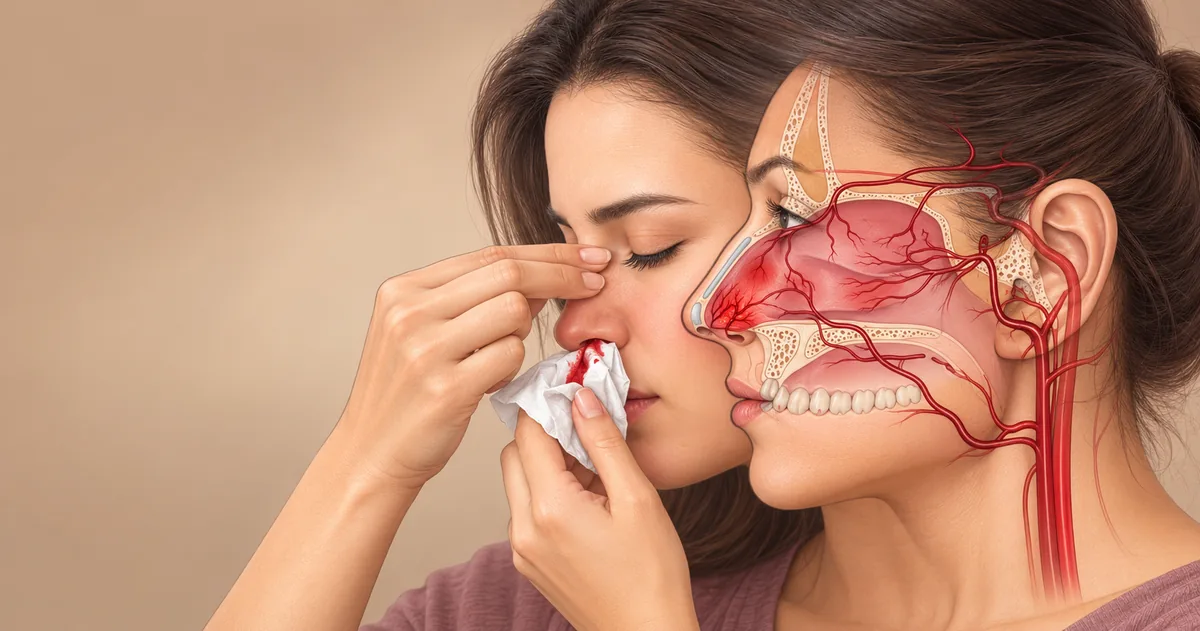
A nosebleed, medically known as epistaxis, occurs when small blood vessels inside the nose break and bleed. The lining of the nose contains many delicate blood vessels that help warm and moisten the air we breathe. Because these vessels are close to the surface, they can bleed after irritation, dryness or minor injury.
Nosebleeds are generally classified into two types:
- Anterior nosebleed: Bleeding starts near the front of the nasal septum. This is the more common type and often responds to correct first aid.
- Posterior nosebleed: Bleeding originates deeper inside the nose. It may be heavier, more difficult to control and may require urgent medical treatment.
Although most nosebleeds stop without major intervention, persistent or recurrent bleeding should not be ignored.
What Are the Common Causes of Nosebleeds?
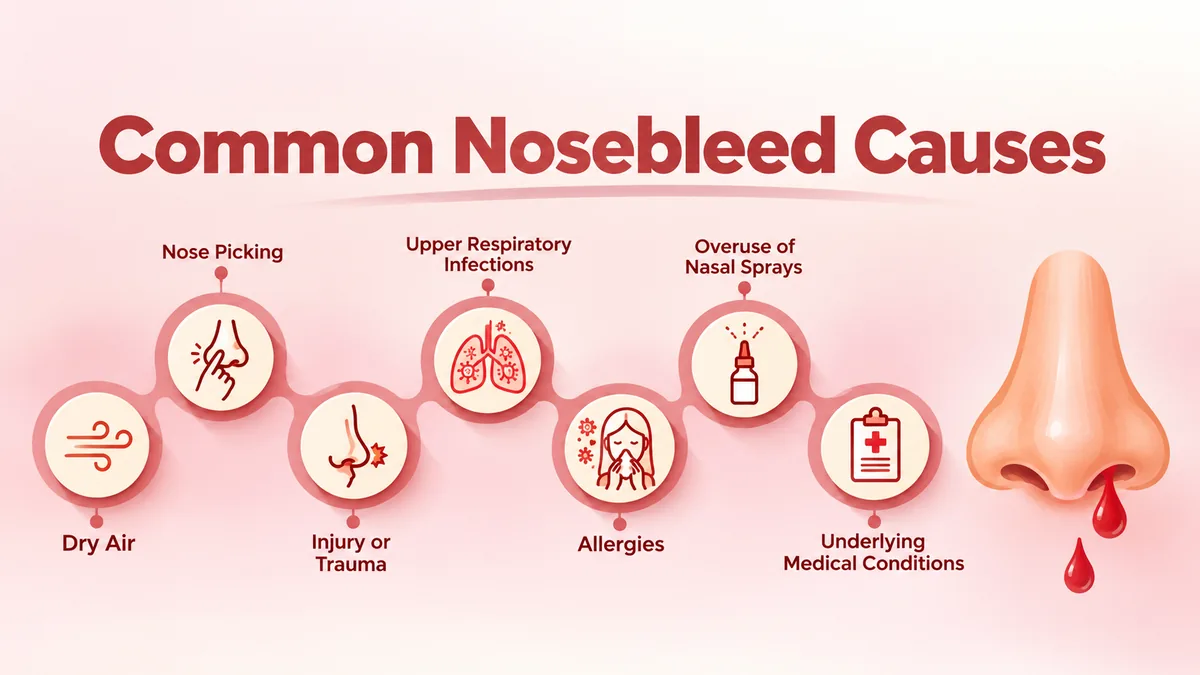
The cause may be as simple as dry nasal lining or may relate to an underlying nasal condition, medication or bleeding disorder.
1. Dry Nasal Lining
Dry air, air conditioning, heating and environmental changes can dry the nasal lining. When the surface becomes irritated or develops small cracks, the blood vessels underneath may bleed.
2. Nose Picking or Forceful Nose Blowing
Picking the nose, scratching crusts or blowing the nose forcefully can damage delicate blood vessels. Children may experience nosebleeds more frequently because of nose picking and minor injuries.
3. Allergic Rhinitis and Frequent Sneezing
Allergic rhinitis can cause sneezing, itching, congestion and irritation inside the nose. Repeated rubbing, forceful blowing and inflammation may increase the risk of bleeding.
People who experience frequent nasal irritation or nosebleeds alongside allergy symptoms may benefit from an ENT assessment.
4. Colds and Sinus Problems
A common cold or other upper respiratory infection can inflame the nasal lining. Frequent wiping, sneezing and blowing may make the tissue more vulnerable to bleeding. Sinus symptoms may occur alongside these problems, although sinusitis is not necessarily the direct cause of every nosebleed.
5. Nasal Injury or Structural Problems
An injury to the nose can damage blood vessels and cause bleeding. A deviated nasal septum may contribute to uneven airflow, dryness or crusting in some people. However, a deviated septum does not automatically mean that a person will experience nosebleeds.
6. Certain Medicines and Nasal Sprays
Medicines that affect blood clotting, including anticoagulants and antiplatelet medicines, may increase the severity or duration of bleeding. Some nasal sprays, particularly when used incorrectly or excessively, can irritate the nasal lining.
If you use a nasal spray, direct the nozzle slightly outward, away from the nasal septum, unless your clinician has instructed otherwise.
Important: Do not stop prescribed blood-thinning medication or prescribed aspirin without medical advice. Your clinician can help balance the risk of bleeding against the reason you take the medicine.
7. High Blood Pressure and Bleeding Disorders
High blood pressure may be associated with nosebleeds that are harder to control, but it should not automatically be considered the cause of every episode.
Conditions that affect blood clotting, certain liver disorders and other medical problems may also contribute to recurrent or prolonged bleeding. A clinician can determine whether further evaluation is necessary.
Nosebleed First Aid: What Should You Do Immediately?
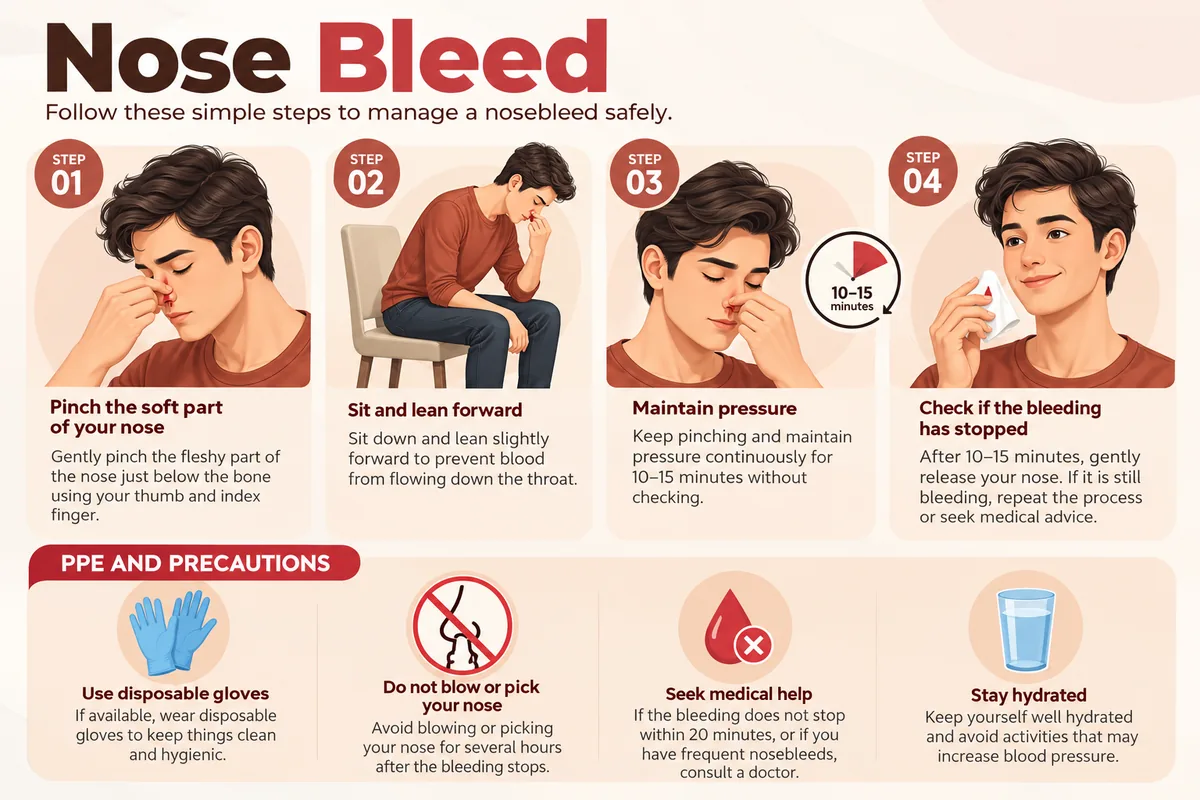
Correct first aid can help control many uncomplicated nosebleeds.
Follow These Steps
Step 1: Sit upright and lean forward
Keep your head slightly tilted forward. Do not tilt your head backwards, as blood may flow into your throat and cause nausea or vomiting.
Step 2: Pinch the soft part of your nose
Using your thumb and index finger, firmly pinch both sides of the soft part of your nose, just below the bony bridge.
Step 3: Maintain continuous pressure for 10–15 minutes
Use a clock to measure the time. Avoid releasing your fingers repeatedly to check whether the bleeding has stopped.
Step 4: Breathe through your mouth
Continue breathing normally through your mouth while maintaining pressure. If blood enters your mouth, spit it out rather than swallowing it.
Step 5: Seek medical help if the bleeding does not stop
If bleeding continues after 10–15 minutes of correctly applied pressure, seek urgent medical assessment. If bleeding is heavy, you feel faint or weak, have difficulty breathing or the bleeding follows a significant head injury, seek emergency care immediately rather than waiting.
A cold pack wrapped in a cloth may be applied gently to the outside of the nose for comfort, but it should not replace direct pressure.
What Should You Avoid During a Nosebleed?
Some common responses can make the situation worse or interfere with clot formation.
Avoid:
- Tilting your head backwards or lying flat during active bleeding.
- Inserting tissues, cotton buds or other objects deep inside the nostril.
- Repeatedly releasing pressure to check whether the bleeding has stopped.
- Blowing your nose, picking crusts or strenuous exercise soon after the bleeding stops.
- Taking aspirin or ibuprofen to treat the nosebleed unless a doctor has told you to, especially if you already bleed easily.
If you take blood thinners or similar medicines, keep taking them and speak to your doctor before making any change. Not sure whether to continue a medicine? Call your doctor or pharmacist first.
For the next day, keep your nose undisturbed: no hard blowing, picking, or heavy workouts, unless your doctor advises otherwise.
When Should You See an ENT Doctor?
An occasional, mild nosebleed may not require specialist treatment. However, certain symptoms need medical assessment to identify the cause and prevent further episodes.
Consult an ENT specialist if:
- You experience frequent or unexplained nosebleeds.
- Bleeding repeatedly occurs from the same nostril.
- Nosebleeds continue to return despite correct first aid.
- You also have persistent nasal blockage, unusual discharge or other ongoing nasal symptoms.
- You take blood-thinning medication or have a known bleeding disorder.
- You develop symptoms that could indicate anaemia, such as unusual tiredness, breathlessness or paleness.
Seek emergency medical care if the bleeding is heavy, continues despite 10–15 minutes of firm pressure, causes weakness or dizziness, affects breathing, involves swallowing large amounts of blood or follows a significant head injury.
Children younger than two years who experience a nosebleed should receive medical assessment.
For people experiencing recurrent nosebleeds in Nashik, a timely ENT consultation can help identify whether dryness, allergy, trauma, a structural issue or another condition is contributing to the problem.
How Does an ENT Specialist Diagnose Recurrent Nosebleeds?
The evaluation depends on the frequency, severity and pattern of bleeding, as well as your medical history.
An ENT specialist may:
- Ask when the bleeding started, how often it occurs and how long it lasts.
- Review medications, previous nasal injuries, allergies and any history of easy bruising or bleeding.
- Examine the nasal lining to identify visible irritation, crusting or a possible bleeding site.
- Recommend nasal endoscopy when bleeding is recurrent, difficult to control or repeatedly occurs from one side.
- Request blood tests when the history or examination suggests anaemia, a clotting problem or another underlying condition.
Nasal endoscopy uses a thin instrument with a light and camera to examine areas inside the nose that may not be visible during a routine examination. It can help identify the bleeding source and guide treatment when clinically indicated.
Not every patient needs an endoscopy or blood tests. The decision depends on the individual assessment.
What Treatments Are Available for Nosebleeds?
Treatment depends on the source of bleeding and whether it is mild, recurrent or difficult to control.
1. Moisturising Treatment
When dryness or crusting is contributing to bleeding, a clinician may recommend saline spray, nasal moisturising gel or an appropriate ointment.
2. Nasal Cautery
If a specific bleeding vessel can be identified, the doctor may use cautery to seal the affected area. This is performed by a trained clinician and is not a home treatment.
3. Nasal Packing
If bleeding does not stop with initial measures or the source cannot be controlled immediately, nasal packing may be required. The type of packing and follow-up depend on the clinical situation.
4. Treatment of the Underlying Cause
If allergies, medication effects, a structural problem or a bleeding disorder contributes to recurrent episodes, the clinician may recommend appropriate treatment or further investigation.
Severe or persistent bleeding may require hospital-based treatment. The aim is to control the bleeding safely and address any underlying cause.
How Can You Reduce the Risk of Recurrent Nosebleeds?
Although not every nosebleed can be prevented, the following measures may help reduce irritation and protect the nasal lining:
- Use saline nasal spray or a suitable moisturising gel if dryness is a problem.
- Avoid picking your nose and pulling off crusts.
- Blow your nose gently, especially during a cold or allergy flare-up.
- Use prescribed nasal sprays with the correct technique.
- Avoid smoke and other irritants that worsen nasal symptoms.
- Follow medical advice if you take medicines that affect blood clotting.
- Arrange an ENT assessment if bleeding repeatedly occurs from one nostril or keeps returning.
A humidifier may help in persistently dry indoor environments, provided it is cleaned and maintained properly.
If you have recurrent nosebleeds, do not rely only on home remedies. Finding and managing the underlying cause is important.
Frequently Asked Questions About Nosebleeds
1. Why does a nosebleed happen in only one nostril?
Many nosebleeds start from a small blood vessel in one part of the nasal lining, so bleeding may occur from only one nostril. However, repeated bleeding from the same side, especially with persistent blockage or unusual discharge, should be assessed by an ENT specialist.
2. What should I do if my nosebleed stops and then starts again?
Sit upright, lean forward and apply firm, continuous pressure to the soft part of the nose for 10–15 minutes. Avoid repeatedly checking the nose or disturbing any clot. If bleeding continues, is heavy or keeps recurring, seek medical attention.
3. Can allergies or nasal sprays cause nosebleeds?
Allergies can irritate the nasal lining through inflammation, sneezing and frequent nose blowing. Some nasal sprays can also contribute to irritation, particularly when used incorrectly. A clinician can review your symptoms and show you the correct spray technique.
4. When should a child with a nosebleed see a doctor?
Seek medical assessment if the bleeding is heavy, does not stop after 10–15 minutes of correct pressure, follows an injury or occurs repeatedly. A child younger than two years who has a nosebleed should also be assessed by a healthcare professional.
5. Can repeated nosebleeds indicate an underlying nasal problem?
Yes. Recurrent bleeding can be associated with persistent dryness, inflammation, a structural problem, a bleeding disorder or, less commonly, an abnormal growth. Repeated bleeding from one nostril warrants particular attention and may require nasal endoscopy.
6. When should I consult an ENT specialist in Nashik for nosebleeds?
Consider an ENT consultation if your nosebleeds recur, occur without an obvious reason, repeatedly affect one nostril or occur alongside persistent nasal blockage. Heavy bleeding, breathing difficulty, faintness or bleeding after a significant head injury requires emergency care rather than a routine appointment.