
Colds, allergies, and sinus infections can all cause a blocked or runny nose, sneezing, and congestion, which can make them difficult to distinguish. A cold is usually caused by a virus and tends to improve within about 7–10 days, although cough or nasal symptoms may sometimes last longer. Allergies commonly cause repeated sneezing, an itchy nose or eyes, clear watery nasal discharge, and symptoms that continue with allergen exposure. Sinusitis may cause nasal congestion, drainage, facial pressure or pain, and reduced sense of smell. Symptoms that persist for 10 days or more without improvement, or that improve and then become significantly worse, may suggest acute bacterial rhinosinusitis and should be assessed by a healthcare professional.
The symptoms can overlap, so the duration, pattern, associated symptoms, and your medical history are important when determining the likely cause.
Key Takeaways
Timing matters most: colds improve in 7–10 days, allergies last with exposure, sinusitis is suspected past 10 days or after “double worsening.”
- Itchy eyes/nose = allergies, not infection.
- Mucus color doesn’t confirm bacterial infection.
- Fever points to infection, not allergies.
- Sudden worsening after improvement suggests sinusitis.
- Most sinus infections are viral, so antibiotics aren’t always needed.
Quick Comparison: Cold vs. Allergies vs. Sinus Infection
| Symptom | Common Cold | Allergies | Sinus Infection / Sinusitis |
|---|---|---|---|
| Typical cause | Viral infection | Allergic reaction to triggers | Usually viral; sometimes bacterial |
| Onset | Usually develops over 1–3 days | Often follows exposure to a trigger | May develop during or after a viral infection |
| Duration | Usually about 7–10 days; some symptoms may last longer | Can persist for weeks or recur with exposure | Acute symptoms can last days to weeks |
| Nasal discharge | Often clear initially; may become thicker | Usually clear and watery | May be thick or purulent, especially with significant inflammation |
| Sneezing | Common | Very common, often repetitive | Sometimes |
| Itchy eyes/nose | Uncommon | Very common | Uncommon |
| Fever | Possible, usually mild in adults | Not typical | May occur, particularly with more severe illness |
| Facial pressure/pain | Sometimes mild | Uncommon | More suggestive when accompanied by nasal obstruction and abnormal drainage |
| Sore throat | Common | Can occur from postnasal drainage | Sometimes |
| Cough | Common | May occur from postnasal drainage | May occur, particularly with postnasal drainage |
| Body aches/fatigue | Can occur | Fatigue may occur, but body aches are less typical | Fatigue may occur |
| Contagious | Yes | No | Depends on the underlying cause |
Important: The color of nasal mucus by itself cannot tell you whether an infection is bacterial. Nasal mucus can become white, yellow, or green during an ordinary viral cold as well.
Cold Symptoms: What to Look For
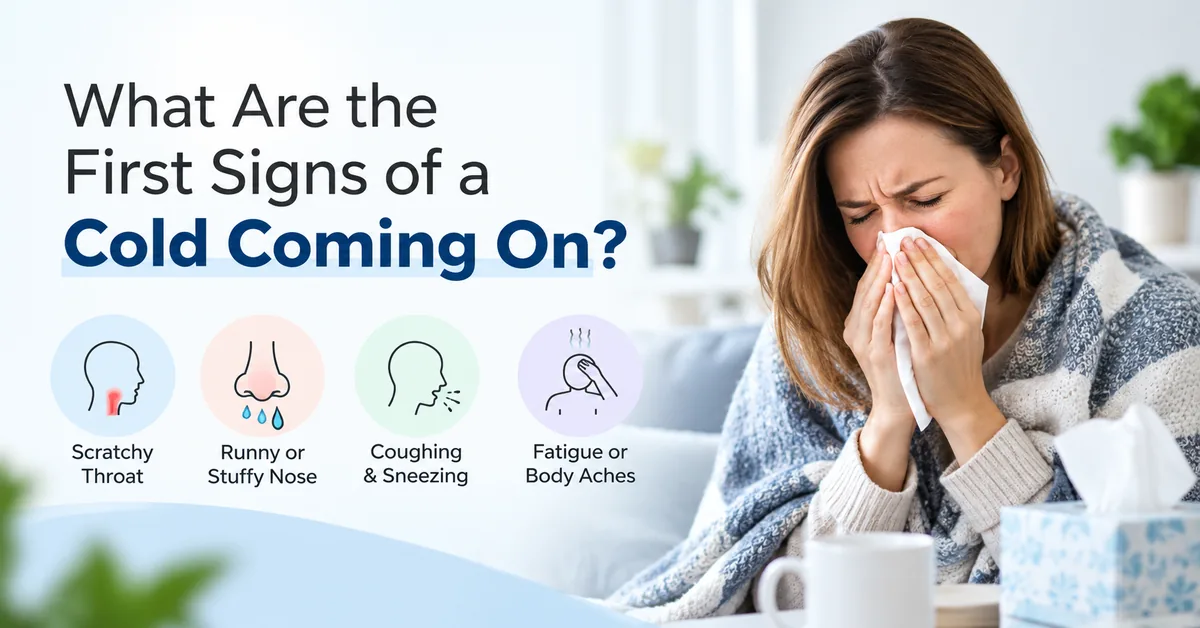
The common cold is a viral infection of the upper respiratory tract. Symptoms commonly include a runny or blocked nose, sneezing, sore throat, cough, headache, and sometimes mild body aches or a low-grade fever. Symptoms often peak within the first few days and then gradually improve.
Signs that may point toward a cold
- Symptoms develop gradually over a few days
- Runny or stuffy nose
- Sore or scratchy throat
- Sneezing and coughing
- Mild fatigue or body aches
- Possible low-grade fever, particularly in children
- Nasal mucus may change from clear to thicker or colored during the illness
- Symptoms generally begin improving within about a week
A cough or runny nose can sometimes continue after the other symptoms have improved, so not every cold will follow exactly the same timeline.
When a cold may need further evaluation
If respiratory symptoms last more than 10 days without improvement, become severe, or improve and then return or worsen, it is worth speaking with a healthcare professional. These patterns can indicate a complication or another condition, including sinusitis.
Allergy Symptoms: What to Look For
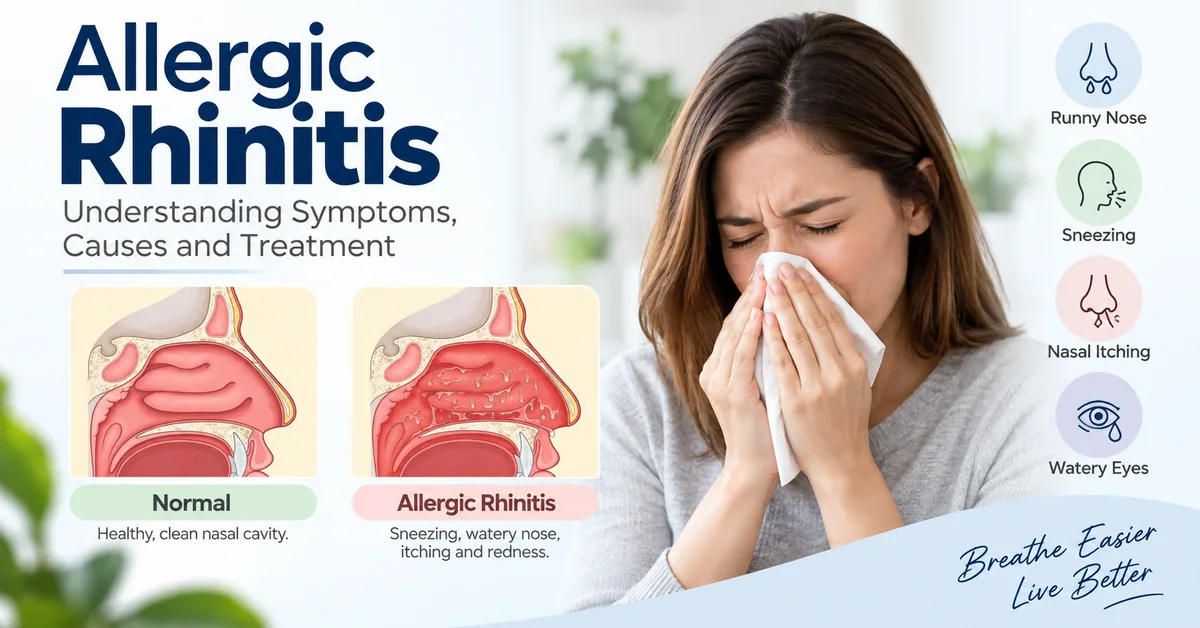
Allergic rhinitis occurs when the immune system reacts to allergens such as pollen, dust mites, pet dander, or other environmental triggers.
Unlike a cold, allergies are not caused by a viral infection and are not contagious.
Signs that may point toward allergies
- Repeated bouts of sneezing
- Itchy nose, throat, or eyes
- Red or watery eyes
- Clear, watery nasal discharge
- Nasal congestion
- Symptoms that appear or worsen after exposure to a particular trigger
- Symptoms that continue while exposure to the allergen continues
- Symptoms that recur seasonally or in particular environments
- Usually no fever
Itchy eyes and nose, repetitive sneezing, clear rhinorrhea, and a history of allergen exposure are particularly useful clues when evaluating allergic rhinitis.
Can allergies cause nasal blockage?
Yes. Allergic inflammation can cause swelling inside the nose, leading to persistent congestion and difficulty breathing through the nose. In some people, allergic rhinitis can also contribute to problems involving the sinuses or ears.
If allergy symptoms are frequent, severe, or interfering with sleep and daily activities, an ENT or allergy specialist can help determine the underlying trigger and appropriate treatment.
Sinus Infection or Sinusitis: What to Look For
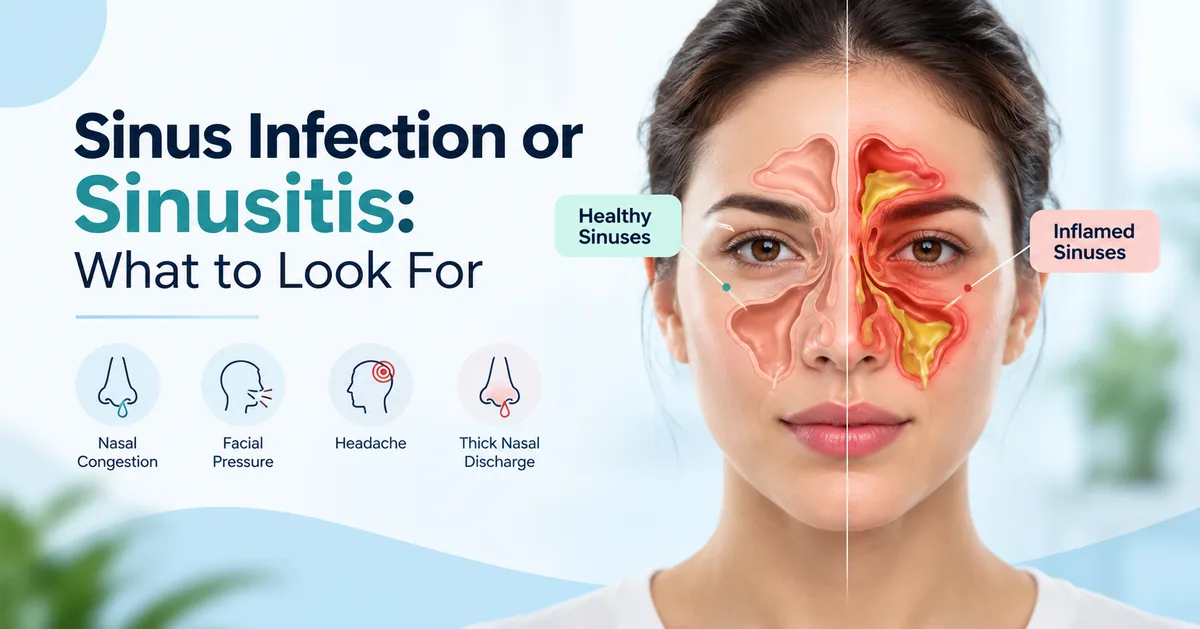
The term sinusitis refers to inflammation of the nose and sinuses. Most episodes of acute rhinosinusitis are caused by viruses rather than bacteria. Therefore, sinus symptoms do not automatically mean that antibiotics are needed.
Common symptoms of sinusitis
- Nasal congestion or blockage
- Nasal discharge
- Facial pressure, pain, or fullness
- Postnasal drainage
- Reduced sense of smell
- Headache
- Cough
- Fatigue
- Sometimes fever
Facial pressure or pain is more meaningful when it occurs together with nasal obstruction and abnormal nasal drainage rather than occurring alone.
When could it be a bacterial sinus infection?
A healthcare professional may suspect acute bacterial rhinosinusitis when:
- Symptoms persist for 10 days or more without meaningful improvement, or
- Symptoms initially improve but then become noticeably worse again (sometimes called “double worsening”), or
- Severe symptoms occur, such as high fever with purulent nasal discharge or significant facial pain for several consecutive days.
These clinical patterns are more useful than mucus color alone when determining whether bacterial sinusitis is likely.
Cold vs. Allergies vs. Sinusitis: A 30-Second Checklist
It may be a cold if:
- Symptoms developed gradually
- You have a sore throat or cough
- You feel mildly tired or achy
- You may have a low-grade fever
- Symptoms begin improving within several days
It may be allergies if:
- Your eyes or nose are itchy
- You sneeze repeatedly
- Your nasal discharge is clear and watery
- Symptoms occur after exposure to pollen, dust, pets, or another trigger
- Symptoms recur seasonally or persist with ongoing exposure
- You do not have a typical fever
Sinusitis may be more likely if:
- Your nose is significantly blocked
- You have persistent nasal drainage
- You have facial pressure, pain, or fullness
- Your sense of smell is reduced
- Symptoms persist for 10 days or more without improvement
- Symptoms improve initially and then become significantly worse
Remember: These are general clues, not a diagnosis. Several conditions can occur at the same time, and an ENT examination may be needed when symptoms are persistent or recurrent.
How Do I Know If It’s a Cold or a Sinus Infection?
Duration and symptom patterns are often more useful than mucus color.
A typical cold should gradually improve. If symptoms remain unchanged for 10 days or more, or if they improve and then become significantly worse, sinusitis becomes more of a consideration.
However, a longer-lasting cold does not automatically mean that you have a bacterial sinus infection. A healthcare professional may need to evaluate your symptoms, medical history, and examination findings before deciding on treatment.
Can Allergies Turn Into a Sinus Infection?
Allergies cause inflammation and swelling inside the nose. This can contribute to nasal blockage and interfere with normal mucus drainage.
People with allergic rhinitis can also experience rhinosinusitis, but allergies and sinusitis are not the same condition. Persistent nasal blockage, facial pressure, abnormal drainage, or recurrent symptoms may require evaluation to determine whether allergies, sinus disease, or another nasal problem is contributing.
Treating the underlying allergic inflammation may be an important part of managing symptoms in appropriate patients.
Why Does My “Cold” Feel Like It Isn’t Going Away?
A cough or nasal symptom can sometimes last beyond the first week of a viral infection. However, symptoms deserve further attention when they:
- Continue for more than 10 days without improvement
- Become severe
- Improve and then suddenly worsen
- Are accompanied by significant facial pain or swelling
- Are associated with persistent or high fever
- Keep coming back
These patterns can indicate sinusitis, another respiratory infection, allergies, or a different underlying nasal or respiratory problem.
When Should You See an ENT Doctor?
Consider seeing an ENT specialist if:
- Your symptoms last more than 10 days without improvement
- Symptoms improve but then become significantly worse
- You have severe or persistent facial pain
- You experience swelling around the eyes
- You have repeated episodes of sinusitis
- Nasal blockage is persistent
- Your sense of smell remains reduced
- Allergy symptoms are affecting sleep or daily activities
- Symptoms keep returning despite treatment
Seek urgent medical attention for serious symptoms such as difficulty breathing, significant swelling around the eyes, severe headache, confusion, vision changes, or other rapidly worsening symptoms.
An ENT specialist can assess the nose, sinuses, throat, and related structures to determine whether symptoms are due to allergies, a viral infection, sinusitis, nasal polyps, a structural nasal problem, or another condition.
Treatment: Cold vs. Allergies vs. Sinusitis
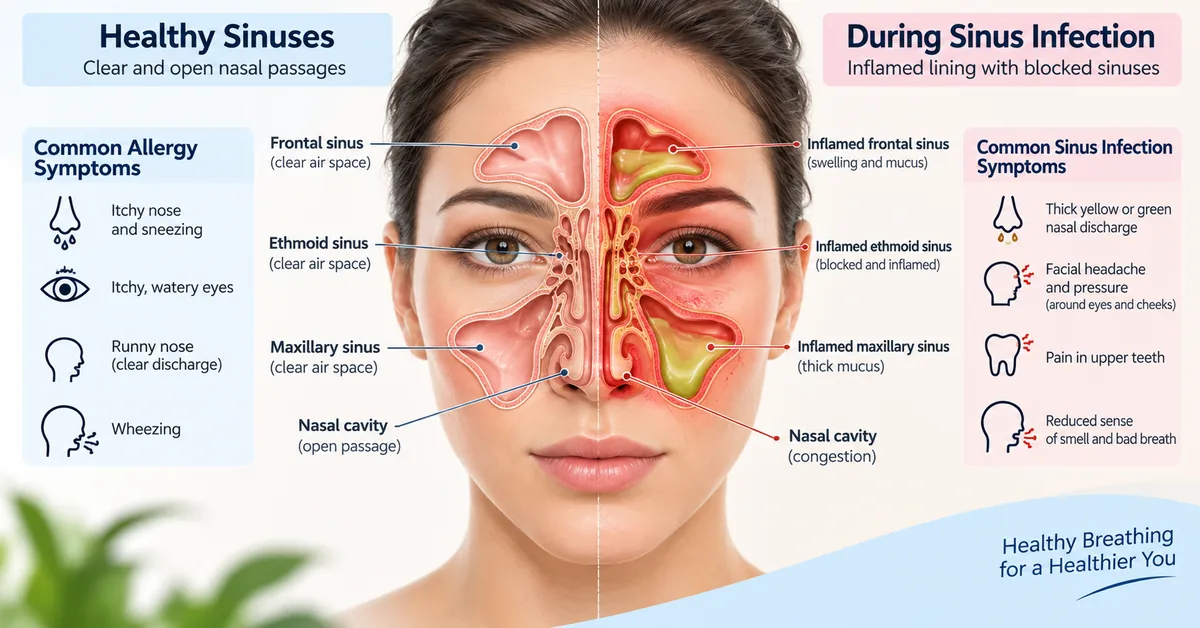
Treatment depends on the underlying cause. The goal is not simply to treat the symptoms but to identify what is causing them.
Treatment for a common cold
Most uncomplicated colds improve without specific treatment.
Depending on your symptoms, supportive measures may include:
- Adequate fluids and rest
- Saline nasal spray or irrigation
- Appropriate pain or fever-relieving medicines
- Honey for cough in appropriate age groups
- Throat lozenges for throat discomfort
Antibiotics do not treat the viruses that cause common colds.
Treatment for allergic rhinitis
Depending on the severity and type of allergy, treatment may include:
- Avoiding or reducing exposure to known triggers
- Saline nasal rinses
- Intranasal corticosteroid sprays
- Appropriate antihistamines
- Other medications recommended by a healthcare professional
- Allergy testing when the diagnosis is uncertain, symptoms do not respond adequately to treatment, or identifying the specific allergen would help guide management
- Allergen immunotherapy in selected patients
Treatment should be individualized according to the patient’s symptoms and medical history.
Treatment for sinusitis
Treatment depends on whether the illness is likely viral, bacterial, recurrent, or chronic.
For uncomplicated acute rhinosinusitis, supportive treatment may include:
- Saline nasal irrigation
- Appropriate pain relief
- Intranasal corticosteroids in selected patients
- Adequate hydration
- Medical observation when appropriate
Antibiotics are not required for every sinus infection. Most rhinosinusitis cases are viral, and antibiotics should be reserved for situations where bacterial infection is suspected and treatment is clinically appropriate.
Do not start antibiotics on your own. An ENT or other qualified healthcare professional can determine whether they are appropriate.
Cold vs. Allergies vs. Sinus Infection: What Is the Biggest Difference?
The easiest way to think about the three is:
Cold: Usually a short-term viral illness with congestion, sore throat, cough, and sometimes mild fever.
Allergies: Usually cause itching, repeated sneezing, clear watery discharge, and symptoms related to allergen exposure.
Sinusitis: More often involves persistent nasal blockage and drainage together with facial pressure, pain, or fullness. Persistent symptoms without improvement for at least 10 days or a pattern of initial improvement followed by worsening can raise concern for acute bacterial rhinosinusitis.
Because symptoms can overlap, an ENT evaluation may be helpful when the diagnosis is unclear or symptoms are persistent or recurrent.
Frequently Asked Questions
What’s the fastest way to tell a cold from allergies?
Look for itching and the pattern of symptoms. Itchy eyes or nose, repeated sneezing, clear watery discharge, and symptoms linked to pollen, dust, pets, or another trigger are more suggestive of allergies. A sore throat, cough, mild body aches, or a short-lived illness are more typical of a cold.
Does green or yellow mucus mean I have a sinus infection?
No. Mucus color alone cannot diagnose a bacterial sinus infection. Nasal mucus can become yellow or green during a normal viral cold. Duration, severity, associated symptoms, and whether symptoms improve or worsen are more useful clues.
Can I have allergies and a cold at the same time?
Yes. Allergic rhinitis and a viral respiratory infection can occur together. When that happens, congestion, sneezing, runny nose, and coughing can become more difficult to interpret.
Can allergies cause sinusitis?
Allergies can contribute to inflammation and nasal blockage and may coexist with or contribute to sinus problems. However, allergic rhinitis and sinusitis are different conditions and may require different approaches to treatment.
Do all sinus infections need antibiotics?
No. Most cases of acute rhinosinusitis are viral. Antibiotics are considered when clinical findings suggest bacterial rhinosinusitis rather than simply because nasal mucus is thick or colored.
When should I see an ENT for sinus problems?
An ENT evaluation may be appropriate when symptoms persist beyond 10 days without improvement, become significantly worse after initially improving, occur repeatedly, cause severe facial pain, or interfere with breathing, sleep, smell, or daily activities.