
Yes, tonsils can grow back after surgery, but this is uncommon, and they almost never grow back to their original size. Regrowth happens mainly when a small amount of tonsil tissue is deliberately or accidentally left behind during surgery. In most children and adults, tonsillectomy gives long‑term relief from infections or sleep‑related breathing problems, and repeat surgery is rarely needed.
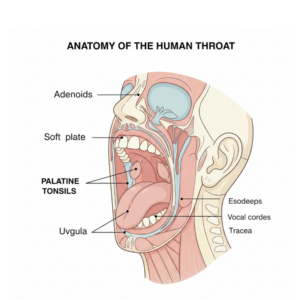
What exactly are tonsils?
Tonsils are small pads of immune tissue at the back of the throat. They help fight germs, especially in young children, but they can also become a problem when they:
- Get infected again and again (recurrent tonsillitis), or
- Become very large and block breathing during sleep (sleep apnoea or loud snoring).
In those situations, an ENT specialist may advise surgery to remove all or most of the tonsils.
Why do tonsils sometimes seem to “grow back”?
After surgery, parents are often surprised to see small lumps at the back of the throat again. This does not usually mean that the full tonsils are back. A few things can happen:
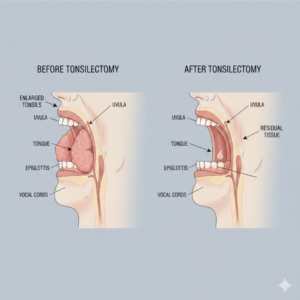
- Small bits of tissue remain: During some types of surgery, a thin layer of tonsil tissue is left on purpose to reduce pain and bleeding risk.
- That tissue can enlarge again: Because tonsils are lymphoid (immune) tissue, the remaining cells can slowly grow, especially in younger children whose immune system is very active.
- Scarring and healing: The healing area can look “bumpy” or uneven, which may give the impression that the tonsils have grown back, even when they have not fully regrown.
Studies suggest that with modern partial tonsil techniques, only about 1–6 out of every 100 children develop noticeable tonsil regrowth, and the need for another operation is even less common.
Partial vs complete tonsillectomy
| Type of surgery | What it means in simple words | Pain & recovery | Chance of tonsil regrowth* | Commonly used for… |
| Partial tonsillectomy (also called intracapsular or tonsillotomy) | Most of the tonsil is removed, but a thin layer is left behind | Usually less pain; faster return to normal eating and school | Small chance (roughly 1–6 in 100; a bit higher in very young children) | Mainly for children with blocked breathing or snoring |
| Complete tonsillectomy (total/extracapsular) | The entire tonsil is removed down to the capsule | More throat pain; recovery can take a few extra days | Very rare – almost no tissue left to grow back | Children or adults with severe infections or mixed problems |
Is regrowth more common in children or adults?
Tonsil regrowth is mainly a childhood issue:
- Children:
- Younger age at the time of surgery (especially under 4 years) is linked with a slightly higher chance of regrowth.
- Children who often have allergies or repeated upper respiratory infections may also have a higher risk.
- Adults:
- True regrowth after a complete tonsillectomy in adults is very rare.
- If an adult feels “something” in the throat after surgery, it is more often due to scar tissue, acid reflux, or another cause rather than a fully regrown tonsil.
Even when regrowth happens, the new tissue is usually smaller, and many patients stay symptom‑free.
Symptoms that may suggest tonsil regrowth
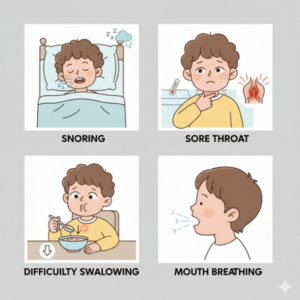
If tonsil tissue grows back enough to cause problems, you might notice:
- Loud snoring or noisy breathing during sleep
- Pauses in breathing, gasping, or restless sleep in a child
- Mouth breathing or blocked nose feeling despite earlier improvement
- Frequent sore throats or throat infections returning
- Trouble swallowing, or the feeling of a lump in the throat
- Change in voice quality, sounding more “nasal”
When should you consult an ENT specialist in Nashik?
You should consider seeing an ENT specialist Dr. Sudarshen Aahire in Nashik if:
- Your child’s snoring or sleep pauses return after initially improving post‑surgery
- There are repeated throat infections again
- You see new swellings at the back of the throat and are unsure what they are
- Your child complains of ongoing throat discomfort or difficulty swallowing
During a visit, the ENT specialist will:
- Take a detailed history of symptoms and past surgery
- Gently examine the throat and neck
- If needed, use a thin flexible camera (endoscope) through the nose to check the tonsil area and adenoids in a child‑friendly way
Frequently asked questions
1. Can tonsils grow back after surgery?
Yes, tonsils can partly grow back if a small amount of tissue was left behind. This is more likely after partial tonsil surgery and is rare after a complete tonsillectomy. In many cases, the new tissue stays small and does not cause problems.
2. Is tonsil regrowth common in children?
No, it is not very common. Studies suggest only a small percentage of children experience noticeable regrowth, and an even smaller number need another surgery. Most children enjoy long‑term relief from breathing or infection problems after one operation.
3. Does partial tonsil surgery increase the risk of regrowth?
Partial tonsillectomy does carry a higher chance of regrowth compared with complete removal because some tissue is left behind. However, it often means less pain, faster recovery and a much lower risk of bleeding, which many parents and surgeons value.
4. How long after surgery can tonsils grow back?
If regrowth happens, it usually develops slowly over months to a few years. Parents may notice snoring or throat symptoms coming back some time after the initial good improvement, rather than immediately after surgery.
5. Do regrown tonsils always need another surgery?
No. Mild regrowth that does not cause symptoms usually just needs observation. A second surgery is only considered if there are significant problems again, such as sleep apnoea, severe snoring, or frequent infections.
6. Is tonsil regrowth dangerous?
By itself, regrowth is not dangerous in most cases. It becomes a concern only if it leads to blocked breathing during sleep, poor growth, daytime sleepiness, or very frequent throat infections. These situations should be assessed by an ENT specialist promptly.
7. Can adenoids also grow back after surgery?
Yes, like tonsils, adenoid tissue can regrow, especially in younger children, but troublesome regrowth is not very common. If nasal blockage or mouth breathing returns, your ENT doctor will also check the adenoids.
8. How can I know if my child’s symptoms are from regrowth or something else?
The only way to be sure is through a proper ENT examination. Symptoms such as snoring and blocked nose can come from allergies, enlarged adenoids, or nasal problems. An ENT specialist in Nashik can examine the throat and nose and explain the exact cause.

Dr. Sudarshen Aahire is a young, talented, and vibrant ENT and Pediatric doctor in Nashik with 12 years of experience. Apart from routine ENT care and surgeries he specializes in the management of Snoring and obstructive sleep apnea surgeries, Endoscopic skull base surgeries, voice-related disorders, and voice surgeries, airway and swallowing disorders.