
Key Takeaways
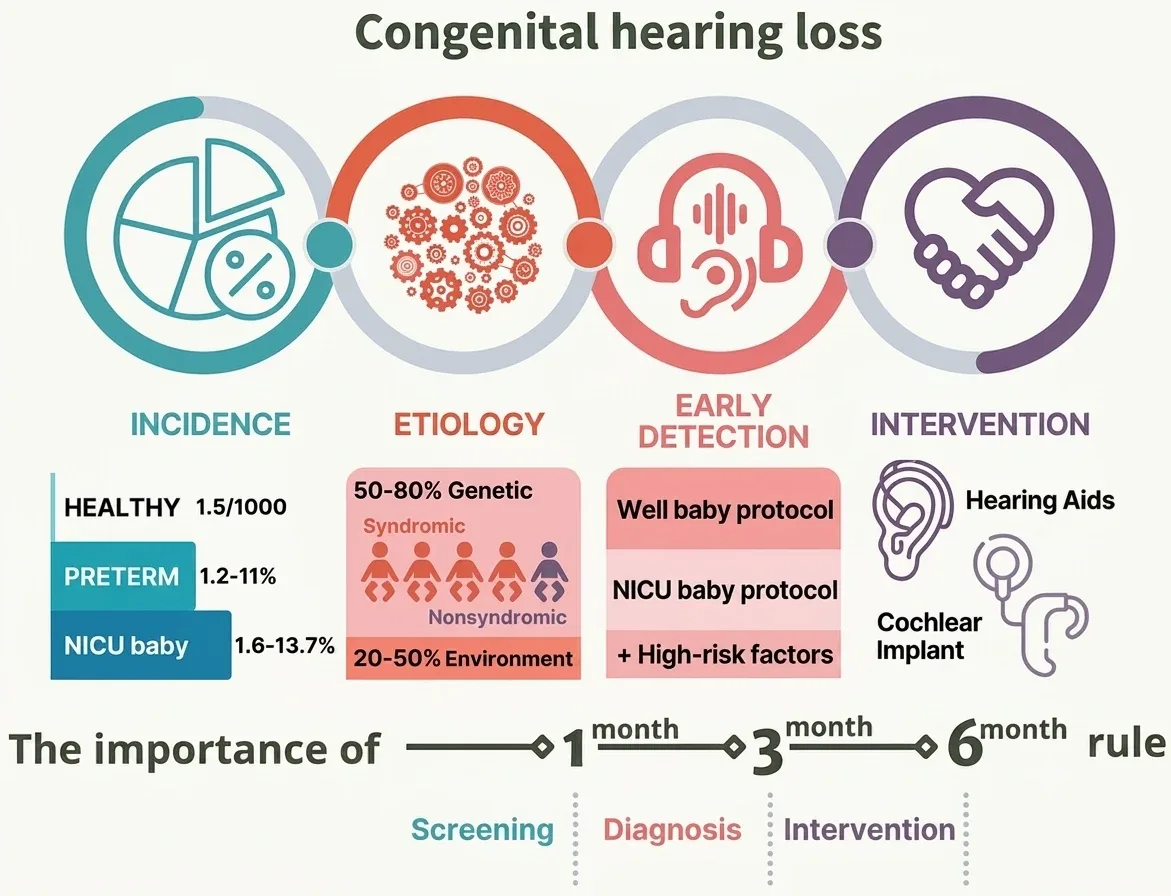
- Congenital hearing loss is present at birth and may be hereditary or caused by prenatal infections, illnesses, toxins, or birth conditions.
- These causes typically produce sensorineural hearing loss ranging from mild to profound in degree.
- Intervention should begin before 6 months of age, as early intervention helps children better develop spoken or sign language skills.
- Cochlear implants can be surgically inserted from as young as 12 months when hearing aids cannot make speech audible.
Congenital hearing loss is a hearing loss present at birth. It can include hereditary hearing loss or hearing loss due to other factors present either in-utero (prenatal) or at the time of birth.
Other causes of congenital hearing loss that are not hereditary in nature include prenatal infections, illnesses, toxins consumed by the mother during pregnancy or other conditions occurring at the time of birth or shortly thereafter. These conditions typically cause sensorineural hearing loss ranging from mild to profound in degree.
Interventions
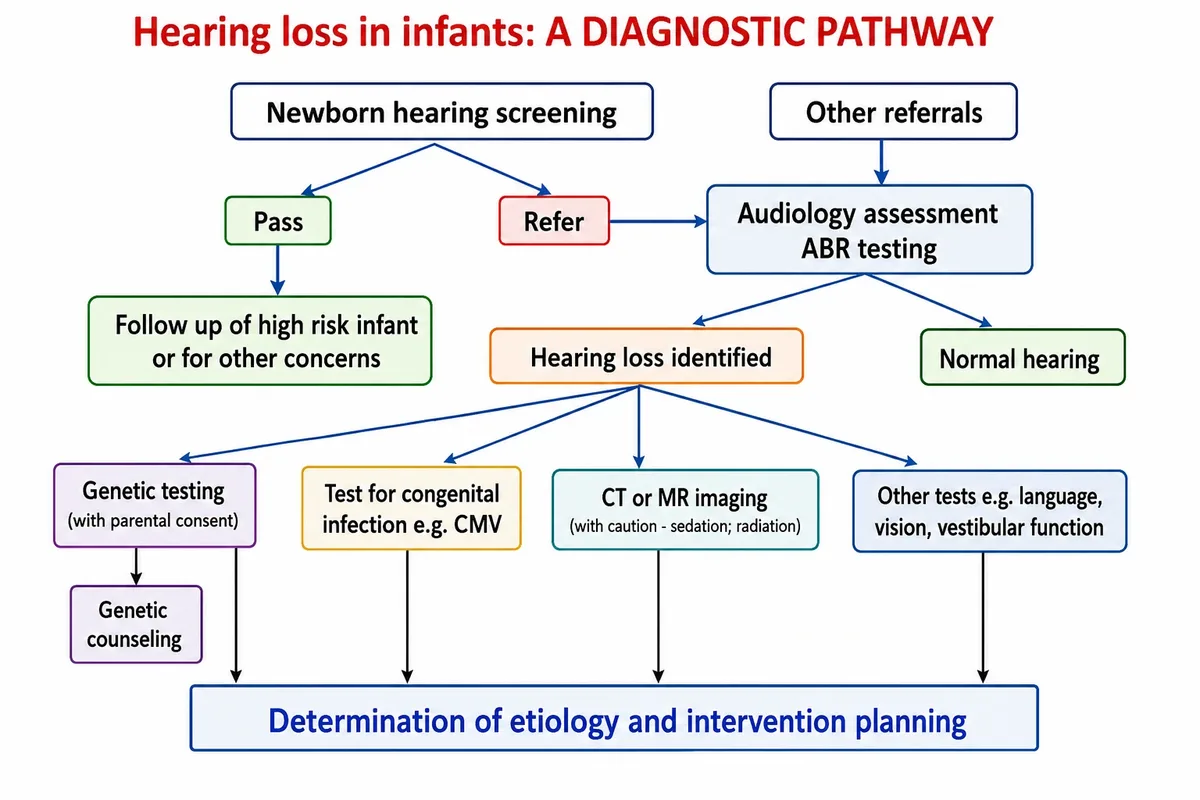
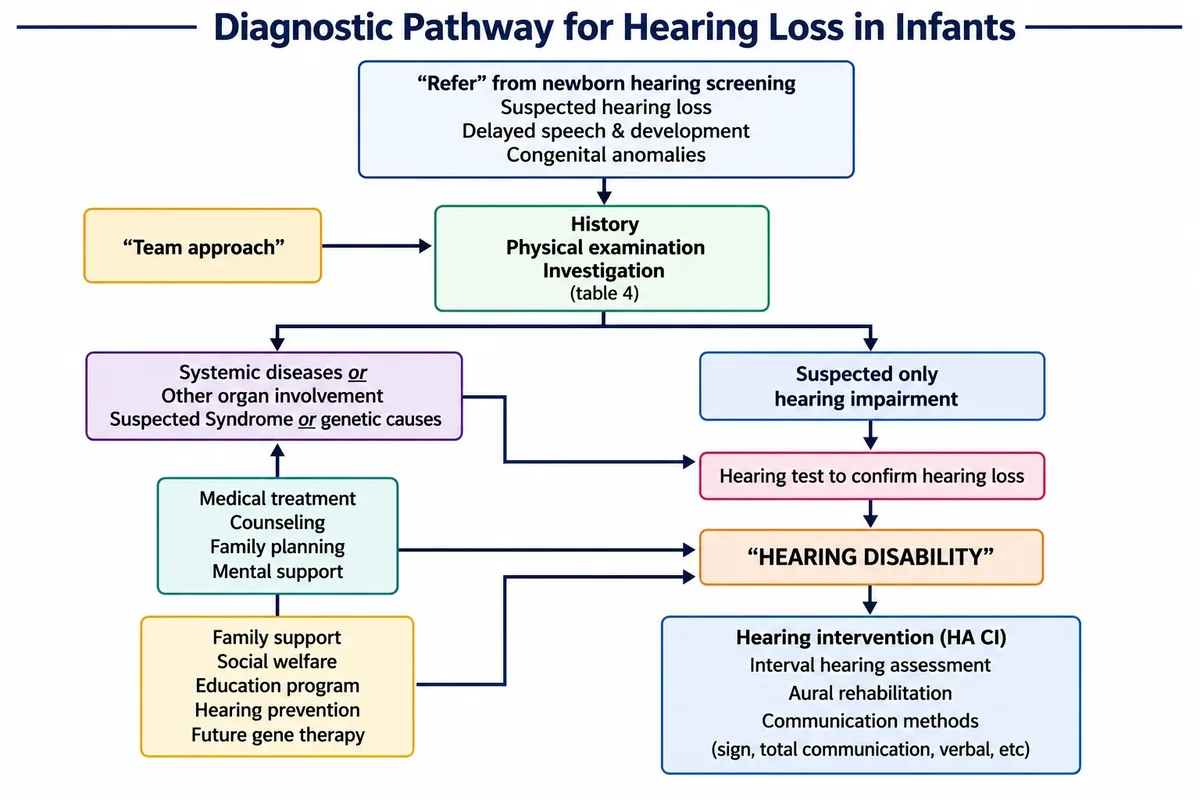
A child with congenital hearing loss should begin receiving intervention before 6 months of age. Studies suggest that children who receive early interventions are better able to develop communication skills (using spoken or sign language). Once a child is diagnosed, doctors or audiologists can counsel the family and provide options for intervention.
Surgery may be recommended if a child has a permanent conductive hearing loss caused by malformations of the outer or middle ear, or by repeated ear infections. Although fluid in the middle ear usually results in only temporary hearing loss, a chronic ear infections can cause a child to fall behind in language skills. In some cases, a doctor may suggest inserting a tube through the eardrum to allow the middle ear to drain. This procedure generally does not require an overnight hospital stay.
Children as young as 4 weeks of age can benefit from a hearing aid. These devices amplify sound, making it possible for many children to hear spoken words and develop spoken language. However, some children with severe to profound hearing loss may not be able to hear enough sound, even with a hearing aid, to make speech audible.
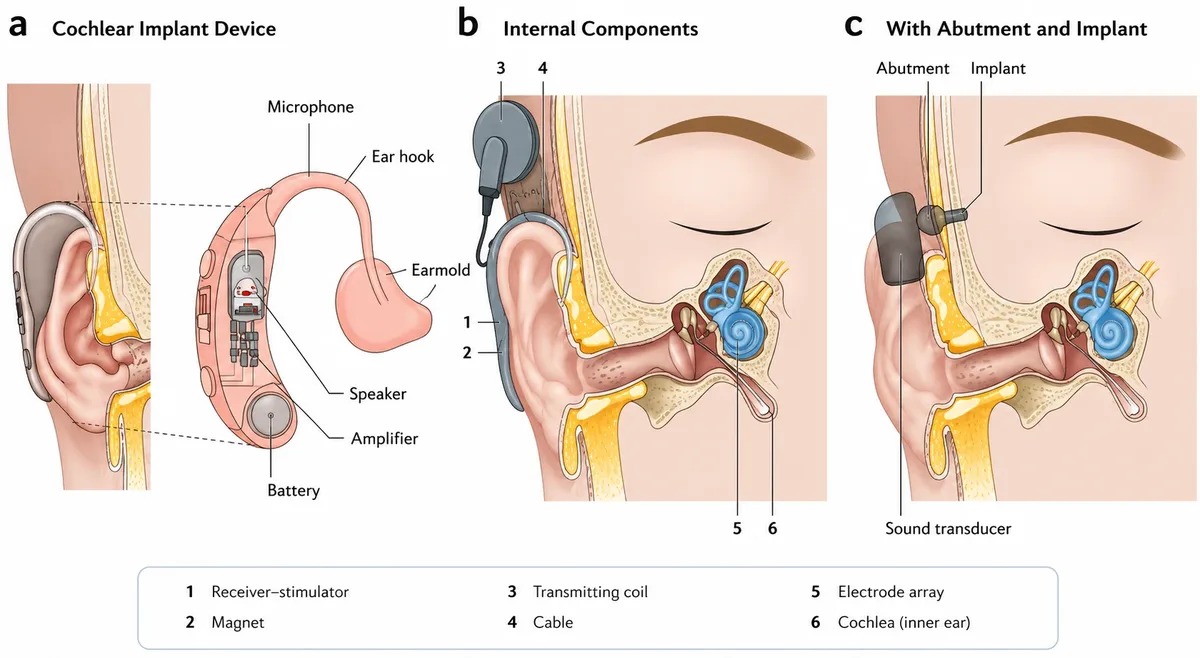
f a child has profound deafness, the benefits of hearing aids are limited. Cochlear implants may be used instead of hearing aids. They can be surgically inserted in the inner ear of children as young as 12 months of age to stimulate hearing. The surgery requires a hospital stay of one to several days. With additional language and speech therapy, children with cochlear implants may learn to understand speech and speak reasonably well, but the amount of improvement is variable.