
That muffled, cotton-wool sensation in your ear, the one that makes sounds seem distant and your own voice echo strangely, is one of the most common reasons patients visit an ENT clinic. A blocked ear feeling can come on suddenly or build up over days. In many cases, the reason behind it is straightforward and not a cause for concern. But in some cases, it points to something that needs medical attention.
This article explains the main causes of a blocked ear feeling, how it is diagnosed, and when you should see a doctor.
Key Takeaways
- A blocked ear feeling is commonly caused by earwax buildup, Eustachian tube dysfunction, ear infections, or pressure changes.
- Most cases improve with proper diagnosis and appropriate treatment.
- Seek medical attention if symptoms last longer than a week or are accompanied by pain, dizziness, or ear discharge.
- Avoid using cotton buds or attempting to remove earwax at home, as this can worsen the blockage and damage the ear canal.
What Causes a Blocked Ear Feeling?
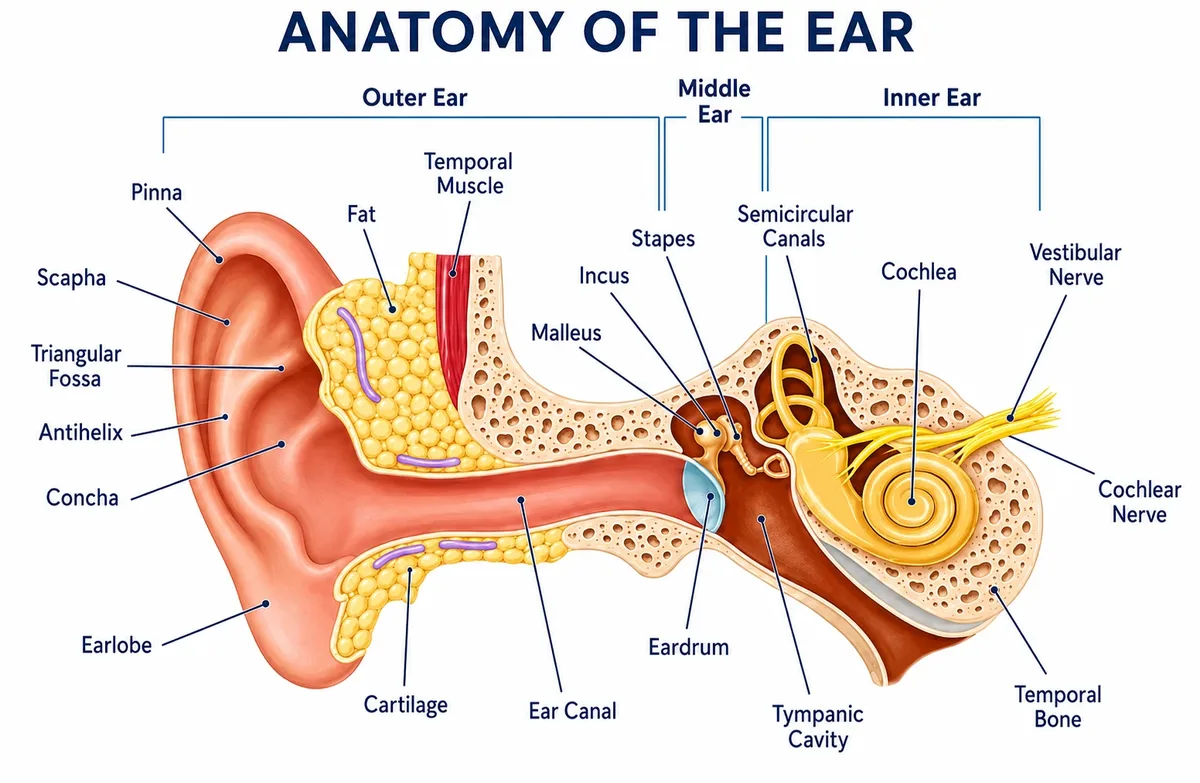
A blocked ear feeling medically called aural fullness is a sensation of pressure, congestion, or muffled hearing in one or both ears. It occurs when normal sound transmission through the ear canal, eardrum, or middle ear is disrupted. The feeling is not always painful, but it can affect hearing and cause significant discomfort.
1. Earwax Buildup (Cerumen Impaction)
Earwax is natural and protective, but when too much accumulates or when cotton buds push it deeper it can block the ear canal and cause that familiar blocked sensation. This is one of the most common and easily treatable causes seen at Aahires ENT Superspeciality Centre in Nashik.
2. Eustachian Tube Dysfunction
A small tube called the Eustachian tube connects the middle ear to the throat and plays an important role in regulating ear pressure. builds up in the middle ear, causing a blocked or full feeling.
3. Ear Infections (Otitis Media or Otitis Externa)
A middle ear infection (otitis media) causes fluid or pus to collect behind the eardrum, creating pressure and muffled hearing. An outer ear infection (otitis externa, also called swimmer’s ear) causes swelling of the ear canal, which physically blocks the passage of sound.
4. Fluid Behind the Eardrum (Glue Ear)
Also called otitis media with effusion, glue ear involves sticky fluid accumulating in the middle ear without active infection. It is especially common in children but can affect adults, particularly after a respiratory illness.
5. Altitude or Pressure Changes
Flying, driving through mountains, or diving can change air pressure faster than the ear can adjust. This creates a temporary blocked ear feeling, often accompanied by a popping sensation.
6. Sinus Congestion and Allergies
Inflammation of the nasal passages and sinuses from allergies or a cold can block the Eustachian tube, indirectly causing ear pressure and a blocked sensation.
7. Foreign Object in the Ear
Small objects, insects, or water trapped in the ear canal can create a blocked feeling. This is more common in children but can occur at any age.
8. Acoustic Neuroma or Other Inner Ear Conditions
In rarer cases, a blocked ear feeling may be linked to inner ear disorders such as Meniere’s disease or an acoustic neuroma, a benign growth on the hearing nerve. These conditions are rare, but they should be excluded through a comprehensive medical assessment.
Signs and Symptoms of a Blocked Ear Feeling
A blocked ear feeling may present alongside the following symptoms:
- Muffled or reduced hearing in one or both ears
- A sensation of pressure or fullness inside the ear
- Popping, crackling, or clicking sounds when swallowing or yawning
- Tinnitus ringing, buzzing, or hissing in the ear
- Mild earache or discomfort
- Dizziness or a slight loss of balance
- Your own voice sounding louder or echoing (autophony)
If symptoms are mild and appear after a cold or flight, they often resolve on their own. However, symptoms that persist beyond a week or that come with fever, severe pain, or sudden hearing loss need prompt medical review.
How Is a Blocked Ear Feeling Diagnosed?
An ENT specialist will begin with a thorough history of your symptoms when they started, whether the blockage is in one or both ears, and any recent illness or travel. The examination typically includes:
Medical History and Symptom Assessment
The evaluation begins with a detailed discussion about your symptoms, including when they started, whether one or both ears are affected, and if you have recently had a cold, allergy flare-up, air travel, or any other illness.
Otoscopy
Using a lighted instrument called an otoscope, the ear canal and eardrum to look for earwax buildup, infection, fluid, or other abnormalities.
Tympanometry
This quick and painless test assesses how well the eardrum moves and measures pressure within the middle ear. It is particularly useful for detecting fluid behind the eardrum or problems with the Eustachian tube.
Pure Tone Audiometry
A hearing test may be performed to determine the type and severity of any hearing loss associated with the blocked ear sensation.
Nasal Endoscopy
If a nasal or sinus condition is suspected, a nasal endoscopy may be recommended to examine the nasal passages and identify any underlying issues.
Accurate Diagnosis Guides Effective Treatment
A thorough ENT evaluation helps identify the exact cause of the blocked ear sensation, ensuring that treatment is targeted, effective, and appropriate for your condition.
Effective Treatment Options for a Blocked Ear Feeling
Treatment depends entirely on the underlying cause. Common approaches include:
Earwax Removal
Earwax buildup can be safely removed using microsuction or ear irrigation performed by a trained ENT specialist. Avoid using cotton buds, as they often push wax deeper into the ear canal and can worsen the blockage.
Decongestants and Nasal Sprays
When blocked ears are caused by Eustachian tube dysfunction related to colds or allergies, short-term use of decongestants or nasal corticosteroid sprays may help reduce inflammation and restore normal ear pressure.
Antibiotic or Antifungal Ear Drops
Bacterial and fungal infections of the outer ear are commonly treated with medicated ear drops prescribed by a healthcare professional.
Oral Antibiotics
Middle ear infections that do not improve with supportive care may require a course of oral antibiotics.
Valsalva Manoeuvre
For mild ear blockage caused by changes in altitude, gently pinching the nose, closing the mouth, and blowing softly can help equalise pressure and relieve symptoms.
Grommets (Ventilation Tubes)
Persistent glue ear or recurrent fluid buildup in the middle ear may require a minor surgical procedure to insert tiny tubes into the eardrum, allowing fluid to drain and pressure to equalise.
Allergy Management
Long-term management of allergic rhinitis with antihistamines, nasal sprays, or immunotherapy can help reduce recurring episodes of ear blockage.
Importance of an Accurate Diagnosis
Most cases of blocked ears improve with appropriate treatment. However, obtaining an accurate diagnosis is essential, as self-treatment can sometimes delay proper care or worsen the condition.
When Should You See a Doctor?
Consult an ENT specialist if you experience any of the following:
- Blocked ear feeling lasting more than 7 to 10 days
- Sudden or significant hearing loss in one or both ears
- Ear pain that is severe or worsening
- Discharge or bleeding from the ear
- Dizziness, vertigo, or balance problems alongside ear symptoms
- Fever with ear symptoms, particularly in children
- Blocked ear feeling with no obvious cause such as a recent cold or air travel
These are signs that the underlying cause needs professional evaluation. Early assessment often leads to faster, more effective treatment.
Experiencing a blocked ear feeling in Nashik? Consult Dr. Sudarshen Ahire at Aahires ENT Superspeciality Centre for a thorough ear examination and personalised treatment. Early assessment leads to faster relief.
FAQs
Can Allergies Cause a Blocked Ear Feeling?
Yes. Allergic rhinitis, commonly known as hay fever, can cause inflammation in the nasal passages and block the Eustachian tube, resulting in a feeling of pressure or fullness in the ears. Proper allergy management with antihistamines or nasal corticosteroid sprays often helps relieve these symptoms.
Can a Blocked Ear Feeling Go Away on Its Own?
Yes. In many cases, especially when caused by a cold, mild Eustachian tube dysfunction, or changes in altitude, the blocked sensation resolves within a few days as the underlying condition improves. However, if the feeling persists for more than 7 to 10 days or is accompanied by pain or hearing loss, it is advisable to consult an ENT specialist.
Is a Blocked Ear Feeling a Sign of Hearing Loss?
Not necessarily. A blocked ear sensation often leads to temporary muffled hearing due to physical obstruction or pressure changes rather than permanent hearing loss. However, if the underlying cause is not treated or involves the inner ear, some degree of hearing impairment may occur. An audiometry test can help determine whether hearing has been affected.
Can Allergies Cause a Blocked Ear Feeling?
Yes. Allergic rhinitis, commonly known as hay fever, can cause inflammation in the nasal passages and block the Eustachian tube, resulting in a feeling of pressure or fullness in the ears. Proper allergy management with antihistamines or nasal corticosteroid sprays often helps relieve these symptoms.
Is It Safe to Use Cotton Buds to Relieve a Blocked Ear?
No. Cotton buds are not recommended for cleaning the ears. They frequently push earwax deeper into the ear canal, which can worsen blockage and may even damage the ear canal or eardrum. Earwax removal should always be performed by a trained ENT professional using safe and appropriate techniques.
When Should I See an ENT Specialist for a Blocked Ear?
You should consult an ENT specialist if the blocked sensation lasts for more than a week, is associated with severe pain, ear discharge, sudden hearing loss, fever, dizziness, or occurs without an obvious cause. Early evaluation helps identify the underlying problem and ensures timely treatment.