
Medically reviewed by Dr. Sudarshen Aahire, MS (ENT), ENT & Head-Neck Surgeon, Nashik
If you need a decongestant nasal spray every few hours just to breathe, you are probably dealing with rebound congestion. Doctors call it rhinitis medicamentosa, and many people simply call it nasal spray addiction. It happens when a spray meant for a few days is used for weeks. The good news is that it’s common and treatable, and most people breathe normally again once they stop the right way.
The spray itself isn’t the problem. Used for a few days during a bad cold, it does its job well. The trouble starts when the bottle becomes part of your daily routine: at your bedside, in your bag, in the car.
Key Takeaways
- Decongestant sprays (xylometazoline, oxymetazoline) are for short-term use only. Most labels allow 3 to 7 days.
- Using them longer makes the nose swell more each time the effect wears off. This is rebound congestion.
- It’s a physical reaction of the nasal lining, not a weakness or a “bad habit”.
- You can stop. The worst stuffiness usually settles within 1 to 2 weeks.
- An ENT can make quitting easier and check for a hidden cause, such as allergies or a deviated septum.
What Is Nasal Spray Overuse (Rebound Congestion)?
Rebound congestion is what happens when you overuse a decongestant nasal spray: your nose becomes dependent on it to stay open. The medical name, rhinitis medicamentosa, simply means a blocked nose caused by a medicine.
It isn’t an addiction in the usual sense, because there is no “high”. Your nasal lining has adjusted to the spray, so it swells up when the spray wears off.
Why Does a Decongestant Spray Stop Working?
A decongestant spray stops working well because the nose gets used to it. Each dose shrinks the swollen blood vessels inside your nose. When it wears off, those vessels swell back, often more than before.
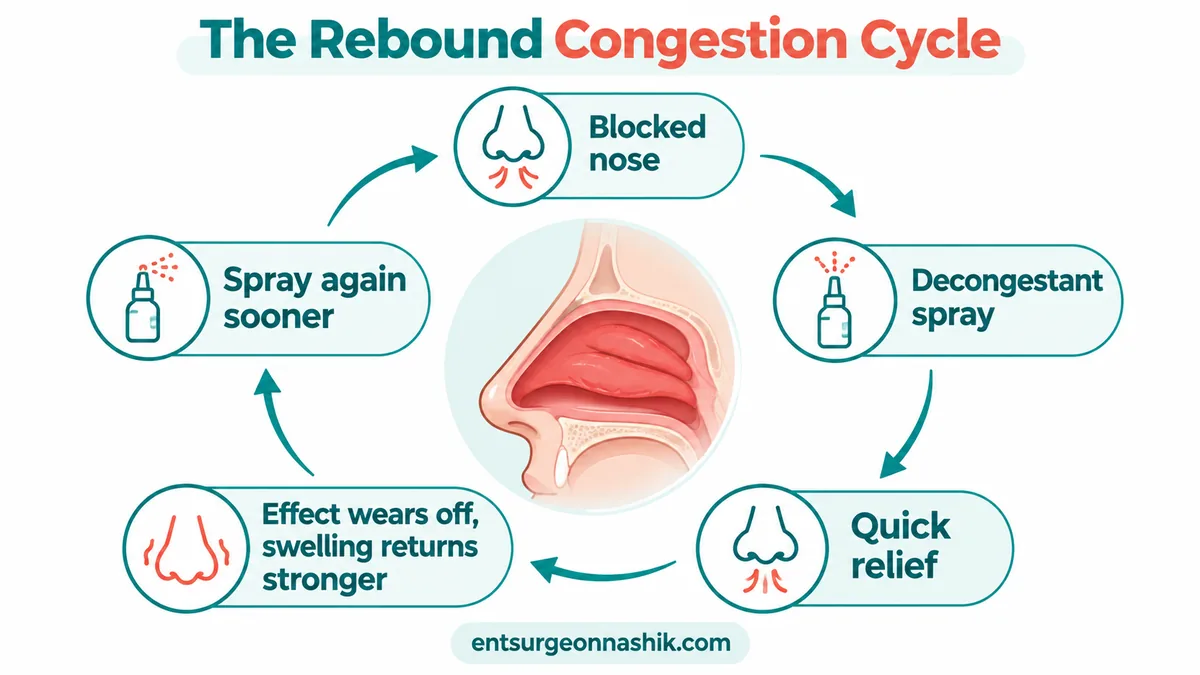
So you spray again, and each time the relief is shorter and the blockage worse. Over days and weeks, this turns into a loop that is hard to break on your own.
The rebound cycle, step by step
- Your nose is blocked from a cold, an allergy or pollution.
- You use the spray and get quick relief.
- After a few hours the effect fades, and the swelling comes back stronger.
- You spray again, sooner than last time.
- Within a few days to a few weeks of regular use, your nose can’t stay open without the spray.
Signs You May Be Dependent on Your Nasal Spray
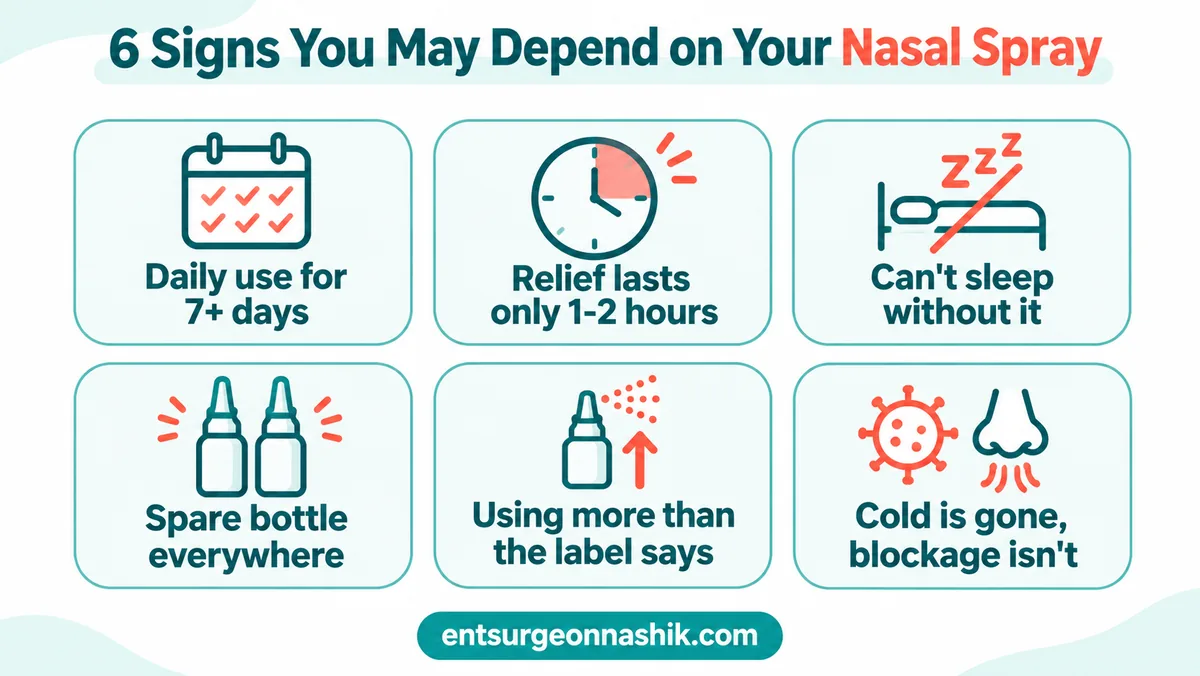
You may be dependent if you can’t sleep, work or travel without your spray. The most common signs are:
- You have used it every day for more than a week
- You use it more often than the label says
- Relief lasts only an hour or two
- Both nostrils block up as soon as it wears off
- You carry a spare bottle everywhere “just in case”
- You feel anxious when you run out
- Your cold or allergy ended long ago, but the blockage didn’t
Otrivin, Nasivion or Saline: Which Sprays Cause Rebound?
Only decongestant sprays cause rebound congestion. Saline sprays and doctor-prescribed steroid sprays do not.
| Type of spray | Common ingredients | Causes rebound? | Safe for daily use? |
|---|---|---|---|
| Decongestant | Xylometazoline, oxymetazoline | Yes, after regular use | No, short-term only |
| Saline (salt water) | Sodium chloride | No | Yes |
| Steroid (prescribed) | Fluticasone, mometasone, budesonide | No | Yes, when advised by a doctor |
| Antihistamine (prescribed) | Azelastine | No | As advised by a doctor |
Good to know: steroid sprays take a few days to start working, which is why many people give up on them too early.
Is It Harmful to Use Nasal Spray Every Day?
Yes. Using a decongestant spray every day for months can harm your nose. It keeps the lining irritated and swollen, and it hides whatever blocked your nose in the first place.
Long-term overuse can lead to:
- A constantly stuffy nose that no longer responds to the spray
- Dryness, crusting and occasional nosebleeds
- Poor sleep, snoring and mouth breathing
- A weaker sense of smell
- In rare long-term cases, damage to the nasal lining that needs treatment
If you have high blood pressure, a heart condition or a thyroid problem, be extra careful, because decongestants can affect blood pressure.
How to Stop Using Nasal Spray Safely
The safest way to stop is with a plan, not willpower alone. Stopping all at once works for some people, but the first few nights can be hard. An ENT can make it much easier.
What usually helps
- One nostril at a time: stop the spray in one nostril first. Once that side opens up, stop the other.
- Switch to saline: use a saline spray or rinse whenever you feel the urge to use the decongestant.
- Steroid spray, if prescribed: it calms the swelling while you come off the decongestant.
- Sleep with your head raised: an extra pillow helps at night. See our tips on how to sleep with a stuffy nose.
- Treat the original cause: allergies, dust, pollution or a structural problem in the nose.
What to expect while quitting
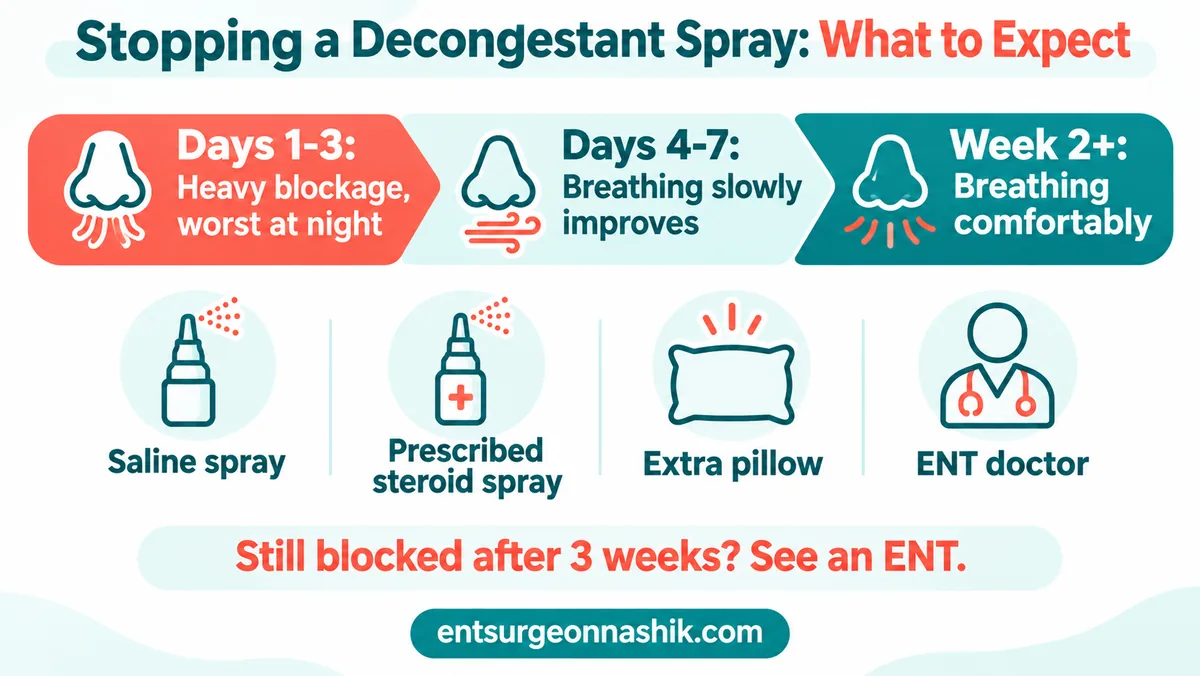
- Days 1 to 3: heavy blockage, especially at night. This is the hardest part.
- Days 4 to 7: breathing slowly improves through the day.
- Week 2 onwards: most people breathe comfortably without the decongestant.
If you still feel blocked after 2 to 3 weeks, something else is probably going on, and an ENT should check.
When to See an ENT for Nasal Spray Dependence
See an ENT if you have tried to stop and couldn’t, or if you have used the spray for more than a month. An ENT finds out what started the blockage and helps you stop without the rough nights.
Book a visit if you notice any of these:
- You’ve tried to stop more than once and couldn’t
- One side of your nose is always more blocked
- Frequent nosebleeds, crusting or a bad smell from the nose
- Snoring or poor sleep that affects your day
- Loss of smell
- You have high blood pressure and use a decongestant regularly
At the clinic, the doctor may look inside your nose with a thin camera, called nasal endoscopy. It shows whether a deviated septum, swollen turbinates, nasal polyps or allergy-related swelling is behind your symptoms.
Treatment Options at an ENT Clinic
Most people come off the spray with medicines and a simple plan. A small number need a minor procedure, when a structural problem keeps the nose blocked.
- Medical plan: steroid spray, saline rinses and a schedule for reducing the decongestant
- Allergy care: allergy testing and treatment if an allergy is the root cause
- Turbinate reduction: a short procedure to shrink swollen tissue inside the nose
- Septoplasty: straightening a deviated septum that blocks airflow
Good to know: many people who have used a decongestant spray for months, even years, don’t realise they can stop. With the right plan and support from an ENT, most people breathe normally without the spray within a few weeks.

Get Help for Nasal Spray Dependence in Nashik
If your nasal spray has become a daily need, you don’t have to quit alone. Dr. Sudarshen Aahire, ENT & Head-Neck Surgeon in Nashik, helps patients stop decongestant sprays safely and treats the cause of the blockage. Call +91 83798 35125 or WhatsApp us to book a consultation.
Frequently Asked Questions
Is Otrivin addictive?
Otrivin isn’t addictive like a drug, but your nose can become dependent on it. Its active ingredient, xylometazoline, causes rebound swelling when used for more than a few days in a row.
How long does rebound congestion last after stopping?
For most people, the worst lasts 3 to 7 days and settles within 2 weeks. If the blockage continues after 3 weeks, see an ENT to check for another cause.
Which nasal spray is safe to use every day?
Saline sprays are safe to use every day. Steroid sprays are also safe long-term when a doctor prescribes them. Decongestant sprays are not meant for daily use.
Can nasal spray overuse damage my nose permanently?
Most of the effects settle once you stop. Very long-term overuse can damage the nasal lining, so it’s best to stop early and get checked if you’ve used the spray for months.
Can I use a decongestant nasal spray during pregnancy or for my child?
Ask your doctor first. Pregnancy often causes a blocked nose on its own, and children need products and doses made for children. Saline drops are usually the safest first step.
Do I need surgery to stop using nasal spray?
Most people don’t. Surgery is considered only when a structural problem, like a deviated septum or swollen turbinates, keeps the nose blocked after you stop the spray.
References
- StatPearls (NCBI): Rhinitis Medicamentosa
- BMJ Case Reports (2021): Rhinitis medicamentosa
This article is for general information and does not replace a consultation with a qualified doctor.