
Yes, a deviated septum can contribute to poor sleep and low energy. When the wall between the nostrils (the septum) is significantly off-center, it can restrict airflow through one or both nasal passages. This can lead to mouth breathing, snoring, disrupted sleep, and reduced oxygen intake overnight, which in turn can cause daytime fatigue, poor concentration, and irritability. Not everyone with a deviated septum has symptoms, and severity varies, but when airflow is meaningfully restricted, sleep and energy are often the first things affected.
What Is a Deviated Septum?
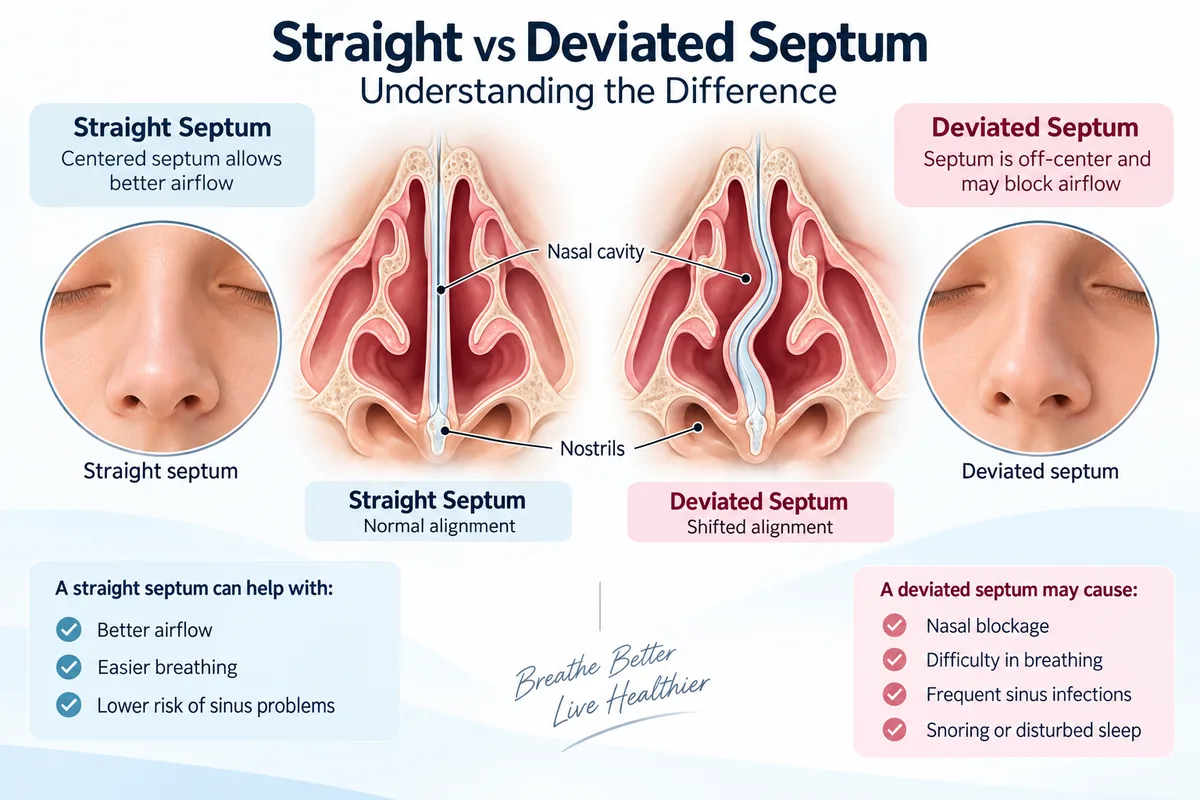
The nasal septum is the thin wall of cartilage and bone that divides the nose into two nostrils. In an ideal world, it sits perfectly centered, but in most people, it’s at least slightly off-center. A deviated septum refers to a more significant shift to one side, which can narrow one nasal passage and restrict airflow.
A deviated septum can be present from birth or result from an injury to the nose later in life. Many people live with mild deviations and never notice symptoms. Problems tend to appear when the deviation is significant enough to obstruct normal breathing, especially during sleep.
How a Deviated Septum Affects Sleep
Nasal breathing plays an important role in restful sleep. When one or both nasal passages are restricted, the body often compensates in ways that interfere with sleep quality.
Common sleep-related effects
- Increased mouth breathing: Restricted nasal airflow often forces breathing through the mouth, which is less efficient and can dry out the throat.
- Snoring: Narrowed airways increase turbulence in airflow, a common cause of snoring.
- Frequent waking or restless sleep: The body may briefly rouse itself to reopen the airway, disrupting deeper sleep stages without the person fully realizing it.
- Worsened sleep apnea symptoms: In people who already have obstructive sleep apnea, a deviated septum can make airflow restriction more severe, though it’s rarely the sole cause.
- Difficulty sleeping on one side: Some people find one nostril is more obstructed than the other, making certain sleep positions more comfortable than others.
Poor-quality sleep doesn’t always look like insomnia. Many people with a deviated septum sleep a full 7–8 hours but still wake up feeling unrested, because the sleep itself was fragmented by airflow restriction.
How It Affects Daytime Energy and Focus
Sleep quality and daytime function are closely linked, so it’s not surprising that restricted nighttime airflow can carry over into the day.
Signs the effects are spilling into your day
- Persistent fatigue despite adequate hours of sleep
- Difficulty concentrating or “brain fog”
- Morning headaches
- Dry mouth or sore throat upon waking
- Irritability or mood changes
- Reduced exercise tolerance, particularly during activities requiring nasal breathing
These symptoms are easy to attribute to stress, poor sleep habits, or general fatigue, which is part of why a deviated septum often goes undiagnosed for years. If fatigue and nasal obstruction are both present, it’s worth considering the two may be connected.
Signs You May Have a Deviated Septum
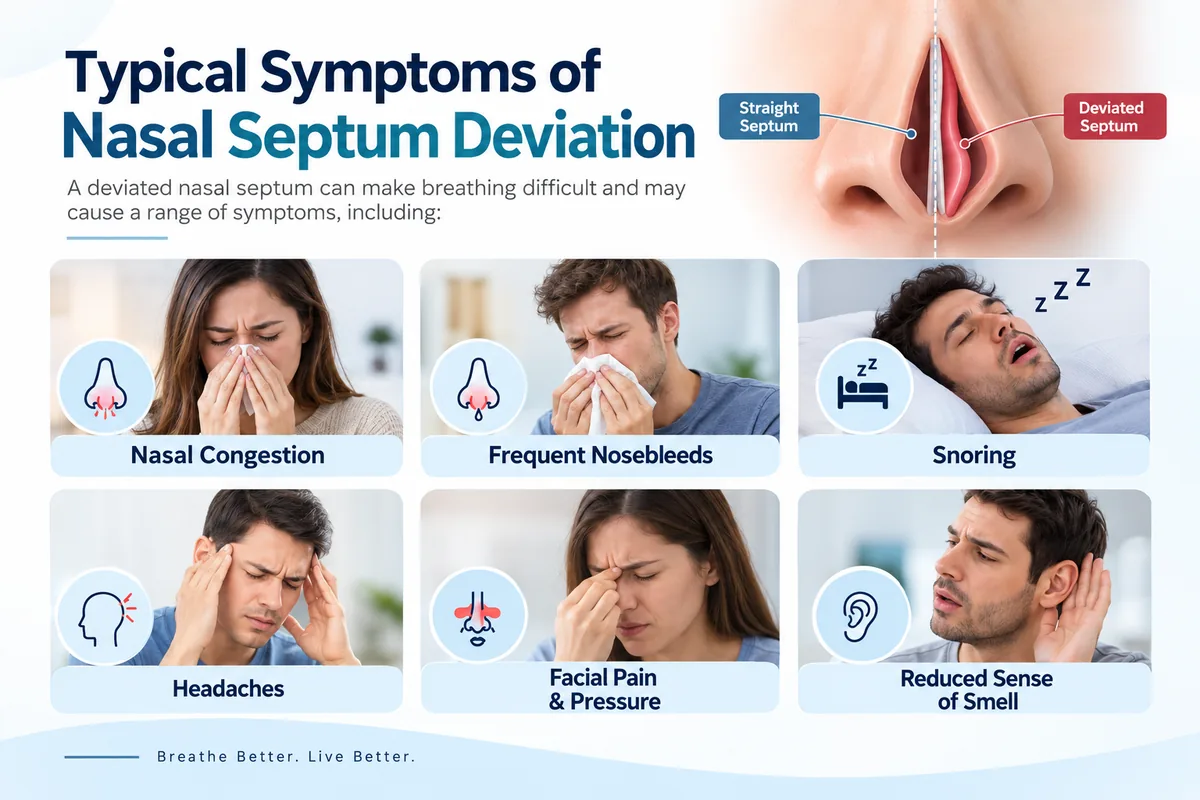
A deviated septum can present in different ways depending on severity and which side is more affected.
Common signs and symptoms
- Nasal congestion, often worse on one side
- Difficulty breathing through the nose, especially during exercise or at night
- Frequent nosebleeds
- Facial pain or pressure
- Loud breathing or snoring during sleep
- Postnasal drip
- Recurrent sinus infections
- Awareness of noisy breathing when lying on a particular side
Symptoms can be constant or may fluctuate, sometimes worsening with a cold, allergies, or upper respiratory infection due to additional swelling in an already-narrowed passage.
When to See an ENT
Not every deviated septum requires treatment. Many people manage well with no intervention at all. However, it’s worth seeing an ENT specialist if you notice:
- Ongoing nasal obstruction that doesn’t improve with allergy or cold treatment
- Snoring or breathing pauses during sleep noticed by a partner
- Persistent fatigue despite adequate sleep
- Frequent sinus infections
- Nosebleeds that occur often or are difficult to control
- Facial pain or pressure that doesn’t resolve
- One nostril that feels consistently more blocked than the other
An ENT can examine the nasal passages, sometimes using a small camera (nasal endoscopy), to determine whether the septum is contributing to your symptoms or whether another issue (such as allergies, nasal polyps, or turbinate enlargement) is involved.
How Septoplasty Helps
Septoplasty is a surgical procedure that straightens the nasal septum to improve airflow through both nasal passages. It’s typically considered when a deviated septum is causing significant, persistent symptoms that haven’t responded to non-surgical treatments like nasal sprays, allergy management, or decongestants.
What septoplasty can improve
- Airflow through the nose, often on both sides
- Reduced snoring related to nasal obstruction
- Improved sleep quality by reducing nighttime airway restriction
- Fewer sinus infections in some patients, due to better sinus drainage
- Reduced daytime fatigue, when poor sleep was linked to nasal obstruction
- Easier nasal breathing during exercise
Septoplasty is generally an outpatient procedure performed under general or local anesthesia. It addresses the structural cause of obstruction rather than just managing symptoms, which is why it can produce more lasting improvement than medication alone in appropriate candidates.
Important: Septoplasty specifically corrects the septum. If sleep apnea or other conditions are also present, additional treatment may be needed alongside surgery for full symptom relief.
What to Expect from Recovery
Recovery from septoplasty varies by individual, but general patterns include:
- Nasal congestion and mild swelling for the first 1–2 weeks
- Light activity restrictions for about 1–2 weeks
- Follow-up visits to monitor healing
- Gradual improvement in airflow over several weeks as swelling resolves
- Full benefits, including sleep and energy improvements, often becoming noticeable over several weeks to a few months
Most people return to work or school within a week, though full recovery and final results can take longer. An ENT can provide a recovery timeline specific to your procedure and health history.
Frequently Asked Questions
Can a deviated septum cause fatigue?
Yes, indirectly. A deviated septum can restrict airflow and disrupt sleep quality, which commonly leads to daytime fatigue, difficulty concentrating, and low energy, even if you’re sleeping a full night.
Can a deviated septum cause sleep apnea?
A deviated septum doesn’t directly cause obstructive sleep apnea, but it can worsen airflow restriction in people who already have it or contribute to snoring and disrupted sleep. An ENT or sleep specialist can determine whether sleep apnea is present and how the septum factors in.
Does septoplasty improve sleep?
Many people report improved sleep quality after septoplasty, particularly if nasal obstruction was a major factor in their sleep disruption. Results vary, and septoplasty may be combined with other treatments if additional causes of poor sleep are present.
How long does it take to feel normal after septoplasty?
Initial congestion and swelling typically improve within 1–2 weeks, but full results, including changes in sleep and energy, can take several weeks to a few months as internal healing continues.
Is a deviated septum the same as nasal polyps?
No. A deviated septum is a structural shift of the cartilage and bone dividing the nostrils. Nasal polyps are soft, noncancerous growths inside the nasal passages. Both can cause nasal obstruction, and an ENT exam can distinguish between them.