
Ear tubes, also called tympanostomy tubes or ventilation tubes, may be recommended for some children who have repeated ear infections, persistent fluid behind the eardrum, hearing difficulties, or complications related to middle-ear problems. However, not every child with an ear infection or speech delay needs ear tubes. Specialists consider the child’s age, number and severity of ear infections, duration of middle-ear fluid, hearing status, speech and language development, and overall health before recommending surgery.
If your child has frequent ear infections, seems to have difficulty hearing, or is experiencing speech or language concerns, an ENT evaluation can help determine whether ear tubes may be appropriate.
Key Takeaways
- Ear tubes are recommended based on infections, fluid, hearing, and speech development.
- Recurrent ear infections typically mean 3+ in 6 months or 4+ in a year.
- Fluid behind the eardrum often clears naturally with observation.
- Ear fluid and speech delay are related but are not the same issue.
- Tubes can reduce some infections but do not guarantee an infection-free ear.
- Most tubes fall out naturally within 6–18 months.
- Hearing or behavioral changes warrant an ENT evaluation.
What Are Ear Tubes?
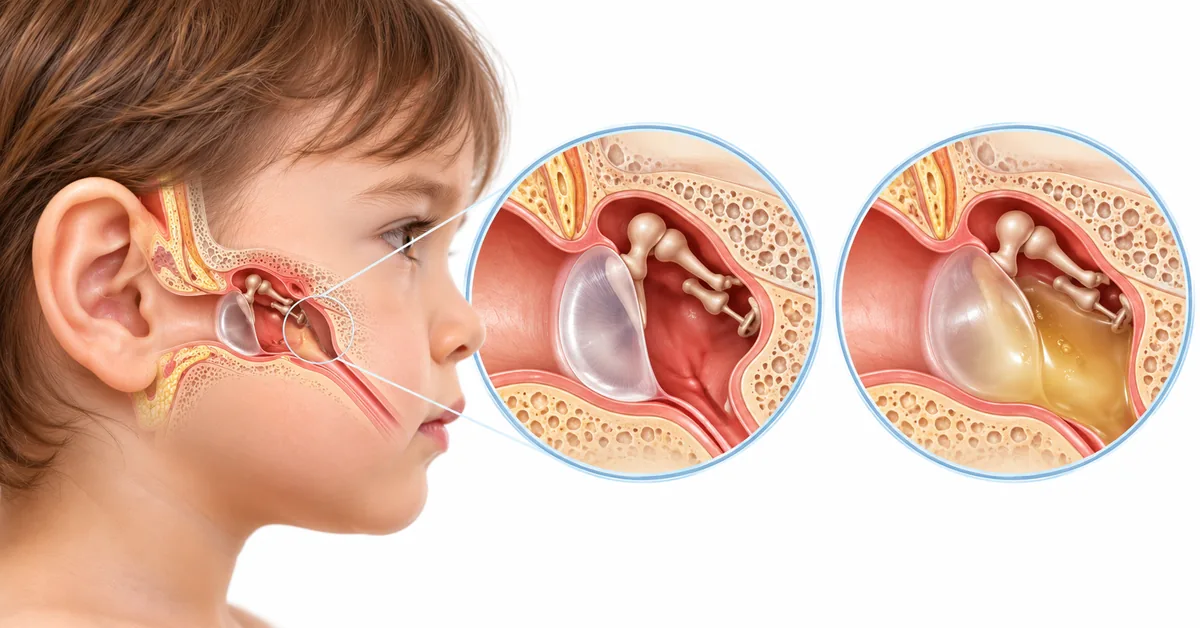
Ear tubes are tiny tubes placed through the eardrum to allow air to enter the middle ear and help prevent fluid from building up behind the eardrum.
The procedure is also called tympanostomy tube placement or ear tube surgery.
Ear tubes are commonly considered in children who have:
- Recurrent acute ear infections
- Persistent fluid behind the eardrum
- Hearing loss caused by middle-ear fluid
- Repeated problems that affect sleep, behavior, hearing, or daily activities
- Certain conditions that increase the risk of developmental or hearing problems
The tubes usually remain in place for several months to a few years, depending on the type of tube used. Most tubes eventually fall out on their own as the eardrum heals.
Why Do Children Need Ear Tubes?
The middle ear is connected to the back of the nose through a small passage called the Eustachian tube. In young children, this tube is smaller and works differently than it does in adults.
After a cold or other upper respiratory infection, the Eustachian tube may not drain properly. Fluid can then collect behind the eardrum.
This fluid can:
- Reduce the movement of the eardrum
- Cause temporary conductive hearing loss
- Contribute to recurrent ear infections
- Make sounds seem muffled
- Affect a child’s ability to hear speech clearly
When fluid persists or ear infections repeatedly occur, an ENT specialist may discuss whether ear tubes could help.
Signs Your Child May Have an Ear Problem
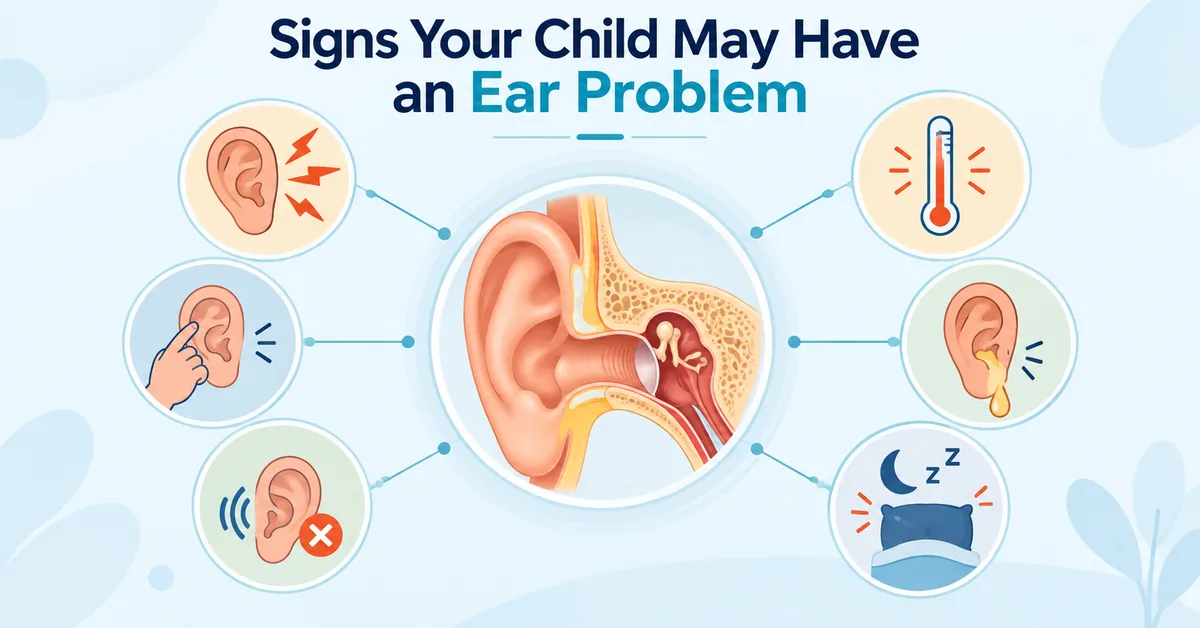
Children do not always tell parents that they cannot hear well. Instead, hearing problems may show up through changes in behavior.
Possible signs include:
- Frequently asking you to repeat yourself
- Turning the television volume up higher than usual
- Not responding when called from another room
- Speaking louder than usual
- Seeming distracted or inattentive
- Difficulty following verbal instructions
- Complaining that their ear feels blocked
- Pulling or rubbing the ear
- Trouble hearing in noisy environments
- Speech that seems unclear for their age
- Changes in behavior, especially after an ear infection
These signs do not necessarily mean your child needs ear tubes. They may indicate that a hearing evaluation or ENT assessment is appropriate.
How Ear Problems Can Affect Hearing
Fluid behind the eardrum can prevent the eardrum and middle-ear bones from moving normally.
This can cause conductive hearing loss, which is often temporary.
For some children, the hearing change is mild and resolves when the fluid clears. In other children, fluid remains for a prolonged period and can interfere with everyday communication.
This is one reason doctors may recommend monitoring the child’s hearing rather than treating every episode immediately with surgery.
Can Ear Fluid Cause Speech Delay?
This is one of the most common concerns parents have.
Persistent middle-ear fluid can cause temporary hearing loss, and reduced hearing can make it harder for a child to consistently hear speech sounds.
However, a speech or language delay does not automatically mean that ear tubes are needed.
Speech and language development can be affected by many factors. If a child has a speech delay, a proper evaluation may include:
- Hearing testing
- Examination of the ears
- Assessment of speech and language development
- Review of the child’s history of ear infections
- Evaluation by a speech-language professional when appropriate
Identifying and treating hearing loss early can be an important part of supporting communication development.
Signs of Possible Speech or Language Delay
Every child develops at a slightly different pace, but parents should discuss concerns with their pediatrician or healthcare professional if a child:
- Is not developing expected communication skills
- Does not appear to understand spoken instructions
- Has difficulty communicating basic needs
- Is difficult to understand for their age
- Stops using skills they previously had
- Does not consistently respond to sounds or their name
- Seems to hear some sounds but not others
A child with speech delay should have their hearing checked even if parents are unsure whether hearing is the problem.
Hearing loss can sometimes be subtle, particularly when it is caused by middle-ear fluid.
How Many Ear Infections Are Too Many?
Doctors may consider ear tubes when a child has recurrent acute otitis media, particularly when infections occur frequently and fluid remains behind the eardrum.
A commonly used definition of recurrent acute otitis media is:
- Three or more ear infections within six months, or
- Four or more ear infections within 12 months, with at least one occurring during the previous six months.
However, the number of infections is not the only factor.
A specialist may also consider whether middle-ear fluid is present between infections, whether the infections are severe, whether hearing is affected, and whether the child has other risk factors.
Therefore, the decision should not be based on the number of infections alone.
Does Every Child With Ear Fluid Need Tubes?
Middle-ear fluid, also called otitis media with effusion (OME), often clears without surgery.
For many otherwise healthy children, doctors may initially recommend observation because the fluid can resolve naturally.
Ear tubes may become an option when fluid persists and is associated with hearing difficulties or other significant concerns.
Children who are at increased risk for developmental difficulties may need a more individualized approach.
This is why an ENT examination and appropriate hearing assessment are important before deciding on ear tube surgery.
When Should My Child See an ENT?
Consider an ENT evaluation if your child has:
- Repeated ear infections
- Persistent fluid in one or both ears
- Suspected hearing loss
- Speech or language concerns
- Difficulty hearing at school or daycare
- Frequent ear pain
- Persistent nasal or breathing problems associated with ear problems
- Ear infections that continue despite appropriate medical treatment
- Concerns about hearing or communication development
An ENT specialist can examine the eardrums and determine whether additional testing, observation, medical treatment, or ear tubes may be appropriate.
What Tests Are Done Before Ear Tubes?
Before recommending ear tubes, your child’s doctor may review the medical history and perform an examination of the ears.
Depending on the child’s age and symptoms, testing may include:
Ear Examination
The ENT examines the ear canal and eardrum to look for infection, fluid, inflammation, or other abnormalities.
Tympanometry
Tympanometry measures how the eardrum responds to changes in air pressure and can help identify fluid or problems with middle-ear function.
Hearing Test
A hearing evaluation helps determine whether middle-ear fluid or another condition is affecting your child’s ability to hear.
The type of hearing test depends on the child’s age and ability to participate.
Speech and Language Assessment
If there are concerns about speech or language development, additional assessment may be recommended.
What Happens During Ear Tube Surgery?
Ear tube placement is usually a short procedure.
For young children, it is generally performed under general anesthesia because they need to remain still during the procedure.
During the operation:
- The ENT makes a very small opening in the eardrum.
- Fluid behind the eardrum may be removed.
- A small ventilation tube is placed into the opening.
- The tube allows air to enter the middle ear and helps prevent fluid from becoming trapped.
The procedure itself is usually brief, and most children go home the same day.
What Should Parents Expect After Ear Tube Surgery?
Most children recover quickly.
Your child’s doctor will provide specific instructions for aftercare and follow-up.
Parents may notice:
- Temporary drainage from the ear
- Mild discomfort
- Improvement in hearing when middle-ear fluid was affecting hearing
- Fewer ear infections in children who were appropriate candidates for tubes
If ear drainage occurs, follow your ENT’s instructions regarding treatment. In some cases, ear drops may be prescribed.
Follow-up appointments help the ENT check that the tubes are functioning properly and that the ears are healing normally.
Can My Child Still Get an Ear Infection With Tubes?
Yes.
Ear tubes reduce the frequency of certain middle-ear infections in appropriate children, but they do not guarantee that ear infections will never happen again.
One difference is that when an infection occurs while a tube is functioning, fluid may drain through the tube into the ear canal. This can make the infection easier to recognize and, in many cases, allow it to be treated with antibiotic ear drops rather than oral antibiotics.
Your child’s ENT will recommend the appropriate treatment based on the examination.
How Long Do Ear Tubes Stay In?
Most temporary ear tubes remain in place for approximately 6 to 18 months, although the exact duration varies depending on the type of tube and the individual child.
Many tubes naturally fall out as the eardrum heals and grows.
Some children may need another set of tubes if significant ear problems return after the first tubes come out.
Longer-lasting tubes may be used in selected situations.
What Are the Risks of Ear Tubes?
Ear tube placement is generally considered a common and safe procedure, but like any medical procedure, it has potential risks.
Possible complications include:
- Ear drainage
- Blockage of the tube
- The tube falling out earlier than expected
- The tube remaining longer than expected
- Scarring or changes in the appearance of the eardrum
- A small opening in the eardrum that does not close after the tube comes out
- Need for another procedure in some children
Your ENT specialist can explain the potential benefits and risks based on your child’s individual situation.
Do Ear Tubes Improve Speech and Development?
This question requires an individualized answer.
If a child has hearing loss because of persistent middle-ear fluid, treating the underlying hearing problem may improve access to speech sounds.
However, ear tubes should not be viewed as a treatment for speech delay itself.
Research has not shown that placing tubes in otherwise healthy young children solely because of persistent middle-ear fluid necessarily improves long-term developmental outcomes compared with appropriate observation in every case.
If speech or language delay is present, hearing evaluation and appropriate developmental or speech-language support remain important.
Ear Tubes: Benefits vs. What Parents Should Know
Potential benefits
- Improve hearing when middle-ear fluid is causing conductive hearing loss
- Reduce certain recurrent ear infections in appropriate children
- Allow treatment of some infections with ear drops
- Improve middle-ear ventilation
- Reduce the impact of persistent fluid on hearing
Important considerations
- Not every child with ear infections needs tubes
- Middle-ear fluid often clears naturally
- Tubes do not prevent every future ear infection
- Surgery requires anesthesia in most young children
- Ear drainage can occur after tube placement
- Some children may eventually need another set of tubes
The decision should be based on the child’s individual medical history rather than on a single symptom.
Frequently Asked Questions
How do I know if my child needs ear tubes?
Your child may be considered for ear tubes if they have recurrent ear infections, persistent middle-ear fluid associated with hearing problems, or other significant ear-related concerns. An ENT specialist will consider the child’s medical history, ear examination, and hearing results before making a recommendation.
Does my child need ear tubes for every ear infection?
No. Most children with an occasional ear infection do not need ear tubes. Tubes are generally considered when ear infections are recurrent or when persistent middle-ear fluid is causing hearing or other problems.
Can ear tubes help a child with speech delay?
They may help when speech concerns are associated with hearing loss caused by persistent middle-ear fluid. However, ear tubes are not a treatment for speech delay itself. A hearing evaluation and, when appropriate, speech-language assessment are important.
Is ear tube surgery painful?
The procedure is performed under anesthesia, so your child should not feel the surgery itself. Some children may experience mild discomfort afterward. Your ENT will provide instructions for managing any postoperative symptoms.
Can my child swim with ear tubes?
Many children with ear tubes can swim without special precautions, particularly in clean, treated swimming pools. However, recommendations may vary depending on the type of tube, swimming conditions, and your child’s individual situation. Ask your ENT whether ear protection is necessary for your child.
Will ear tubes fall out on their own?
Most temporary ear tubes naturally fall out as the eardrum heals, with timing varying from child to child depending on the type of tube used. If a tube falls out before the underlying ear problem has resolved, your child’s ENT may recommend observation or discuss whether another tube is needed.
When should I worry about ear drainage after tubes?
Some drainage can occur after tube placement or during an ear infection. Contact your child’s healthcare provider if drainage is persistent, recurrent, bloody, associated with significant pain, or does not improve with the treatment recommended by the ENT.