Pain or swelling beneath your jaw or tongue, particularly when eating, may sometimes indicate a salivary gland stone. These stones develop when minerals in saliva harden and block the ducts that carry saliva into the mouth. Although some stones are small and cause few symptoms, others can lead to recurring pain, swelling and difficulty eating.
Doctors call this condition sialolithiasis, and it is one of the usual reasons a salivary gland duct gets blocked. Most stones form in the submandibular glands, the pair that sits under the jaw. An early check-up shows where the stone is lodged and whether it is likely to pass on its own or needs treatment.
In this article, we explain the symptoms, causes, diagnostic methods and treatment options for salivary gland stones, including when to consult an ENT specialist in Nashik.
What Are Salivary Gland Stones?
A salivary stone is a hard lump of minerals that builds up inside a salivary gland or in the duct that drains it. Depending on where it sits, it can slow the flow of saliva into the mouth or stop it altogether.
A steady flow of saliva helps you chew, swallow and speak comfortably, and it protects your oral health. When a stone sits in the way, saliva backs up behind it, and the gland can feel tight, painful and swollen.
Stones come in different sizes. A small one can go unnoticed until it starts to block the flow of saliva.
Which salivary glands can develop stones?
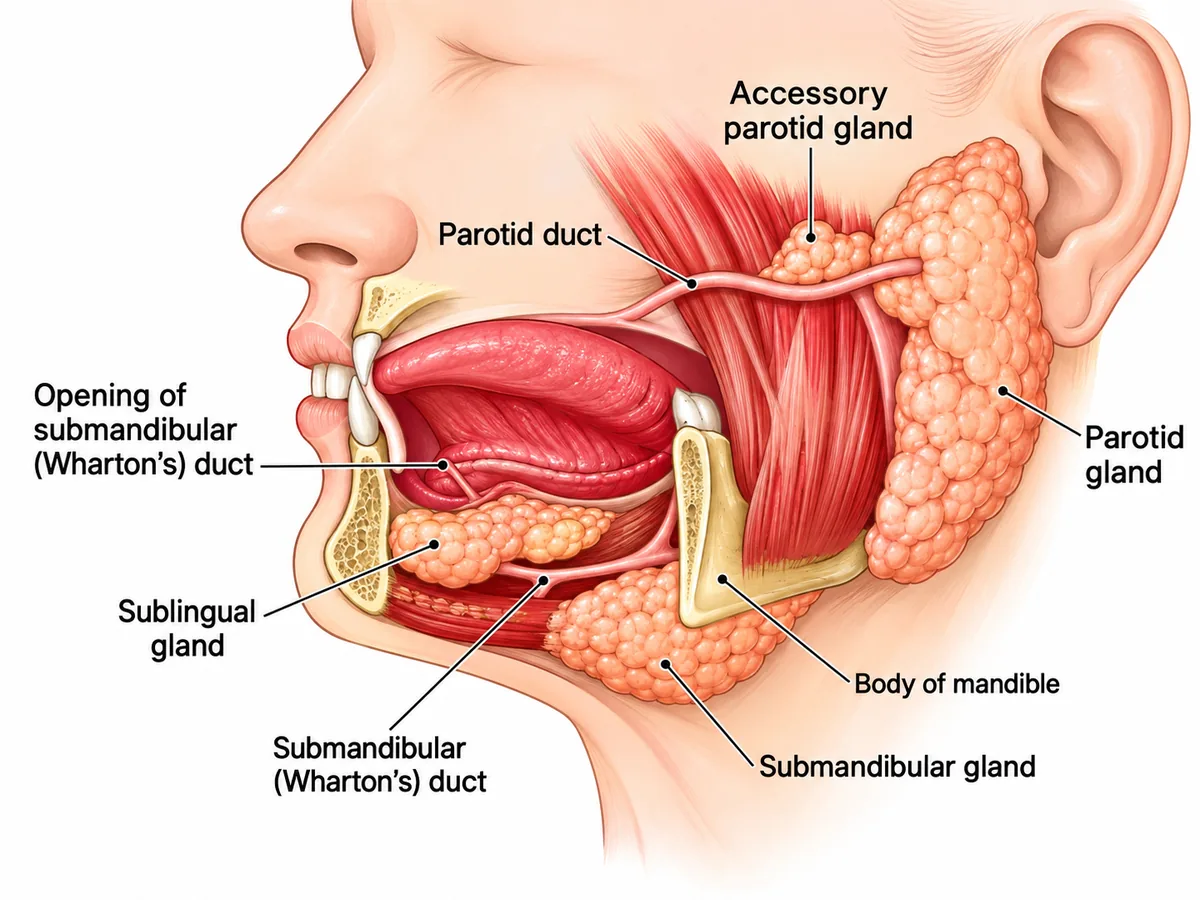
There are three major pairs of salivary glands:
- Submandibular glands: under the lower jaw on each side. Most salivary stones are found here.
- Parotid glands: in front of and just below each ear. A stone here can block the duct that drains the gland.
- Sublingual glands: under the tongue. Stones can form here too, but this is less common.
Why the submandibular glands? The saliva they make is more prone to mineral build-up, and the path their duct takes can slow drainage, which gives a stone more chance to form.
What Are the Symptoms of Salivary Gland Stones?
The symptoms of salivary gland stones depend on the size of the stone, its location and how much it obstructs saliva flow. Some people have no noticeable symptoms, while others experience recurring discomfort.
Common salivary stone symptoms include:
1. Pain while eating
Pain that begins or becomes more noticeable during meals is a characteristic symptom. Eating stimulates saliva production. If a stone blocks the duct, the saliva cannot drain freely, increasing pressure within the gland.
The discomfort may decrease after a few hours as the swelling settles, only to return during the next meal.
2. Swelling beneath the jaw
A stone in the submandibular gland may cause swelling beneath the lower jaw or along the floor of the mouth. The swelling may fluctuate, becoming more noticeable around mealtimes.
3. Swelling near the ear or cheek
When a stone affects the parotid gland, it may cause discomfort or swelling in front of or below the ear, sometimes extending into the cheek.
4. A lump beneath the tongue
A stone located near the opening of a salivary duct may sometimes be visible or felt as a small, firm lump beneath the tongue. However, not every stone can be seen during a self-examination.
5. Dry mouth or an unusual taste
Reduced saliva flow can contribute to a dry feeling in the mouth. Some people may notice an unpleasant or unusual taste, particularly if the gland becomes inflamed or infected.
6. Difficulty swallowing or opening the mouth
Significant swelling and discomfort around the jaw or floor of the mouth may make swallowing or opening the mouth uncomfortable.
7. Signs of infection
A blocked duct can sometimes lead to a secondary infection. Warning signs include increasing pain, redness, fever, tenderness or pus draining into the mouth. These symptoms require prompt medical assessment.
Important: If you develop rapidly increasing swelling under the tongue or jaw, difficulty breathing, or difficulty swallowing saliva, seek emergency medical care.
What Causes Salivary Gland Stones?
Salivary gland stones form when minerals naturally present in saliva accumulate and harden. The precise cause is not always identifiable, and stones can develop even in people without an underlying medical condition.
Several factors may contribute to their formation.
1. Reduced saliva flow
When saliva moves slowly through a duct, minerals may have more opportunity to accumulate and form deposits. Reduced saliva production or drainage can therefore contribute to stone formation.
2. Dehydration
Not drinking enough fluids may reduce saliva production and contribute to thicker saliva. This can make normal drainage less efficient in some people.
3. Certain medications
Some medications can cause dry mouth or reduce saliva production. Examples include certain antihistamines, antidepressants and medicines with anticholinergic effects. Do not stop a prescribed medicine independently; discuss possible side effects with your doctor.
4. Mineral accumulation in saliva
Most stones are made mainly of calcium salts, which build up slowly around a tiny core until they harden into a stone.
5. Previous salivary gland stones
Some people experience recurrent stones. Multiple stones may be present, and an existing obstruction can contribute to repeated episodes of swelling or inflammation.
6. Certain health conditions
People with gout appear to form salivary stones more often. Even so, many people who get a stone have no related health condition at all.
Can Salivary Gland Stones Cause an Infection?
Yes. A salivary gland stone can obstruct the duct and prevent saliva from draining normally. When saliva accumulates behind the obstruction, bacteria may multiply and cause inflammation or infection of the affected gland.
This condition is called sialadenitis. Symptoms may include painful swelling, tenderness, fever, redness and pus draining from the duct.
A stone does not automatically mean that an infection is present. However, persistent or worsening swelling, fever or pus should be evaluated promptly because treatment may be needed for both the obstruction and the infection.
If you would like to learn specifically about infection symptoms and management, read our related guide on salivary gland infection.
How Are Salivary Gland Stones Diagnosed?
An ENT specialist can assess symptoms, examine the affected area and determine whether a salivary duct obstruction is likely. The choice of tests depends on the clinical findings and the suspected location of the stone.
1. Medical history and symptom assessment
Your doctor may ask:
- Does the pain begin or worsen when you eat?
- Is the swelling beneath the jaw, under the tongue or near the ear?
- Does the swelling disappear and return?
- Have you experienced fever, an unusual taste or pus?
- Have you had similar symptoms previously?
- Do you have persistent dry mouth or take medicines that affect saliva production?
These details can help distinguish a salivary stone from other causes of swelling around the jaw, cheek or mouth.
2. Physical examination
The doctor examines the mouth, floor of the tongue, jaw and affected salivary gland. Depending on the stone’s location, it may be possible to feel the stone or identify swelling around the duct opening.
3. Ultrasound
An ultrasound scan can often show the stone itself, a swollen gland or other changes. It is painless and involves no radiation.
4. CT scan
If the stone is hard to find, more detail is needed, or a complication is suspected, your doctor may advise a CT scan.
5. Other investigations
In selected cases, additional imaging or specialised salivary duct evaluation may be required. The doctor chooses the investigation according to the suspected location and the complexity of the obstruction.
What Is the Treatment for Salivary Gland Stones?
Salivary gland stone treatment depends on the size, location and accessibility of the stone, the degree of blockage and whether an infection is present. Some small stones pass without a procedure, while persistent or larger stones may require removal.
1. Hydration and supportive care
Drinking adequate water may help maintain saliva flow. A warm compress and gentle massage around the affected gland may help relieve discomfort and encourage drainage.
These measures are not guaranteed to remove the stone, particularly if it is large or firmly lodged in the duct.
2. Measures to stimulate saliva
Sugar-free gum or sugar-free lozenges may stimulate saliva production. A doctor may recommend other saliva-stimulating measures depending on the symptoms.
However, increased saliva production can temporarily increase pressure and pain when a duct is completely blocked. Stop any measure that significantly worsens the discomfort and seek medical advice.
3. Pain relief
A clinician or pharmacist can advise whether an appropriate pain-relieving medicine is suitable for you, taking your medical history and other medicines into account.
Pain relief may reduce discomfort, but it does not necessarily remove the obstruction.
4. Professional stone removal
If the stone does not pass naturally, a doctor may be able to remove an accessible stone through the duct opening using an appropriate instrument or a small procedure.
The technique depends on the position of the stone and the surrounding anatomy.
5. Sialendoscopy
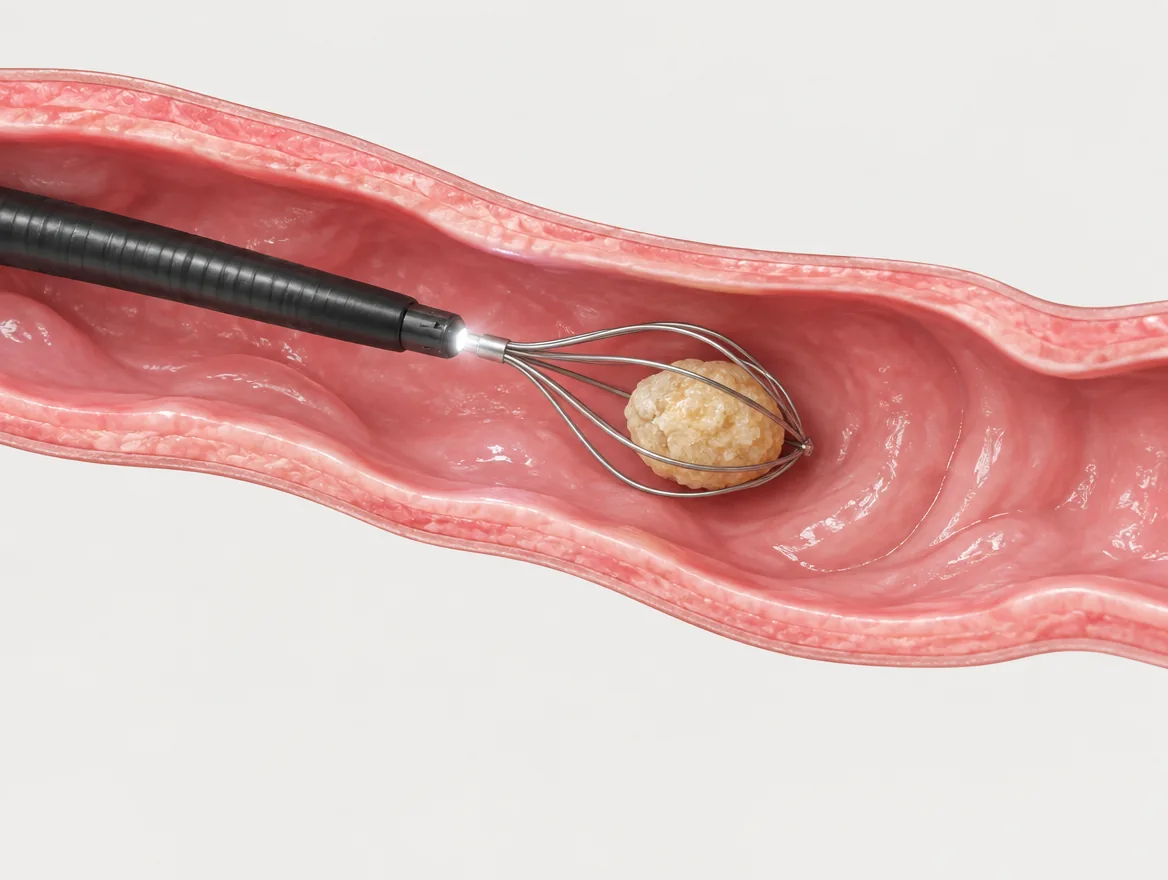
In sialendoscopy, the ENT guides a very fine camera into the salivary duct through its natural opening inside the mouth, so usually no cut on the face or neck is needed. Tiny instruments passed through the scope can then find the stone and take it out, or clear the blockage.
The gland stays in place, which is a real advantage, but the procedure does not suit every case. It depends on how big the stone is, where it sits and how easy it is to reach.
6. Surgical removal
Some stones cannot be removed using conservative measures or endoscopic techniques. In such cases, a procedure through the mouth or another surgical approach may be considered.
Taking out the whole gland is kept for selected cases, for example when stones keep coming back or problems continue after other treatments have failed or cannot be used. The right option is decided after a specialist examination.
Can Salivary Gland Stones Go Away on Their Own?
Yes. Some small salivary gland stones pass naturally, particularly if they are near the opening of the duct. Symptoms may improve when the obstruction clears and saliva can drain normally.
However, not every stone passes on its own. A persistent blockage can cause recurring pain and swelling and may increase the risk of infection.
If symptoms continue, keep returning during meals, or become more severe, consult an ENT specialist rather than relying solely on home remedies.
Home Care for Salivary Gland Stones: What Should You Do?
If your symptoms are mild and there are no signs of infection or another complication, certain measures may provide temporary relief while you arrange appropriate assessment.
- Drink water regularly: Maintain adequate hydration throughout the day.
- Apply a warm compress: Use a comfortably warm, not hot, cloth over the affected area.
- Massage gently: Gentle massage may help saliva move towards the duct opening. Avoid forceful pressure.
- Maintain oral hygiene: Brush and clean between your teeth regularly.
- Monitor symptoms: Note whether pain or swelling occurs during meals and whether it settles afterwards.
What should you avoid?
- Do not use needles, pins or sharp objects to remove a stone.
- Do not squeeze or press the gland forcefully.
- Do not take antibiotics without medical advice.
- Do not delay assessment if you have fever, pus, worsening swelling or severe pain.
Home care may ease symptoms, but a persistent stone may require professional removal.
When Should You See an ENT Specialist for Salivary Gland Stones?
Arrange an ENT consultation if you experience:
- Repeated pain or swelling during meals.
- A persistent lump beneath the jaw or tongue.
- Swelling near the ear or cheek without a clear explanation.
- Difficulty swallowing due to discomfort or swelling.
- Symptoms that do not resolve or repeatedly return.
- Suspected salivary duct blockage or a stone that has not passed.
Seek prompt medical assessment if you have fever, pus, increasing redness or rapidly worsening pain and swelling. Difficulty breathing or an inability to swallow saliva requires emergency care.
An ENT specialist can assess whether the symptoms are caused by a salivary stone, infection or another condition and recommend appropriate treatment.
Conclusion
A salivary stone is a hard mineral deposit that blocks the flow of saliva, so the gland tends to ache or swell at mealtimes. Small stones sometimes pass by themselves; a blockage that lasts may need a scan, removal by a doctor or a minimally invasive procedure such as sialendoscopy.
Recognising the symptoms early can help prevent prolonged discomfort and identify complications such as infection. If you experience recurring swelling beneath the jaw, pain while eating or a persistent lump under the tongue, consult an ENT specialist for appropriate evaluation and treatment.
Frequently Asked Questions About Salivary Gland Stones
1. What are the first signs of a salivary gland stone?
The first signs of a salivary gland stone often include pain or swelling beneath the jaw, under the tongue, or near the ear. Discomfort may become more noticeable during meals because eating stimulates saliva production, increasing pressure behind the blocked duct.
2. Are salivary gland stones dangerous?
Most salivary gland stones are not serious and may pass naturally. However, a persistent blockage can cause recurring pain, swelling, and sometimes a secondary infection. Consult an ENT specialist if symptoms persist or worsen, particularly if you develop fever or pus.
3. Can drinking water help remove a salivary gland stone?
Drinking enough water helps maintain normal saliva production and may support the passage of small stones. However, hydration cannot reliably remove a stone that is firmly lodged in a duct. Persistent pain or swelling should be evaluated by a healthcare professional.
4. How is a stone under the tongue treated?
Treatment depends on the stone’s size and location. Small stones may pass naturally, while accessible stones can sometimes be removed by a doctor. Larger or deeply located stones may require a minimally invasive procedure, such as sialendoscopy, or surgical removal.
5. Can salivary gland stones cause an infection?
Yes. A stone can block saliva drainage, allowing bacteria to multiply and cause inflammation or infection. Symptoms may include worsening pain, swelling, fever, tenderness, or pus in the mouth. Seek prompt medical assessment if these symptoms occur.
6. Which doctor treats salivary gland stones?
An ENT specialist can assess salivary gland stones, identify the location of the blockage, and recommend suitable treatment. Depending on the symptoms, the evaluation may include a physical examination and imaging, such as an ultrasound or CT scan. Consult an ENT specialist in Nashik if you experience recurring swelling or pain during meals.