
Yes, acid reflux can contribute to hoarseness, especially when stomach contents reach the throat or voice box. This type of reflux is commonly called laryngopharyngeal reflux (LPR).
Reflux can irritate sensitive tissues around the throat and larynx, potentially causing changes in the voice. Some people may also experience throat clearing, chronic cough, excess mucus or a sensation of something stuck in the throat.
However, hoarseness does not automatically mean that acid reflux is the cause. Voice changes can also result from infections, allergies, vocal overuse, smoking, vocal cord problems, neurological conditions and other laryngeal disorders.
Current clinical guidance emphasizes that throat and voice symptoms alone are not enough to confirm LPR. A proper assessment is important when symptoms persist.
Key Takeaways
- Acid reflux (LPR) can cause hoarseness, even without heartburn.
- Other causes include allergies, infections and vocal strain.
- Persistent hoarseness should not automatically be attributed to reflux.
- Consult an ENT if hoarseness lasts more than four weeks or keeps returning.
- Proper diagnosis helps guide appropriate treatment.
What Is Silent Reflux or Laryngopharyngeal Reflux?
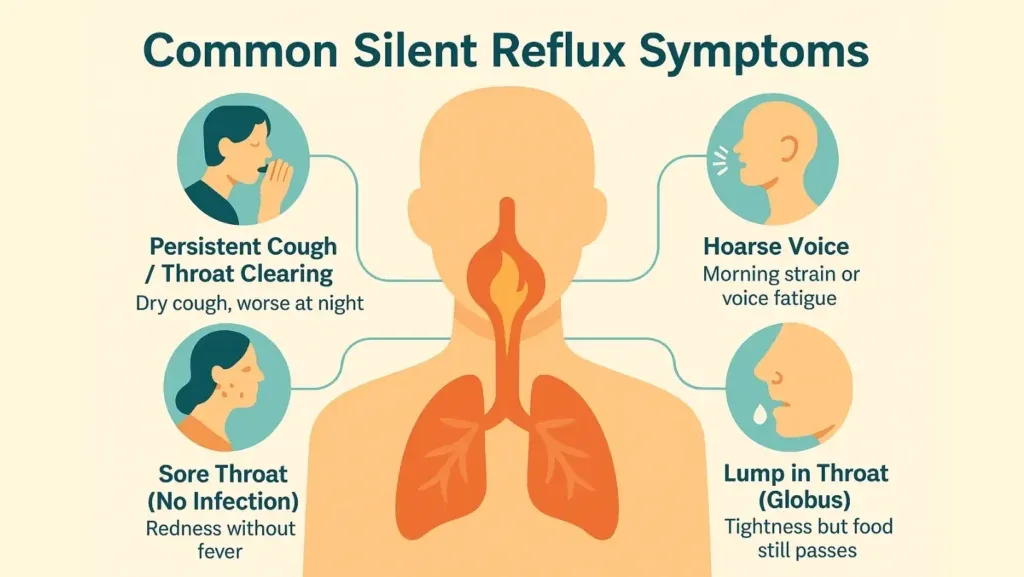
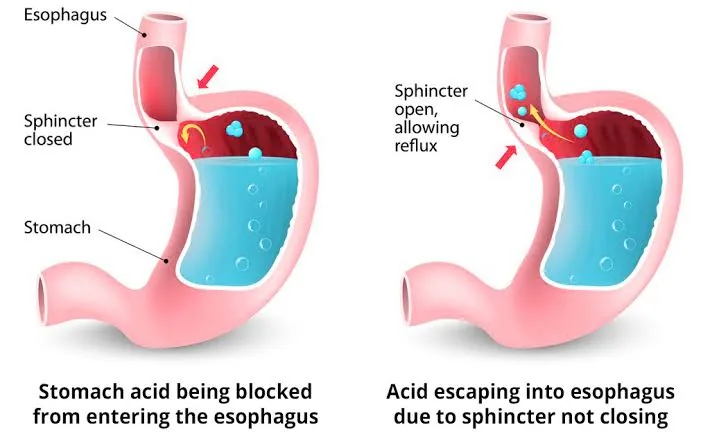
Laryngopharyngeal reflux, or LPR, occurs when refluxed stomach contents reach the upper throat or larynx.
Unlike typical gastroesophageal reflux disease (GERD), LPR may occur without the classic symptom of heartburn. This is why it is sometimes called silent reflux.
Possible symptoms include:
- Hoarseness or a raspy voice
- Frequent throat clearing
- Chronic cough
- Excess mucus or phlegm
- Sore or irritated throat
- A lump-like sensation in the throat
- Voice fatigue
- Difficulty using the voice for long periods
Importantly, having these symptoms does not by itself prove that reflux is responsible. Other throat and voice conditions can cause similar symptoms.
How Does Acid Reflux Affect Your Voice?
Your vocal cords are delicate structures that vibrate rapidly when you speak. Irritation or inflammation around the larynx can interfere with their normal vibration.
When reflux reaches the throat, it may irritate the tissues around the larynx. This can contribute to:
- A rough or raspy voice
- Reduced vocal clarity
- Voice fatigue
- Frequent throat clearing
- A feeling of throat irritation
- Difficulty maintaining the voice during prolonged speaking
For singers, teachers, lawyers, actors and public speakers, even relatively mild voice changes can become noticeable because their voices are used extensively.
At the same time, reflux is only one possible explanation for these symptoms. An ENT examination can help identify whether there is another underlying voice or laryngeal condition.
What Are the Symptoms of Reflux-Related Hoarseness?
Reflux-related throat and voice symptoms can vary from person to person.
Hoarse or Raspy Voice
The voice may sound rough, weak, breathy or deeper than usual. Some people notice that their voice is worse in the morning or after prolonged voice use.
Frequent Throat Clearing
A persistent sensation of mucus or irritation may make you repeatedly clear your throat. Frequent throat clearing itself can further irritate the vocal cords.
Chronic Cough
Some people with reflux-related throat symptoms experience a persistent cough, particularly when there is no obvious respiratory infection.
Excess Mucus or Phlegm
You may feel as though mucus is continuously present in your throat, even when there is no significant nasal infection.
Lump-in-the-Throat Sensation
Some people describe a feeling that something is stuck in the throat even though there is nothing physically blocking it.
Voice Fatigue
Your voice may become tired, weak or strained after talking for a long time. This can be particularly troublesome for people who depend on their voice professionally.
Can You Have Silent Reflux Without Heartburn?
Yes. Some people with laryngopharyngeal symptoms do not experience typical heartburn.
This is one reason reflux may be considered when someone has persistent hoarseness, throat clearing or cough without obvious digestive symptoms.
However, the absence of heartburn does not confirm silent reflux either. Persistent hoarseness has many possible causes, so an ENT assessment may be necessary to determine what is actually affecting the voice.
How Can You Tell If Acid Reflux Is Causing Your Hoarseness?
You cannot reliably determine the cause of persistent hoarseness from symptoms alone.
For example, hoarseness may be associated with:
- Acid reflux or LPR
- Viral or bacterial infections
- Allergies
- Vocal overuse
- Vocal cord nodules or polyps
- Smoking or tobacco exposure
- Vocal cord inflammation
- Certain medications
- Neurological conditions
- Other disorders affecting the larynx
A doctor may consider your symptoms, medical history, voice use, lifestyle factors and examination findings together.
In some cases, further reflux testing may be appropriate. Current LPR consensus recommends objective evidence when diagnosing reflux disease rather than assuming that all throat symptoms are caused by reflux.
How Is Hoarseness Diagnosed by an ENT?
An ENT specialist evaluates the throat and larynx to identify the possible cause of persistent voice changes.
Depending on your symptoms, the evaluation may include:
Medical History
Your ENT may ask about:
- When the hoarseness started
- Whether it is continuous or intermittent
- Your voice-use patterns
- Heartburn or reflux symptoms
- Throat clearing and coughing
- Smoking or tobacco exposure
- Allergies
- Previous throat or voice problems
- Any difficulty swallowing or breathing
Examination of the Larynx
Laryngeal examination, including appropriate visualization of the vocal cords, can help identify structural or functional problems affecting the voice.
Laryngoscopy is useful for evaluating the larynx and ruling out other causes of dysphonia. However, laryngoscopy findings alone should not be treated as definitive proof of LPR.
Additional Reflux Testing
When reflux remains a concern and the diagnosis is uncertain, a doctor may consider additional testing such as upper endoscopy or ambulatory reflux monitoring.
The appropriate test depends on the individual’s symptoms and clinical assessment.
How Is Reflux-Related Hoarseness Treated?
Treatment depends on whether reflux is actually contributing to the symptoms and what the clinical evaluation shows.
Management may include lifestyle measures, dietary changes, voice care and medication when appropriate.
Lifestyle Changes
Your doctor may recommend measures such as:
- Avoiding meals close to bedtime
- Identifying foods that trigger reflux symptoms
- Maintaining a healthy weight when appropriate
- Reducing habits that worsen reflux
- Following an individualized reflux-friendly diet
- Staying adequately hydrated
- Avoiding unnecessary throat clearing
Not every person needs the same dietary restrictions. It is generally better to identify individual triggers rather than unnecessarily eliminating large numbers of foods.
Do You Need Acid-Reflux Medicine for Hoarseness?
Not necessarily.
Medication should not automatically be started simply because a person has hoarseness.
Current hoarseness guidelines recommend visualizing the larynx when dysphonia does not improve within four weeks, or sooner when there are concerning features. They also caution against treating isolated dysphonia as reflux without appropriate evaluation.
If reflux disease is confirmed or strongly supported by the clinical assessment, your doctor may recommend appropriate treatment.
How Long Does Hoarseness From Acid Reflux Last?
There is no single recovery time for reflux-related hoarseness.
The duration depends on:
- The underlying cause
- How long the larynx has been irritated
- Whether reflux is actually contributing to the problem
- Voice-use habits
- Other medical conditions
- Response to treatment
If your hoarseness continues despite lifestyle changes or treatment, it is important not to assume that reflux is the only cause.
Persistent voice changes may require further examination of the vocal cords and larynx.
When Should You See an ENT for Hoarseness?
You should consider an ENT evaluation if hoarseness persists, keeps returning or is affecting your ability to speak normally.
According to clinical practice guidance, laryngeal evaluation is recommended when dysphonia does not improve within four weeks, or sooner when there is concern about a serious underlying condition.
Seek medical evaluation promptly if hoarseness is accompanied by symptoms such as:
- Difficulty breathing
- Difficulty swallowing
- Coughing up blood
- A neck lump
- Significant or worsening pain
- Unexplained weight loss
- Persistent voice changes in someone with significant tobacco exposure
These symptoms should not simply be attributed to acid reflux without proper evaluation.
Hoarseness Treatment in Nashik: When Should You Consult an ENT?
If you are experiencing persistent hoarseness in Nashik, an ENT specialist can assess whether reflux, vocal strain, inflammation or another condition may be affecting your voice.
At Aahire’s ENT Superspeciality Centre, Dr. Sudarshen Aahire provides ENT care with a focus that includes voice disorders and professional voice care.
The clinic’s professional voice care service is particularly relevant for people whose careers depend on their voices, including singers, teachers, lawyers, actors and public speakers.
A detailed assessment can help determine whether the problem is related to reflux or whether another condition involving the vocal cords or larynx needs attention.
How Can You Protect Your Voice?
Good voice habits can help reduce unnecessary strain on the vocal cords.
Consider the following:
- Drink adequate water throughout the day.
- Avoid shouting or repeatedly speaking at very high volume.
- Give your voice regular periods of rest.
- Avoid repeatedly clearing your throat.
- Treat allergies or respiratory infections appropriately.
- Avoid smoking and tobacco exposure.
- Manage known reflux triggers.
- Use proper microphone technique when speaking to large audiences.
- Seek professional evaluation if voice changes persist.
People who use their voices professionally may benefit from specialized voice care and appropriate vocal rehabilitation when needed.
Acid Reflux and Hoarseness: Key Takeaway
Acid reflux can contribute to hoarseness, particularly when reflux affects the throat and larynx. However, persistent hoarseness should not automatically be diagnosed as acid reflux.
Voice changes can have many causes, and symptoms such as throat clearing, cough and mucus are not specific to reflux.
If your voice remains hoarse or keeps changing, an ENT evaluation can help identify the underlying cause. Depending on the findings, your doctor may recommend laryngeal examination, reflux testing, lifestyle changes, medication or other treatment.
For patients looking for hoarseness treatment, professional evaluation is especially important when symptoms persist or interfere with work, communication or singing.
Frequently Asked Questions
Can acid reflux cause a hoarse voice?
Yes. Acid reflux, particularly laryngopharyngeal reflux, can contribute to throat and voice symptoms such as hoarseness. However, hoarseness can have many other causes, so persistent symptoms should be evaluated rather than automatically attributed to reflux.
Can silent reflux cause hoarseness?
Yes. Laryngopharyngeal reflux can cause throat and voice symptoms even when typical heartburn is absent. However, the presence of hoarseness alone does not confirm silent reflux.
Can you have LPR without heartburn?
Yes. Some people with LPR-type symptoms do not experience classic heartburn. Other symptoms may include throat clearing, cough, mucus, globus sensation and voice changes.
How do I know if reflux is causing my hoarseness?
Symptoms alone cannot reliably establish that reflux is the cause. An ENT evaluation can assess the larynx and look for other possible causes. Additional reflux testing may be considered when clinically appropriate.
How long does acid reflux hoarseness last?
There is no fixed recovery period. It depends on the underlying cause and whether reflux is actually contributing to the voice problem. Persistent hoarseness should be reassessed rather than assumed to be reflux-related.
Should I see an ENT for persistent hoarseness?
Yes. If hoarseness does not improve or keeps returning, an ENT evaluation can help identify the cause. Clinical guidelines recommend laryngeal evaluation when dysphonia persists for around four weeks, or sooner when concerning symptoms are present.
Can acid reflux permanently affect your voice?
Long-lasting irritation can affect the larynx, but persistent voice changes should not automatically be blamed on reflux. A proper ENT evaluation is important to determine the underlying cause.
Who should I see for hoarseness in Nashik?
An ENT specialist can evaluate persistent hoarseness and examine the larynx and vocal cords. Patients in Nashik experiencing ongoing voice problems can consult an ENT specialist for appropriate diagnosis and treatment.