

Key Takeaways
- Hoarseness occurs when swelling, irritation, nerve problems, or growths disrupt smooth vocal fold vibration.
- Acute laryngitis from a viral infection is the most common cause and usually resolves within one to two weeks.
- Laryngopharyngeal reflux can silently damage the vocal folds without producing the chest burning of typical acid reflux.
- Hoarseness persisting beyond two weeks warrants evaluation by a qualified ENT specialist.
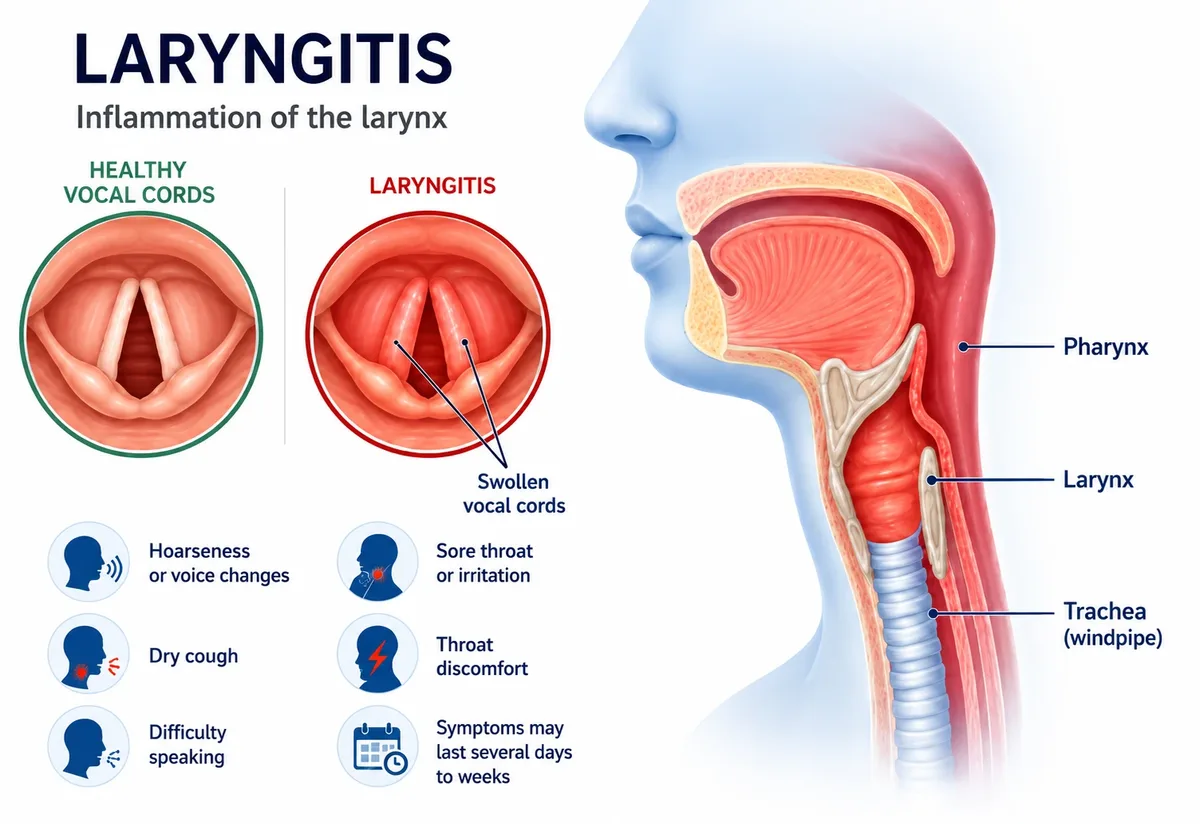
Understanding What Hoarseness Actually Means
The voice is produced when air from the lungs passes through the larynx, causing the vocal cords to vibrate together. Clear speech depends on smooth and symmetrical movement of these vocal folds. When swelling, irritation, nerve problems, or growths interfere with this process, the voice changes.
Voice hoarseness may appear as:
- A rough or grating texture that was not previously present
- Reduced volume or a voice that tires quickly
- A breathy quality, suggesting air is escaping around improperly closed folds
- A lower pitch than the person’s typical speaking voice
- A sense of effort or strain required to produce sound
- Unexpected cracking or breaking while speaking
Any of these changes -especially those that continue beyond two weeks, should be treated as a signal worth investigating with a qualified ENT specialist.
Common Causes of Voice Hoarseness
Acute Laryngitis
The most frequent trigger of sudden-onset hoarseness is acute laryngitis – inflammation of the larynx arising from a cold or upper respiratory viral infection. The vocal folds swell in response, disrupting their normal vibration pattern. Hoarseness typically emerges within a day or two of illness onset and resolves within one to two weeks with adequate voice rest and fluid intake. Any hoarseness extending beyond that window warrants formal evaluation.
Vocal Overuse and Incorrect Technique
The vocal folds are precise, delicate structures not built for continuous mechanical strain. Speaking at high volumes for extended periods, repeated shouting, or using poor vocal technique places excessive stress on the tissue. Over time, this leads to swelling, bruising, and potentially the formation of benign growths. Professionals whose livelihoods depend on daily voice use -teachers, fitness instructors, legal advocates, contact centre staff, and performing artists -face elevated risk.
Laryngopharyngeal Reflux (Silent Reflux)
When stomach acid migrates upward through the oesophagus and reaches the larynx, it can quietly damage the vocal folds without producing the chest burning most people associate with acid reflux. Telltale signs include a voice that sounds rough in the morning, a persistent urge to clear the throat, and a sensation of something lodged in the throat. Because heartburn is absent, the connection between voice changes and a digestive condition is often overlooked by both patients and clinicians.
Vocal Cord Nodules
Sustained vocal strain over time causes small, firm, callus-like deposits to form at the midpoint of the vocal folds, the area subjected to the greatest vibratory friction. These nodules interfere with clean fold closure, producing a characteristically rough or breathy voice. They represent an occupational hazard for anyone using their voice intensively and are managed through voice therapy or, when therapy alone is insufficient, surgical removal.
Vocal Cord Polyps
In contrast to nodules, which build up gradually, polyps often develop following a single episode of severe vocal trauma, such as one prolonged bout of shouting. They are soft, fluid-containing swellings whose impact on voice quality ranges from mild breathiness to a markedly changed sound, depending on their size and location. Most polyps require surgical intervention for complete resolution.
Vocal Cord Paralysis
Damage to the nerve controlling one or both vocal folds can render the affected fold immobile. When a paralysed fold cannot close against its counterpart, the result is a weak, breathy, or barely audible voice. This may follow surgery in the neck or chest region, a viral illness affecting the nerve, or a neurological condition. Because the underlying cause requires identification and treatment, vocal cord paralysis always demands thorough specialist investigation.
Other Contributing Factors
- Thyroid conditions: an enlarged or underactive thyroid may compress or affect the nerves serving the larynx
- Chronic allergies causing repeated throat clearing that irritates the mucosal lining
- Tobacco use, which is among the most significant and modifiable causes of persistent laryngeal inflammation
- Certain medications, including ACE inhibitors and inhaled corticosteroids, that produce laryngeal irritation
- Psychological or functional dysphonia, where the voice fails despite anatomically normal vocal structures
Warning Signs: When Hoarseness Becomes a Red Flag
A hoarse voice lasting more than two to three weeks without a clear precipitating cause, such as an active cold or a recent period of vocal strain, should always prompt an ENT consultation. In certain situations, persistent hoarseness represents an early indicator of a serious condition that responds considerably better to treatment when identified at an early stage.
Seek prompt specialist evaluation if hoarseness occurs alongside any of the following:
- Difficulty swallowing or pain when eating or drinking
- A noticeable lump or swelling anywhere in the neck
- Blood present when coughing
- Unexplained or unintentional weight loss
- One-sided ear pain that has no apparent local cause
- Noisy breathing or breathlessness occurring alongside voice changes
- Voice changes in a current or former smoker, or in someone with a history of heavy alcohol use
These symptom combinations may indicate laryngeal conditions, including early-stage laryngeal cancer – in which timely diagnosis has a substantial bearing on treatment outcomes.
Who Is at Greatest Risk of Developing Hoarseness?
| Group | Primary Risk Factor | Most Common Cause |
| Teachers & Lecturers | Sustained vocal demand across long working hours | Vocal cord nodules, voice fatigue |
| Singers & Stage Performers | High-intensity vocal output under pressure | Nodules, polyps, mucosal haemorrhage |
| Call Centre Workers | Extended phone-based communication daily | Vocal overuse, muscle tension dysphonia |
| Smokers | Ongoing laryngeal irritation from tobacco | Chronic laryngitis, Reinke’s oedema |
| Acid Reflux Sufferers | Repeated acid exposure at the laryngeal inlet | Laryngopharyngeal reflux |
| Post-Surgical Patients | Nerve proximity during neck or chest surgery | Vocal cord paralysis |
| Older Adults | Natural age-related cord thinning and atrophy | Presbyphonia |
When to Consult an ENT Specialist in Nashik
If your hoarseness has persisted for more than two weeks, is worsening over time, or is accompanied by difficulty swallowing, a neck lump, or any of the red-flag symptoms described above, a specialist review should not be delayed.
Dr. Sudarshen Aahire at Aahire’s ENT Superspeciality Center in Nashik offers comprehensive evaluation and treatment of voice and laryngeal conditions. Early assessment leads to more effective management and better outcomes -do not wait for symptoms to worsen before seeking care.
Frequently Asked Questions
1. When should I worry about persistent voice hoarseness?
A hoarse voice that lasts longer than two to three weeks should always be evaluated by an ENT specialist, especially if it is associated with swallowing difficulty, neck swelling, breathing changes, unexplained weight loss, or smoking history.
2. Can acid reflux cause chronic voice changes?
Yes. Laryngopharyngeal reflux, often called silent reflux, can irritate the vocal cords without causing typical heartburn symptoms. Many patients experience morning hoarseness, throat clearing, chronic cough, or a sensation of something stuck in the throat.
3. Can voice hoarseness go away on its own?
Temporary hoarseness caused by a cold or mild vocal strain often improves within one to two weeks with voice rest and hydration. Persistent or recurring hoarseness, however, may indicate an underlying condition that requires specialist evaluation.
4. What are vocal cord nodules?
Vocal cord nodules are small callus-like growths that develop from repeated voice strain. They are especially common in teachers, singers, public speakers, and professionals who use their voice heavily every day.
5. Is voice hoarseness ever a sign of cancer?
In some cases, yes. Persistent hoarseness can occasionally be an early symptom of laryngeal cancer, particularly in smokers or individuals with long-term tobacco and alcohol exposure. Early diagnosis significantly improves treatment outcomes.
6. How do ENT specialists diagnose voice hoarseness?
ENT specialists evaluate the vocal cords using procedures such as laryngoscopy or nasal endoscopy. These examinations allow direct visualisation of swelling, nodules, paralysis, reflux-related irritation, or abnormal growths affecting the voice.
7. Can smoking permanently affect the voice?
Yes. Smoking causes chronic irritation and inflammation of the vocal cords, increasing the risk of long-term hoarseness, vocal cord swelling, and throat cancer.