

Key Takeaways
- Swimmer’s ear is an outer ear canal infection, distinct from middle ear infection, usually triggered by trapped moisture.
- It is caused by bacteria such as Pseudomonas aeruginosa or fungi when the canal’s protective barrier is disrupted.
- Cotton swabs, earphones, and hearing aids raise risk by scratching the canal and trapping humidity.
- With early ENT treatment and medicated drops, swimmer’s ear typically clears within 7 to 10 days.
Quick answer: Swimmer’s ear, medically called otitis externa, is an infection of the skin lining the outer ear canal. It usually follows water, sweat or a small scratch that leaves the canal damp and irritated. The usual signs are itching, pain when you touch or tug the ear, and a blocked feeling. Most people get better in about 7 to 10 days once an ENT specialist cleans the ear and prescribes the right drops.
Key Takeaways
- Swimmer’s ear affects the outer ear canal. A middle ear infection sits behind the eardrum and is a different problem.
- Bacteria such as Pseudomonas aeruginosa and Staphylococcus aureus cause most cases. Fungi such as Candida and Aspergillus cause the rest.
- Cotton swabs, in-ear earphones and hearing aids make it more likely, because they scratch the skin and trap moisture.
- Leftover or random ear drops can make things worse. Bacterial and fungal infections need different medicines.
- If you have diabetes, get any ear pain or discharge checked by an ENT specialist straight away.
Can You Get Swimmer’s Ear Without Swimming?
Yes, and a lot of people are surprised by that. The name is misleading. A bath, a monsoon downpour, a sweaty workout or a long day with earphones can leave the canal just as damp as a swimming pool does.
If your ear has started to itch, hurt or feel blocked, swimmer’s ear is one of the first things to think about. Caught early and treated properly, it usually settles within 7 to 10 days. Below, we go through what it is, why it happens, how to spot it, and what actually helps.
What Is Swimmer’s Ear (Otitis Externa)?
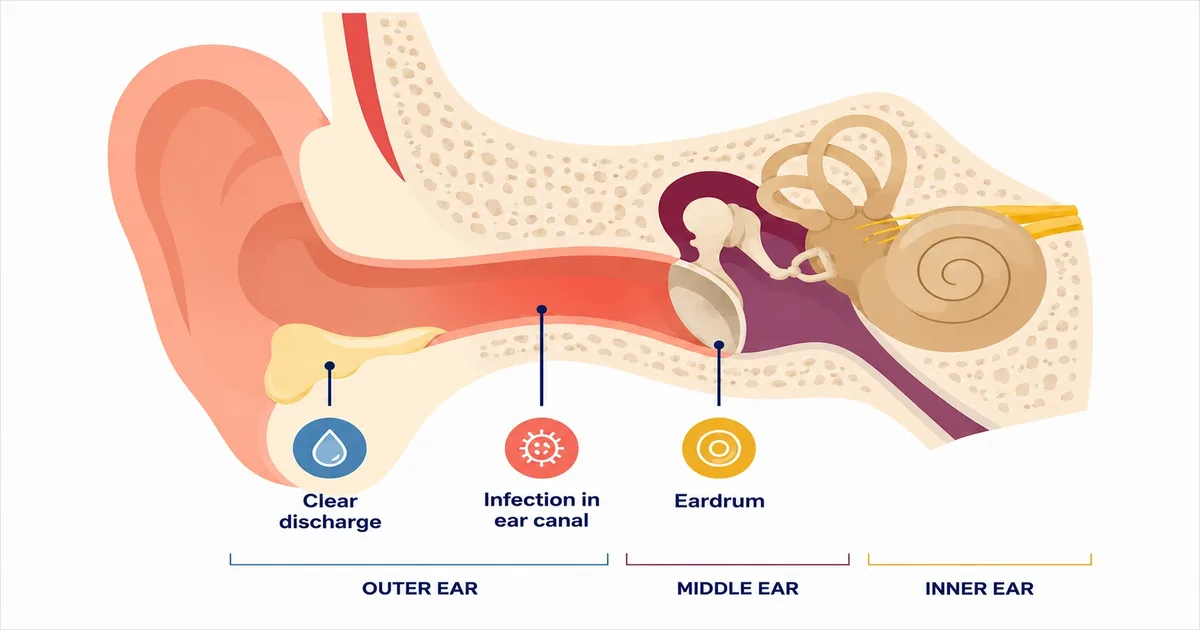
Swimmer’s ear is an infection of the skin that lines the outer ear canal, the short passage between the opening of your ear and the eardrum. Water or sweat that stays in there gives bacteria and fungi the warm, dark, humid spot they like.
Because the infection stays in the outer canal, it is treated differently from a middle ear infection. Left alone, though, it can spread beyond the canal.
What Causes Swimmer’s Ear?
The canal protects itself with a thin layer of wax and slightly acidic skin. Swimmer’s ear starts when that barrier breaks down and germs get a foothold. Trapped water is the usual trigger, but it is far from the only one.
Water that stays in the ear
Pool, river, lake or bath water that sits in the canal washes away the protective wax and oils. The skin underneath is then easy for germs to infect.
Cleaning the ear too aggressively
Many people clean their ears with cotton swabs every day because they think it is hygienic. The swab scratches the delicate skin, removes the wax and pushes debris deeper. Hairpins, keys and fingernails do the same damage.
Earphones and hearing aids
Anything that sits inside the canal cuts down airflow and traps moisture and heat. That is a good environment for bacteria and fungi.
Skin conditions
Eczema, seborrhoeic dermatitis and psoriasis can affect the ear canal too. Skin that is already inflamed or broken gets infected far more easily.
Diabetes or weak immunity
People with diabetes or HIV, and those on chemotherapy, should not wait out even mild ear symptoms. In these patients an infection can turn serious quickly.
Dirty or stagnant water
Polluted water carries many more bacteria and fungi into the canal.
Hair sprays and chemical irritants
Hair spray, hair dye and cosmetic products that get into the ear can irritate the lining and weaken its natural defence.
Swimmer’s Ear (Otitis Externa) Symptoms: How to Recognise It
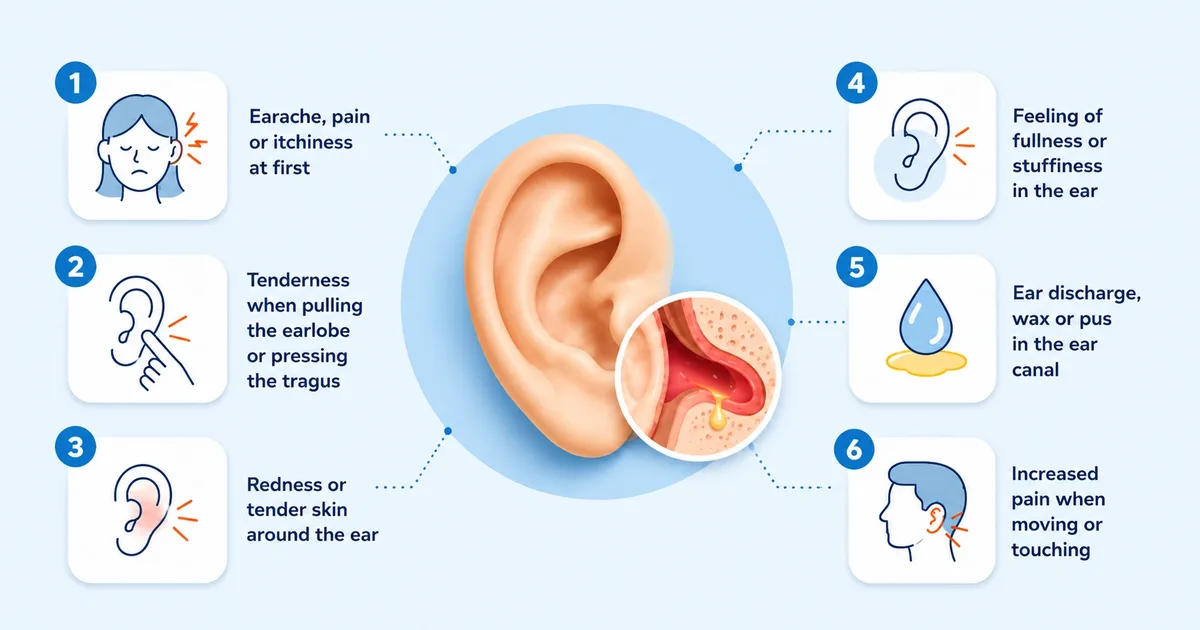
Itching inside the ear is usually the first sign. If nothing is done, pain, discharge and muffled hearing tend to follow. The symptoms below are grouped by how far the infection has gone.
Stage 1: Mild
- Itching or tickling in the ear canal
- Slight redness and mild discomfort
- A small amount of clear fluid
Stage 2: Moderate
- Pain that gets worse when you pull the earlobe or press the small bump in front of the ear (the tragus)
- Swelling inside the canal
- Yellow or cloudy discharge
- A full or muffled feeling in the ear
Stage 3: Severe
- Throbbing ear pain that can spread to the jaw or the side of the face
- Swelling that can close the canal
- Pus-like discharge with a bad smell
- Fever
- Redness spreading to the skin outside the ear
Malignant (necrotising) otitis externa
This is rare but dangerous. It happens mostly in people with diabetes or weak immunity, when the infection spreads into the bone and tissue around the ear. If you are diabetic and have ear pain with discharge, see an ENT specialist immediately.
Is It Swimmer’s Ear or a Middle Ear Infection?
Pain when you press the tragus or gently tug the earlobe points to swimmer’s ear. Deep pain inside the ear, often after a cold or sore throat, points to a middle ear infection. That is only a rough guide. An ENT examination is the only reliable way to tell them apart.
How Is Swimmer’s Ear Treated by an ENT Specialist?
Treatment has two main parts: cleaning the canal properly and putting the right medicine into it. Most of the rest is supporting care.
- Professional ear cleaning (aural toilet). Under a microscope or endoscope, the ENT specialist removes debris, discharge and infected material.
- Prescription ear drops. Bacterial infections need antibiotic drops (often combined with a steroid to bring the swelling down). Fungal infections need antifungal treatment.
- Pain relief. Your doctor may suggest an anti-inflammatory or a pain medicine, and a warm compress over the outer ear also helps.
- Ear wick for severe swelling. When the canal is swollen shut, a small wick carries the medicine in.
- Oral antibiotics, only when needed. These are kept for severe infections, spreading redness, fever, or patients with diabetes or low immunity.
- Keep the ear dry and come back for follow-up. Finish the full course even when you feel better, so the canal can be checked.
What not to do while you are being treated
- Do not use hydrogen peroxide or leftover or random ear drops.
- Do not put cotton swabs or anything else into the ear.
- Do not wear in-ear earphones or hearing aids unless your doctor says it is fine.
- Do not swim until your doctor gives you the all-clear.
- Do not wait several days if the symptoms are getting worse.
What Can You Do at Home While You Recover?
Home care helps, but it does not replace the drops your doctor prescribes.
- Warm compress: Hold a warm (not hot) cloth against the outer ear for about 15 minutes to ease the pain.
- Putting in drops: Lie on your side with the sore ear facing up. Add the drops as prescribed and stay put for 3 to 5 minutes.
- Keep water out: When bathing, use a shower cap, or a cotton ball coated with petroleum jelly in the outer ear, if your doctor agrees.
- No in-ear devices: Avoid earphones and hearing aids until the infection clears, unless your doctor says otherwise.
- No swimming: Stay out of pools, rivers and bathtubs for the whole treatment course.
How to Prevent Swimmer’s Ear (Otitis Externa): 7 ENT Tips
- Dry your ears after every swim or bath. Tilt your head to each side and pat the outer ear with a soft towel.
- Use a hairdryer on its lowest, coolest setting. Hold it at arm’s length so the warm air only dries the outer ear.
- Wear well-fitted swimming earplugs. Custom-moulded ones work best if you swim often.
- Never put anything in the canal. That means cotton swabs, fingers and hairpins.
- Avoid dirty or stagnant water.
- Ask your ENT about preventive drops if you keep getting infections. Some doctors suggest diluted vinegar or alcohol-based drops, but they are not safe for everyone. Do not use them if you have ear pain, discharge, a hole in the eardrum, ear tubes or a past ear operation, unless an ENT has examined you first.
- Keep earphones and hearing aids clean, and give your ears regular breaks.
| Prevention step | Who needs it most |
|---|---|
| Dry ears after swimming or bathing | Everyone |
| Low, cool hairdryer | People with narrow ear canals |
| Custom earplugs | Regular and competitive swimmers |
| Avoid cotton swabs | Everyone |
| Avoid polluted water | Outdoor swimmers |
| Preventive drops (ENT-advised) | People with recurrent infections |
| Clean earphones and hearing aids | Daily earphone and hearing-aid users |
When Should You See an ENT Specialist Urgently?
Do not wait if any of these apply:
- Severe ear pain
- High fever
- Sudden hearing loss
- Redness or swelling spreading outside the ear
- Diabetes or weak immunity with ear pain or discharge
- Symptoms getting worse after you start treatment
- Jaw pain or trouble opening the mouth
Any of these can mean the infection is moving beyond the ear canal.
Ear pain or discharge bothering you? Call +91 83798 35125 to book an appointment with Dr. Aahire.
Frequently Asked Questions
What are the first symptoms of swimmer’s ear?
Itching inside the ear canal is usually first, often with mild redness or a little clear fluid. Pain, a blocked feeling and yellow discharge follow if the infection is not treated.
What is the fastest way to get rid of swimmer’s ear?
See an ENT specialist early. After a proper cleaning and the right prescription drops, many people feel better in 2 to 3 days, and most cases clear fully in 7 to 10 days. Finish the whole course, and do not try to clean the ear yourself.
Can swimmer’s ear go away on its own?
A very mild case may settle, but it often does not clear fully without treatment, and it can get worse or spread. It is safer to have it checked early.
Can earphones cause otitis externa?
Yes. In-ear earphones and hearing aids trap heat and moisture and can scratch the skin, which makes infection more likely. Clean them regularly and give your ears breaks.
How do I tell swimmer’s ear from a middle ear infection?
In swimmer’s ear, touching the tragus or tugging the earlobe usually hurts. Middle ear infections cause deeper pain, often after a cold. Only an ENT examination can confirm which one you have.
Is it safe to use pharmacy ear drops without a prescription?
No. Over-the-counter drops may not suit your infection, and the wrong ones can delay recovery, hide symptoms or irritate the canal. If the eardrum has a hole, some drops can harm the inner ear. Get examined first.
Can I swim with swimmer’s ear?
No. Water brings in more germs and stops the canal from healing. Stay out of the water until your ENT gives the all-clear, usually after the full 7 to 10 day course.
How can diabetic patients protect themselves?
Keep your blood sugar well controlled, keep water out of your ears, and never self-medicate. Because of the risk of malignant otitis externa, see an ENT specialist at the first sign of ear pain or discharge.
Is swimmer’s ear contagious?
No, it does not pass from person to person. Shared earphones and dirty water can carry the germs that cause it, though.
This article is for general information and does not replace an in-person examination by a doctor.