

Swimmer’s Ear (Otitis Externa) is an infection of the outer ear canal commonly caused by trapped water, moisture, or irritation inside the ear. Symptoms include ear pain, itching, discharge, blocked sensation, and reduced hearing. Early treatment by an ENT specialist with proper ear cleaning and medicated drops helps prevent complications and ensures faster recovery.
Key Takeaways
- Swimmer’s ear is an outer ear canal infection caused mainly by trapped moisture.
- Early symptoms include itching, pain, discharge, and blocked hearing.
- Cotton swabs and prolonged earphone use increase infection risk.
- Keep ears dry after swimming or bathing to prevent infection.
- Early ENT treatment helps avoid severe complications.
- Never use random ear drops without medical advice.
Swimmer’s Ear Is Far More Common Than Most People Realise
Swimmer’s ear – medically known as otitis externa – is a painful infection of the outer ear canal that affects millions of people every year, and you do not have to be a swimmer to get it.
If your ear feels itchy, painful, or blocked after a swim, a bath, or even after using earphones for a long time -you may have swimmer’s ear. The good news is that when caught early and treated correctly, it clears up within 7 to 10 days.
In this complete guide, I will explain exactly what a swimmer’s ear is, what causes it, how to recognise it early, and – most importantly – how to treat and prevent it the right way.
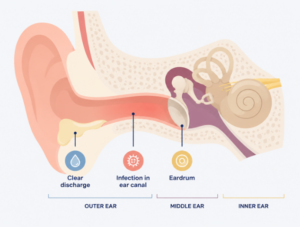
What Is a Swimmer’s Ear? (Simple Explanation)
Swimmer’s ear is an infection of the skin lining the outer ear canal – the passage that runs from your eardrum to the outside of your head.
It is different from a middle ear infection, which occurs deeper inside the ear behind the eardrum. Swimmer’s ear affects the outer canal only – but if left untreated, it can spread.
The condition gets its name because it commonly occurs when water becomes trapped inside the ear canal. This trapped moisture creates a warm, dark, humid environment – the ideal breeding ground for bacteria (most commonly Pseudomonas aeruginosa and Staphylococcus aureus) or fungi (such as Candida and Aspergillus).
However, swimming is not the only cause. Anyone can develop swimmer’s ears – children, adults, earphone users, and people with certain skin conditions are all at risk.
Micro Summary: Swimmer’s ear is an outer ear canal infection caused by bacteria or fungi, usually triggered by trapped moisture. It is not a middle ear infection and is treated very differently.
What Are the Common Causes and Risk Factors of Swimmer’s Ear?
Swimmer’s ear is caused when the ear canal’s natural protective barrier is disrupted – allowing bacteria or fungi to grow. Trapped water is the most common trigger, but several other everyday habits and health conditions are equally responsible.
Prolonged Water Exposure
Water from swimming pools, rivers, lakes, or even bathwater that remains in the ear canal for too long strips away the ear’s natural protective oils and wax. Without this protective layer, bacteria find it easy to multiply and infect the exposed skin.
Aggressive Ear Cleaning
Many patients use cotton swabs daily believing they are keeping their ears clean. In reality, cotton swabs scratch the delicate skin lining the canal, remove the protective wax, and push debris deeper – creating the perfect entry point for infection.
Earphone and Hearing Aid Use
Devices that sit inside the ear canal trap moisture, reduce airflow, and create a warm, humid environment where bacteria and fungi thrive.
Skin Conditions
Eczema, seborrheic dermatitis, and psoriasis can directly affect the ear canal. When the skin is already inflamed or broken, it becomes significantly more vulnerable to infection.
Diabetes or Weakened Immunity
Patients with diabetes, HIV, or those undergoing chemotherapy must take even mild ear symptoms seriously because infections can escalate rapidly.
Swimming in Polluted Water
Swimming in dirty or stagnant water exposes the ear canal to higher bacterial and fungal loads.
Hair Sprays or Chemical Irritants
Hair sprays and cosmetic chemicals can irritate the ear canal lining and weaken its natural defence barrier.
Micro Summary: Cotton swabs, long earphone use, and skin conditions are just as likely to cause swimmer’s ear as swimming itself.
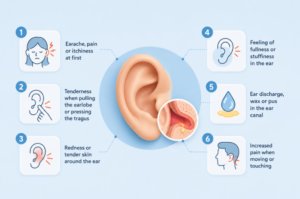
How Do You Recognise the Symptoms of a Swimmer’s Ear?
The earliest warning sign of a swimmer’s ear is itching inside the ear canal – often followed by increasing pain, discharge, and muffled hearing if left untreated.
Stage 1 – Mild Symptoms
- Itching or tickling sensation inside the ear canal
- Slight redness
- Mild discomfort
- Small amount of clear fluid
Stage 2 – Moderate Symptoms
- Pain that worsens when pulling the earlobe
- Swelling inside the ear canal
- Yellow or cloudy discharge
- Feeling of fullness or muffled hearing
Stage 3 – Severe Symptoms
- Intense throbbing ear pain
- Severe swelling of the ear canal
- Pus-like discharge with unpleasant smell
- Fever
- Redness spreading outside the ear
Malignant (Necrotising) Otitis Externa
This is a rare but life-threatening complication that occurs mainly in diabetic and immunocompromised patients. The infection spreads beyond the ear canal to surrounding bone and tissue.
If you are diabetic and develop ear pain with discharge – visit an ENT specialist immediately.
Micro Summary: Swimmer’s ear starts with itching and mild discomfort but can progress to severe infection if ignored.
7 Proven Ways to Prevent Swimmer’s Ear – ENT Specialist Tips
1. Dry Your Ears Thoroughly After Every Swim or Bath
Tilt your head to each side after swimming and gently dry the outer ear with a soft towel.
2. Use a Hairdryer on Low Heat to Remove Stubborn Moisture
A low-heat hairdryer held at a safe distance can help evaporate trapped moisture.
3. Wear Properly Fitted Swimming Earplugs
Custom-moulded earplugs provide superior protection for frequent swimmers.
4. Never Insert Anything Into the Ear Canal
Avoid cotton swabs, fingers, or hairpins inside the ear canal.
5. Avoid Swimming in Polluted or Stagnant Water
Dirty water significantly increases infection risk.
6. Use Preventive Ear Drops If You Are Prone to Infections
Diluted white vinegar drops may help maintain the ear canal’s natural acidic environment.
7. Keep Earphones and Hearing Aids Clean and Give Your Ears Regular Air
Clean devices regularly and avoid prolonged use without breaks.
Prevention Summary Table
| Prevention Step | Who Needs It Most |
| Dry ears after swimming | Everyone |
| Hairdryer on low heat | Narrow ear canals |
| Custom earplugs | Competitive swimmers |
| Avoid cotton swabs | Everyone |
| Avoid polluted water | Outdoor swimmers |
| Preventive ear drops | Recurrent infections |
| Clean earphones | Earphone users |
Micro Summary: Proper ear drying and avoiding cotton swabs are the most effective preventive measures.
Swimmer’s Ear Treatment: What Really Works According to an ENT Specialist
Step 1 – Professional Ear Cleaning (Aural Toilet)
ENT specialists remove debris, discharge, and infected material using microscopy or endoscopy.
Step 2 – Prescription Antibiotic or Antifungal Ear Drops
Bacterial infections require antibiotic drops, while fungal infections need antifungal medication.
Step 3 – Pain Management
Anti-inflammatory medicines and warm compresses help relieve discomfort.
Step 4 – Ear Wick Placement for Severe Swelling
An ear wick allows medication to reach swollen ear canals effectively.
Step 5 – Oral Antibiotics When Needed
Used only for severe infections or spreading disease.
Step 6 – Water Restriction and Follow-Up
Keep the ear dry during recovery and attend follow-up visits.
What NOT to Do During Treatment
- Do not use hydrogen peroxide or random ear drops
- Do not insert cotton swabs into the ear
- Do not wear earphones
- Do not swim
- Do not ignore symptoms for several days
Micro Summary: Professional cleaning and the correct medication are essential for fast recovery.
How Can You Safely Manage a Swimmer’s Ear at Home?
Warm Compress
Apply a warm cloth against the outer ear for 15 minutes to relieve pain.
Sleep Position
Sleep with the infected ear facing upward after applying ear drops.
No Earphones
Avoid all in-ear devices until the infection fully resolves.
No Swimming
Stay away from pools, rivers, and bathtubs during treatment.
Apply Ear Drops Correctly
Lie on your side and allow the drops to remain inside the ear canal for several minutes.
When Should You See an ENT Doctor Immediately?
Warning Signs That Need Urgent ENT Care
- Severe ear pain
- High fever
- Sudden hearing loss
- Redness spreading outside the ear
- Diabetes with ear discharge
- Symptoms worsening after treatment
- Jaw pain or difficulty opening the mouth
These symptoms may indicate that the infection is spreading beyond the ear canal.
Expert Advice From Dr. Aahire, ENT Specialist in Nashik
Swimmer’s ear is common, but with early treatment, most patients recover quickly and completely. Avoid self-medicating or using cotton swabs, as these often worsen the infection. Keep your ears dry, protect them properly, and consult an ENT specialist early for the best results.
FAQ
Q1. What is the fastest way to get rid of a swimmer’s ear?
The fastest way to treat a swimmer’s ear is to visit an ENT specialist immediately. A doctor will clean the ear canal professionally and prescribe the right antibiotic or antifungal ear drops. Most mild to moderate cases improve within 5–7 days with proper treatment. Do not try to clean the ear yourself – it can make things worse.
Q2. Can a swimmer’s ear go away on its own without treatment?
A mild swimmer’s ear may improve slightly on its own, but it rarely goes away completely without treatment. If left untreated, the infection can worsen and spread. It is always safer to consult an ENT doctor early to avoid complications like chronic ear infection or hearing loss.
Q3. How do I know if I have swimmer’s ear or a middle ear infection?
The easiest way to tell the difference is the tragus test – press gently on the small bump (tragus) in front of your ear opening. If it hurts, it is likely a swimmer’s ear (outer ear infection). Middle ear infections usually cause pain deep inside the ear.
Q4. Is it safe to use ear drops from a pharmacy without a prescription?
No, it is not recommended. Over-the-counter ear drops may not match the type of infection you have. Bacterial and fungal swimmer’s ear require completely different treatments. Using the wrong drops can delay recovery, mask symptoms, or irritate the ear canal further. Always consult an ENT specialist before using any ear drops.
Q5. Can I swim with a swimmer’s ear?
No. Swimming with a swimmer’s ear will make the infection significantly worse. Water introduces more bacteria and prevents the ear canal from healing. You should avoid swimming, bathing without a shower cap, and all water exposure to the affected ear until your ENT doctor gives you the all-clear – usually after completing the full course of treatment (7–10 days).
Q6. How can diabetic patients protect themselves from swimmer’s ear?
Diabetic patients must take swimmer’s ear very seriously. They are at high risk of developing a severe, life-threatening complication called Malignant (Necrotising) Otitis Externa, where the infection spreads to surrounding bone. Diabetic patients should keep blood sugar well controlled, avoid water entering the ear, never self-medicate, and visit an ENT specialist at the very first sign of ear pain or discharge.

Dr. Sudarshen Aahire is a young, talented, and vibrant ENT and Pediatric doctor in Nashik with 12 years of experience. Apart from routine ENT care and surgeries he specializes in the management of Snoring and obstructive sleep apnea surgeries, Endoscopic skull base surgeries, voice-related disorders, and voice surgeries, airway and swallowing disorders.