
Key Takeaways
- Allergic rhinitis is an immune overreaction to airborne allergens like dust, pollen, or mould, not a common cold.
- Exposure triggers IgE antibodies on mast cells, which release histamine, causing nasal swelling, sneezing, and mucus.
- Symptoms extend beyond a runny nose to include fatigue, disturbed sleep, headaches, and poor concentration.
- Untreated chronic inflammation raises the risk of sinus infections, nasal polyps, and worsening asthma symptoms.
Allergic rhinitis is one of the most common -and most misunderstood -conditions.
If your nose runs constantly, you sneeze in bursts every morning, or your eyes itch without any obvious reason, you may have allergic rhinitis. Millions of people across India live with this condition without ever receiving the right diagnosis or treatment.
What Is Allergic Rhinitis? (Simple Explanation)
Allergic rhinitis is when your nose becomes inflamed because your immune system overreacts to harmless things in the air – like dust, pollen, or mould.
Your body mistakenly treats these substances as dangerous. To fight them, it releases a chemical called histamine. Histamine causes your nose to swell, produce extra mucus, and trigger sneezing.
Two Types of Allergic Rhinitis
| Type | When It Occurs | Common Triggers |
| Seasonal | Specific months of the year | Pollen from trees and grasses |
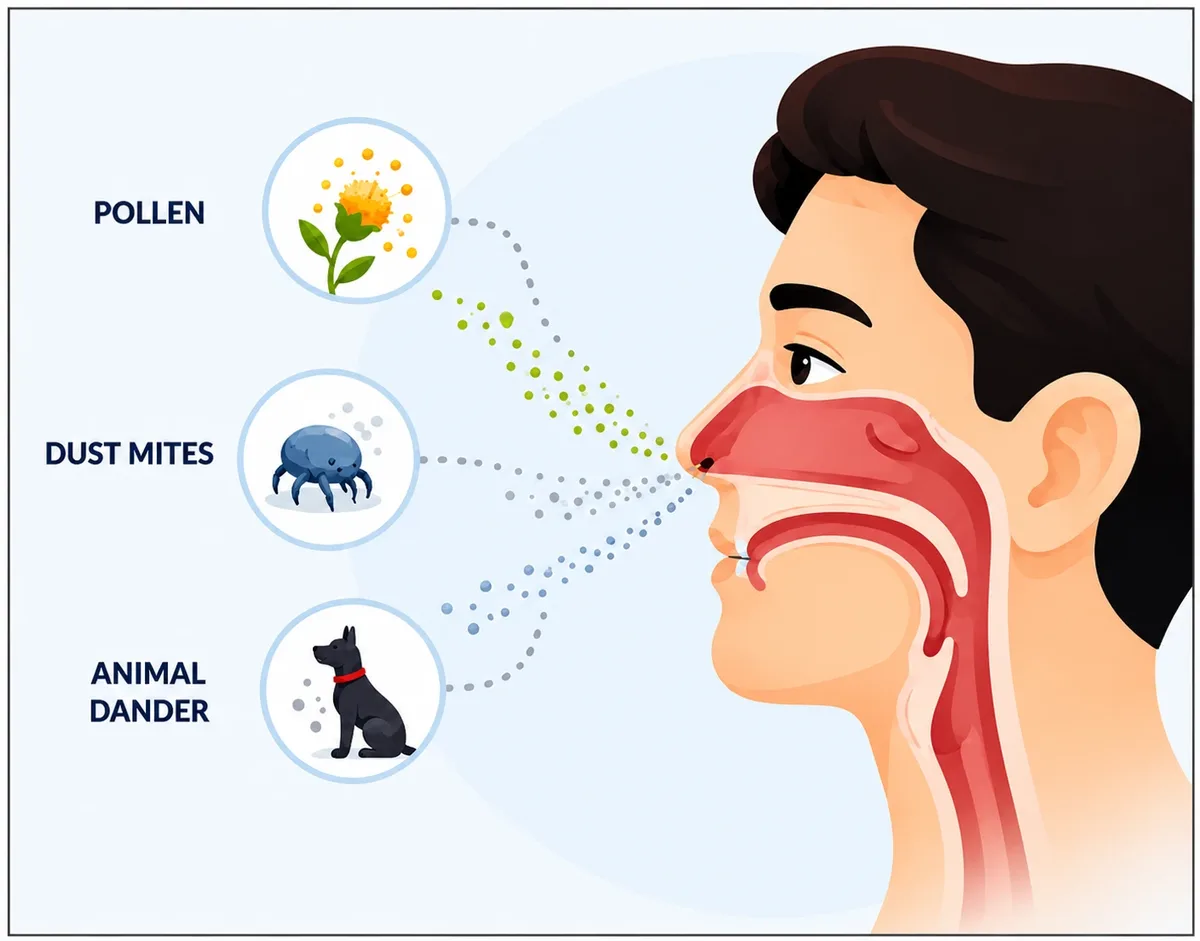
| Perennial | All year round | Dust mites, mould, pet dander |
Micro Summary: Allergic rhinitis is an immune overreaction to airborne allergens. It can be seasonal or year-round. It is not a cold – it needs proper diagnosis and targeted treatment.
What Causes Allergic Rhinitis? Understanding the Science Simply
Allergic rhinitis occurs when the immune system mistakenly reacts to harmless allergens like dust, pollen, or pet dander, causing inflammation inside the nose and triggering allergy symptoms.
Step 1 -First Exposure
You breathe in an allergen such as dust, pollen, or pet dander. Your immune system mistakenly identifies it as harmful and starts producing IgE antibodies against it.
Step 2 -Sensitisation
These IgE antibodies attach themselves to mast cells present in the lining of your nose, preparing the body to react during future exposure.
Step 3 -Second Exposure
When you inhale the same allergen again, the mast cells rapidly release histamine and other inflammatory chemicals.
Step 4 -Symptoms Begin
Within minutes, the nasal lining becomes swollen and irritated, leading to sneezing, runny nose, nasal blockage, itching, and mucus production.
Long-Term Effect of Repeated Exposure
Continuous exposure to allergens can cause chronic inflammation inside the nose, increasing the risk of sinus infections, nasal polyps, and worsening asthma symptoms.
Micro Summary: Allergic rhinitis develops through a stepwise immune response – exposure, sensitisation, and allergic reaction. Identifying and avoiding the trigger is just as important as medical treatment.
What Are the Symptoms of Allergic Rhinitis?
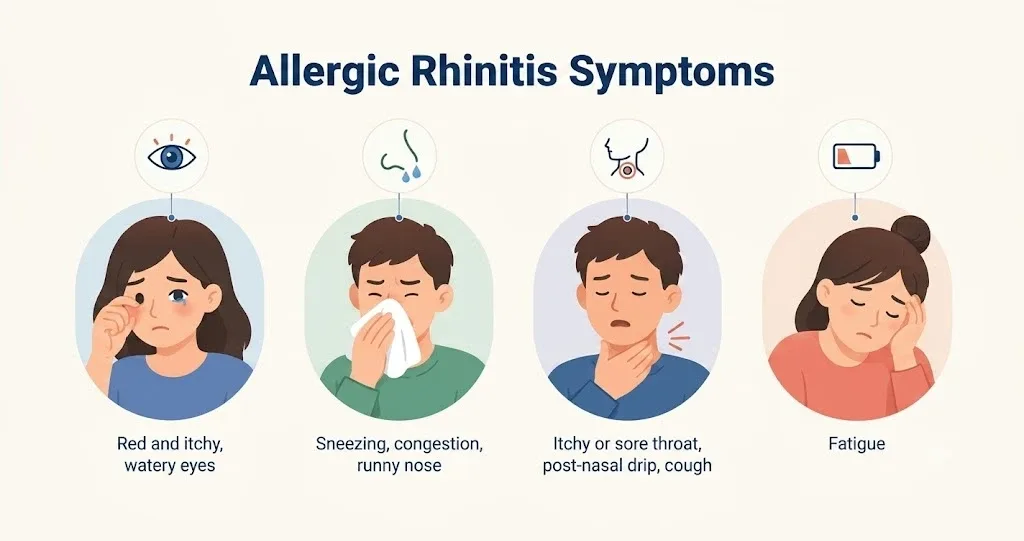
The most common symptoms of allergic rhinitis are a runny nose, repeated sneezing, nasal blockage, and itchy, watery eyes.
Many patients are surprised to learn that headaches, disturbed sleep, and daytime fatigue are also symptoms of uncontrolled allergic rhinitis.
Full Symptoms Comparison Table
| Common Symptoms | Less Obvious Symptoms |
| Runny nose (clear discharge) | Chronic fatigue and low energy |
| Repeated sneezing | Poor concentration and brain fog |
| Nasal congestion and blockage | Disturbed or poor sleep |
| Itchy, watery eyes | Frequent headaches |
| Itchy throat and roof of mouth | Postnasal drip and throat clearing |
| Sneezing fits in the morning | Reduced sense of smell |
Micro Summary: Allergic rhinitis symptoms go beyond a runny nose. Fatigue, poor sleep, and difficulty concentrating are signs that the condition is affecting your whole body – not just your nose.
What Triggers Allergic Rhinitis? Common Causes and Risk Factors Explained
House Dust Mites
House dust mites are one of the most common triggers of allergic rhinitis in Nashik. These microscopic allergens thrive in mattresses, pillows, carpets, curtains, and upholstered furniture, especially in humid indoor environments.
Seasonal Pollen During Summer
During the summer months, especially around April, pollen from local trees, grasses, and plants increases significantly. Many people experience sneezing, itchy eyes, and nasal blockage during this seasonal pollen surge.
Monsoon Mould and Dampness
Monsoon humidity between June and September encourages mould growth inside damp walls, bathrooms, and poorly ventilated rooms. Mould spores are a major trigger for persistent allergy symptoms in Nashik.
Construction Dust and Urban Pollution
Rapid urban development and ongoing construction activities generate large amounts of airborne dust. Continuous exposure to dust particles can irritate the nasal lining and worsen allergic rhinitis symptoms.
Vehicle Exhaust Fumes
Heavy traffic and vehicle pollution release irritants that inflame the nasal passages. People exposed to daily traffic fumes often experience chronic sneezing, congestion, and throat irritation.
Cockroach Allergens in Older Buildings
Cockroach droppings and body particles are powerful indoor allergens commonly found in older buildings. This trigger is often overlooked but can significantly worsen allergic rhinitis, especially in children.
Pet Dander From Dogs and Cats
Proteins found in pet skin flakes, saliva, and fur can trigger allergic reactions in sensitive individuals. Pet dander commonly causes sneezing, itchy eyes, nasal blockage, and recurring allergy symptoms.
Micro Summary: climate makes it a high-allergen city. Knowing which season your symptoms peak in gives a strong clue about your specific triggers -and helps your ENT specialist design a more targeted treatment plan.
Diagnosis Methods Compared
| Test | How It Works | Result Time | Best For |
| Skin Prick Test | Small allergen drops on forearm skin | 20 minutes | Most patients |
| Blood IgE Test | Blood sample tested in lab | 2–3 days | Patients on antihistamines or with skin conditions |
| Nasal Endoscopy | Camera examination of nasal passage | Immediate | Ruling out polyps and structural issues |
Micro Summary: Proper allergy testing is not optional -it is essential. It tells you exactly what to avoid and helps your ENT specialist choose the right treatment for your specific allergy profile.
What Are the Best Treatments for Allergic Rhinitis?
The best treatment for allergic rhinitis combines nasal corticosteroid sprays, antihistamines, allergen avoidance, and -for long-term relief -allergen immunotherapy.
Many patients manage only with antihistamine tablets. While these help with sneezing and itching, they do not treat the underlying nasal inflammation. A proper ENT treatment plan includes:
Nasal Corticosteroid Sprays
Nasal steroid sprays such as fluticasone and mometasone are considered the most effective long-term treatment for allergic rhinitis because they directly reduce inflammation inside the nose without causing drowsiness.
Allergen Immunotherapy
Allergen immunotherapy gradually trains the immune system to become less sensitive to allergens and is the only treatment that can modify the underlying allergic response long term.
Saline Nasal Rinse
Regular saline nasal rinsing helps wash out allergens, moisturises the nasal lining, reduces irritation, and can decrease dependence on medications.
Micro Summary: Antihistamines alone are not enough. Nasal sprays treat the inflammation. Immunotherapy treats the root cause. The right combination – chosen by your ENT specialist – gives the best and most lasting results.
Practical Tips to Reduce Allergens at Home
The most effective way to reduce allergic rhinitis symptoms at home is to identify and reduce your specific allergen exposure daily.
Simple changes at home can make a significant difference, sometimes reducing the need for medicines:
For Dust Mite Allergy
Use allergen-proof mattress and pillow covers, wash bedding weekly in hot water, and reduce dust-collecting items like carpets, curtains, books, and soft toys in the bedroom.
For Mould Allergy
Keep indoor areas dry and well-ventilated, clean damp bathroom surfaces regularly, repair leaks quickly, and maintain indoor humidity below 50%.
For Pollen Allergy
Keep windows closed during high-pollen hours, shower after outdoor exposure, and consider using a HEPA air purifier in the bedroom.
For Pet Dander Allergy
Keep pets away from sleeping areas, clean furniture and floors frequently with a HEPA vacuum, and wash hands after handling animals.
Micro Summary: Reducing allergen exposure is as important as taking medicine. Even small changes -like allergen-proof pillow covers or keeping windows closed on high-pollen mornings -can cut your symptom load significantly.
When Should You See an ENT Specialist?
You should see an ENT specialist if your runny nose or sneezing has lasted more than two weeks, is affecting your sleep, or is not responding to standard antihistamines.
Do not delay if you notice any of the following warning signs: symptoms that keep returning every season, nasal blockage that alternates between sides, loss of sense of smell, frequent ear pain or pressure, mouth breathing at night, or snoring that worsens during allergy season.
Untreated allergic rhinitis can lead to chronic sinusitis, middle ear infections, nasal polyp growth, and worsening of asthma. Early treatment prevents these complications.
Allergic Rhinitis vs Common Cold – Know the Difference
| Feature | Allergic Rhinitis | Common Cold |
| Duration | Weeks to months | 7–10 days |
| Nasal discharge | Clear and watery | Starts clear, turns yellow/green |
| Fever | Never | Sometimes |
| Itchy eyes | Yes, very common | Rare |
| Sneezing | Repeated bursts | Occasional |
| Cause | Immune reaction to allergens | Viral infection |
| Treatment | Antihistamines, nasal spray | Rest, fluids, supportive care |
FAQ
1: Can allergic rhinitis be permanently cured?
Yes, in many cases. Allergen immunotherapy – given over 3 years – can reprogram the immune system and provide long-term relief that continues even after treatment ends. The earlier you start, the better the outcome.
2: Is allergic rhinitis common in Nashik?
Yes. Nashik’s climate – dry summers, monsoon humidity, rapid construction, and seasonal pollen – creates one of the highest allergen environments in Maharashtra. It is one of the most frequently diagnosed conditions in my ENT clinic in Nashik.
3: Are nasal corticosteroid sprays safe for daily use?
Yes. Nasal corticosteroid sprays prescribed by a doctor are safe for long-term daily use. They act locally inside the nasal lining and have minimal absorption into the bloodstream, making them far safer than long-term antihistamine tablet use.
4: Can children have allergic rhinitis?
Yes, and it is more common in children than most parents realise. Untreated allergic rhinitis in children causes poor sleep, reduced concentration, and frequent ear infections. Early diagnosis and treatment can also reduce the child’s risk of developing asthma later in life.
5: Can I manage allergic rhinitis without medicines?
For mild cases, strict allergen avoidance and daily saline nasal rinse can reduce symptoms significantly. However, for moderate to severe allergic rhinitis, medicines prescribed by an ENT specialist are necessary for adequate control.
6: How is allergic rhinitis different from sinusitis?
Allergic rhinitis is an immune reaction that inflames the nasal lining. Sinusitis is an infection or inflammation of the sinus cavities. They often occur together – uncontrolled allergic rhinitis is actually one of the leading causes of chronic sinusitis.