
Congenital hearing loss is hearing impairment a baby is born with, affecting roughly 1 to 3 out of every 1,000 newborns worldwide. It can involve one ear or both, and range from mild to profound. Most cases are picked up through routine newborn hearing screening, not by parents noticing something is wrong — which is exactly why screening matters. When identified and treated within the first six months of life, most children go on to develop speech and language skills in line with their hearing peers.
Key Takeaways
- Congenital hearing loss is present at birth, though it isn’t always caught until weeks or months later.
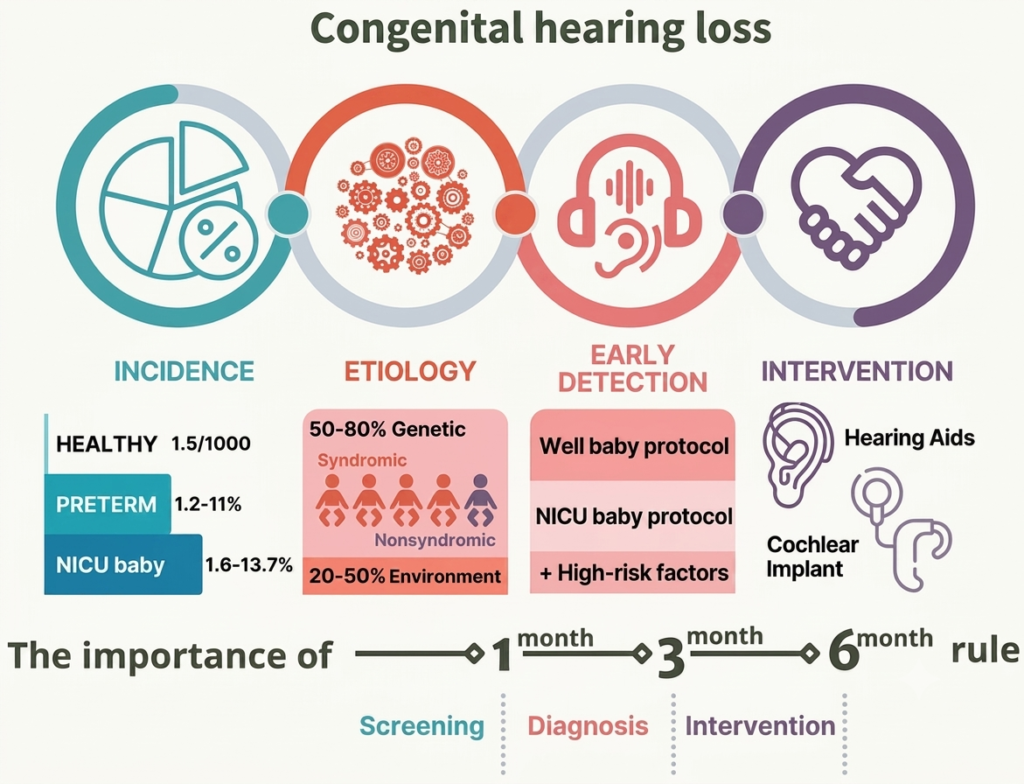
- Roughly half of all cases trace back to genetic causes — often with no family history at all.
- Newborn hearing screening catches most cases before parents notice anything unusual.
- The 1-3-6 rule (screen by 1 month, diagnose by 3 months, treat by 6 months) is the global benchmark for good outcomes.
- Hearing aids, cochlear implants, and early speech-language therapy allow most children to develop typical communication skills.
What Is Congenital Hearing Loss?
Congenital hearing loss refers to any hearing impairment present at the time of birth. The word “congenital” simply means “existing from birth” — it doesn’t specify a cause. That’s an important distinction, because people often assume Congenitall automatically means genetic. It doesn’t. A baby can be born with hearing loss caused by an infection the mother had during pregnancy, complications during delivery, or a structural difference in the ear — genetics is just one contributor among several.
Congenital hearing loss can present in different ways:
- Unilateral – affecting only one ear
- Bilateral – affecting both ears
- Mild to profound – ranging from difficulty hearing soft sounds to little or no detectable hearing at all
- Temporary or permanent – fluid-related hearing loss may resolve, while damage to the inner ear or hearing nerve is typically lifelong
Because most affected babies look and behave like any other newborn, hearing loss is rarely obvious at a glance. That’s the core reason universal newborn hearing screening exists — it doesn’t rely on parents or doctors noticing a problem.
Types of Congenital Hearing Loss
Conductive Hearing Loss
Sound gets blocked somewhere in the outer or middle ear — before it ever reaches the inner ear causes range from fluid behind the eardrum to structural differences in the ear canal. This type is often treatable through medication or surgery, and hearing can sometimes be fully restored.
Sensorineural Hearing Loss (SNHL)
This is the most common permanent form of congenital hearing loss. It stems from damage to the hair cells inside the cochlea or to the auditory nerve itself. Sound reaches the inner ear normally but isn’t converted into a signal the brain can interpret properly. SNHL doesn’t resolve on its own, but hearing aids or cochlear implants can restore functional hearing in most children.
Mixed Hearing Loss
A combination of both conductive and sensorineural issues. Children with mixed hearing loss often need a layered treatment approach — addressing the conductive component medically while managing the sensorineural component with devices and therapy.
What Causes Congenital Hearing Loss?
Genetic Factors
Genetics account for roughly half of all congenital hearing loss cases. This can occur as an isolated trait or as part of a broader genetic syndrome. One detail that surprises many parents: a baby can inherit a hearing-loss gene from two hearing parents who carry no family history of it whatsoever, since some genetic variants are recessive and silent for generations.
HInfections During Pregnancy
Several maternal infections are linked to hearing loss in the developing baby, including:
- Cytomegalovirus (CMV) — currently the leading non-genetic cause in many countries
- Rubella
- Toxoplasmosis
- Syphilis
- Herpes simplex virus
Routine prenatal screening and, where applicable, vaccination before conception reduce this risk considerably.
Prematurity and Low Birth Weight
Babies born early or with very low birth weight have inner ear structures that may not be fully developed, and they’re more likely to need interventions (like certain medications or extended NICU stays) that carry their own hearing risks.
Birth Complications
Reduced oxygen supply during labor — sometimes called birth asphyxia — can damage the auditory nerve or inner ear structures. Extended neonatal intensive care is a recognized risk marker, which is why NICU graduates are typically screened more thoroughly than other newborns.
Craniofacial and Structural Differences
Conditions affecting the ear, jaw, or skull — such as cleft palate or outer ear malformations — can interfere with normal sound conduction and usually call for specialist evaluation beyond standard screening.
Ototoxic Medications
A small number of medications can affect the inner ear if used during pregnancy or the newborn period. These are prescribed only when medically necessary, with the risks weighed carefully against the benefits.
Unknown Causes
In a meaningful percentage of cases, no clear cause is ever found — even after genetic testing, infection screening, and imaging. This doesn’t change the treatment path. What matters most for long-term outcomes isn’t identifying why hearing loss happened, but how quickly it’s diagnosed and addressed.
How Is Congenital Hearing Loss Diagnosed?
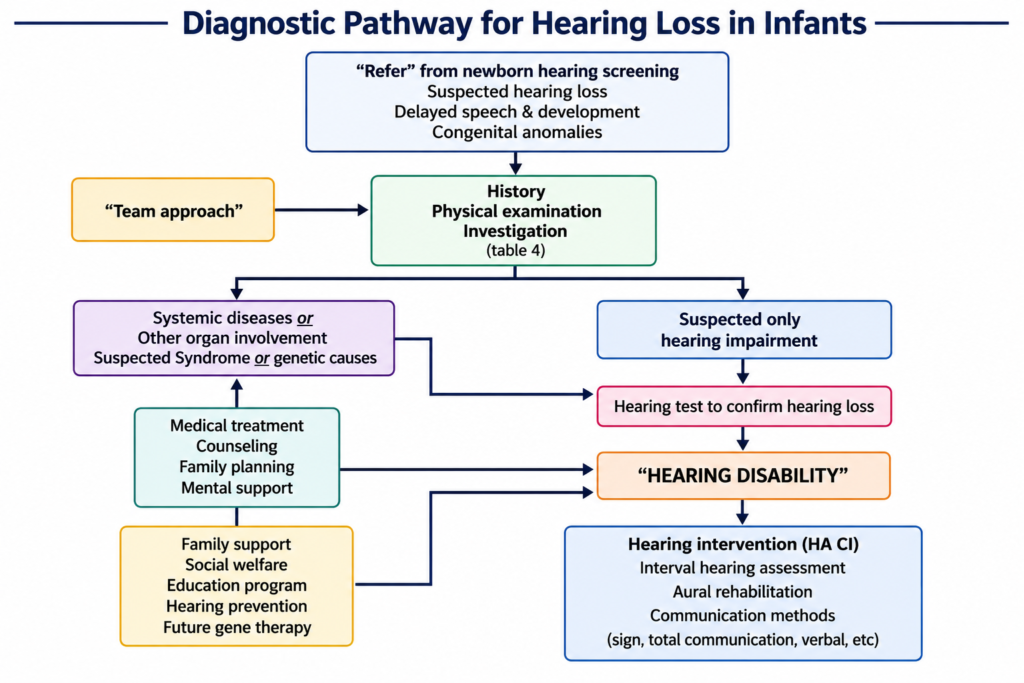
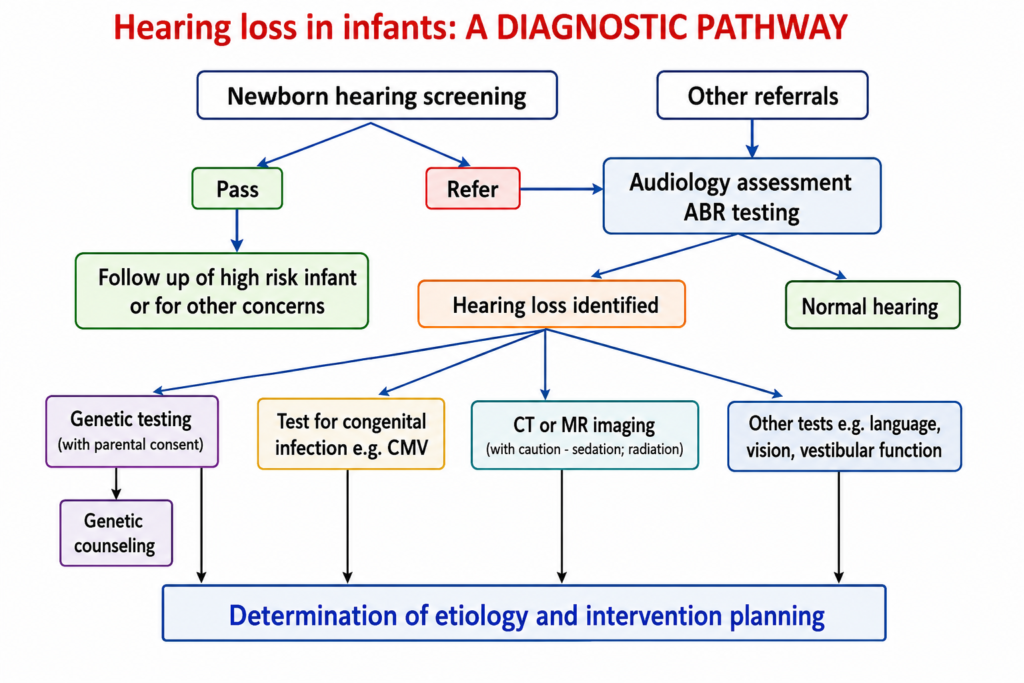
Newborn Hearing Screening (Within the First Month)
Almost every baby born in a hospital today receives a hearing screening before discharge, using one or both of these painless, non-invasive tests:
- Otoacoustic Emissions (OAE): A small probe measures faint sound “echoes” produced by a healthy inner ear. No echo may indicate a hearing issue.
- Automated Auditory Brainstem Response (AABR): Soft clicks are played through earphones while sensors track the brain’s electrical response to sound.
A “did not pass” result does not confirm hearing loss — it means a follow-up diagnostic test is needed. Fluid in the ear canal, background noise, or a baby being unsettled during testing can all cause a false result.
Diagnostic Audiological Evaluation (By 3 Months)
If a baby doesn’t pass the initial screening, a pediatric audiologist performs a more detailed diagnostic ABR test, along with a physical ear exam, to confirm whether hearing loss is present and how severe it is.
Further Medical Work-Up
Depending on the diagnostic results, doctors may recommend genetic testing, CMV testing (ideally within the first 3 weeks of life, since it becomes harder to confirm afterward), or imaging of the inner ear structures to understand the underlying cause and guide treatment planning.
Treatment Options for Congenital Hearing Loss
Treatment depends entirely on the type and severity of hearing loss, but early intervention — starting by 6 months of age — is the single biggest predictor of good long-term outcomes.
| Treatment | Best suited for | What it does |
| Medical/surgical treatment | Conductive hearing loss (fluid, structural issues) | Can fully or partially restore hearing |
| Hearing aids | Mild to severe sensorineural hearing loss | Amplify sound to a usable level |
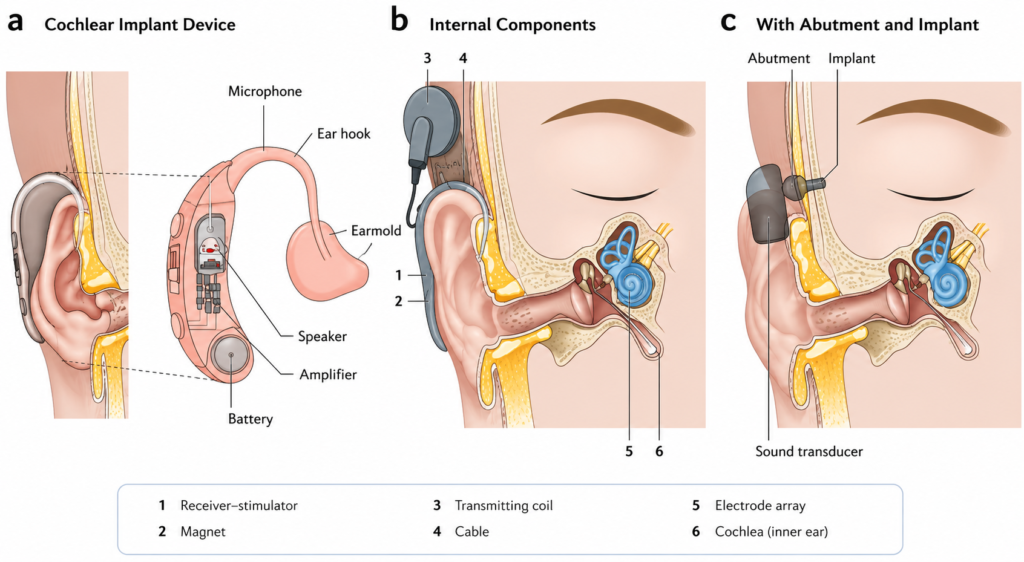
| Cochlear implants | Severe to profound sensorineural hearing loss | Bypass damaged hair cells and stimulate the auditory nerve directly |
| Speech-language therapy | Nearly all children with hearing loss | Builds listening, speech, and language skills alongside hearing devices |
| Sign language / visual communication support | Families who choose it, or as a complement to spoken language | Provides a full, accessible language foundation from infancy |
Most children fitted with appropriate devices and enrolled in early intervention services by 6 months go on to develop speech and language at a pace comparable to hearing children of the same age.
Why the First Six Months Matter So Much
A newborn’s brain is in its most adaptable state — a property called neuroplasticity — during the first years of life. This is when the auditory pathways that process speech and language are being actively wired. Sound stimulation during this window has an outsized effect on how those pathways develop.
Delay that stimulation, and the effects tend to compound: speech emerges more slowly, vocabulary lags, and by school age, academic and social gaps can appear that are harder to close later. Early diagnosis doesn’t just treat hearing — it protects the developmental timeline for language, learning, and social connection.
This is the reasoning behind the internationally recognized 1-3-6 rule:
- Screen every baby by 1 month of age
- Diagnose confirmed hearing loss by 3 months
- Begin treatment by 6 months
Children who follow this timeline consistently show stronger speech, language, and academic outcomes than those diagnosed later.
hout these red flags, scheduling a consultation for vertigo treatment in Nashik with an ENT specialist is the right first step.
Frequently Asked Questions
What is congenital hearing loss?
Congenital hearing loss is hearing impairment that is present at birth. It can affect one or both ears and range from mild to profound. Depending on the cause, it may be temporary or permanent.
Why is early diagnosis of congenital hearing loss important?
Early diagnosis allows treatment during the critical stages of brain development, helping children develop better speech, language, communication, and learning skills.
What causes congenital hearing loss?
Common causes include genetic factors, infections during pregnancy, premature birth, low birth weight, birth complications, structural ear abnormalities, and certain medications. In some cases, the exact cause remains unknown.
Can congenital hearing loss be treated?
Treatment depends on the type and severity of hearing loss. Options may include hearing aids, cochlear implants, speech therapy, and auditory rehabilitation. Some cases of conductive hearing loss can also be treated medically or surgically.
Can congenital hearing loss get worse as a child grows?
Some forms of congenital hearing loss remain stable, while others may gradually progress over time. Regular hearing assessments help monitor changes and ensure treatment continues to meet the child’s communication and developmental needs.