
If the room suddenly feels like it’s spinning or you experience a sudden loss of balance, it can be a frightening experience. Many people assume these symptoms indicate a problem with the brain, but in reality, the inner ear is often the underlying cause. The inner ear contains the body’s balance system, and even minor disturbances can trigger vertigo, dizziness, nausea, and unsteadiness. Because these symptoms can arise from a variety of conditions, understanding their source is essential for accurate diagnosis and effective treatment. This guide explains what vertigo and dizziness really are, why the ear is frequently responsible, and when medical evaluation is necessary.
Quick Takeaways
- Most cases of vertigo are caused by problems in the inner ear rather than the brain.
- Benign Paroxysmal Positional Vertigo (BPPV) is the most common cause of vertigo.
- Vertigo is different from general dizziness and typically causes a spinning sensation.
- An ENT evaluation is often the first step in diagnosing recurrent vertigo.
- Seek urgent medical attention if vertigo occurs with slurred speech, facial weakness, severe headache, or difficulty walking.
What Is Vertigo?
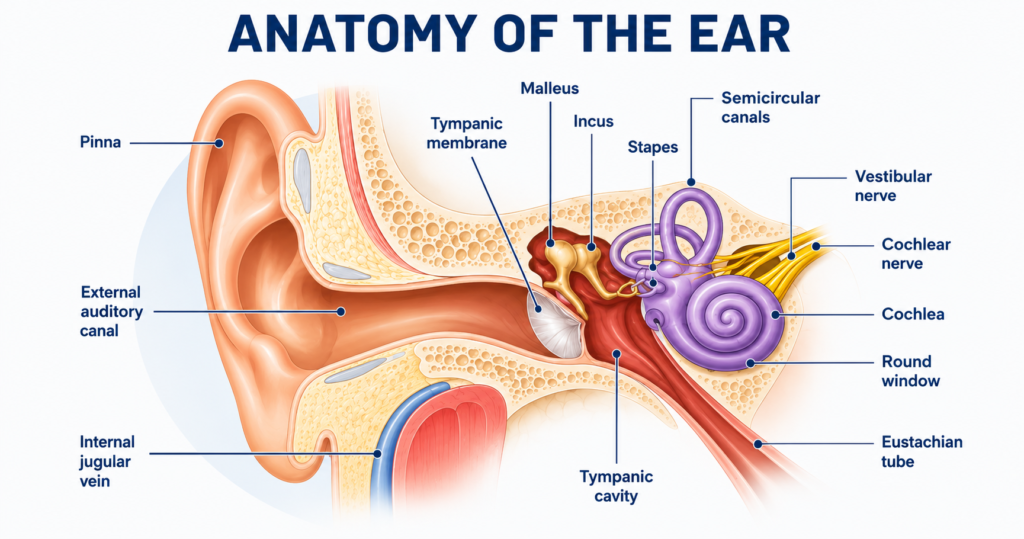
Vertigo is the false sensation that you or your surroundings are spinning or moving, even while standing still. It is a symptom, not a disease, and in most cases it originates from the vestibular (balance) system inside the inner ear rather than the brain.
Vertigo is different from general “dizziness,” which can mean light-headedness, unsteadiness, or near-fainting. True vertigo specifically involves a spinning or rotating sensation.
Why Is Vertigo Often an Ear Problem?
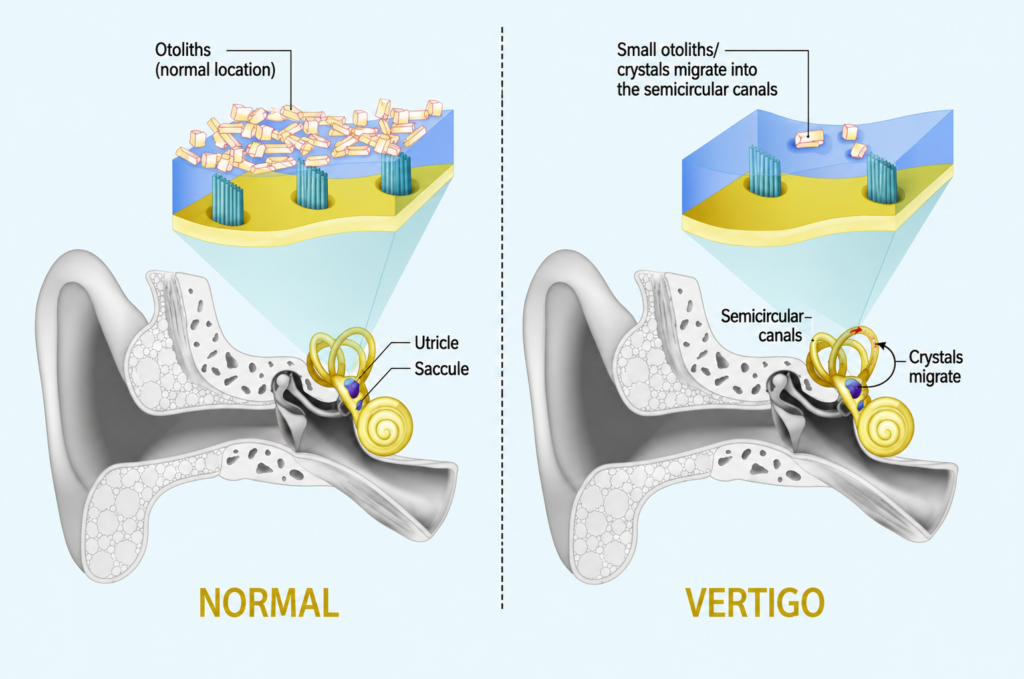
Your inner ear contains tiny structures responsible for balance, including fluid-filled canals and calcium crystals (otoconia) that detect head movement. When these structures are disturbed, your brain receives confusing signals about position and motion-and the result is vertigo.
This is why the evaluation of vertigo often begins with a detailed examination of the ears and balance system rather than immediately relying on brain imaging. Research shows that most cases of vertigo originate from the vestibular (inner ear) system, with Benign Paroxysmal Positional Vertigo (BPPV) being the most common cause. Brain scans such as MRI or CT are usually reserved for patients with warning signs suggesting a neurological condition or other less common causes.
Ear-Related Vertigo vs Brain-Related Vertigo
Understanding whether vertigo originates from the ear or the brain is important because the treatment approach differs significantly.
| Feature | Ear-Related Vertigo | Brain-Related Vertigo |
| Frequency | Very common | Less common |
| Typical symptoms | Spinning sensation, nausea, hearing loss, tinnitus | Weakness, slurred speech, double vision |
| Duration | Often triggered by head movement | May occur continuously |
| Specialist involved | ENT specialist | Neurologist |
| Urgency | Usually non-emergency | May require urgent medical attention |
While most cases are related to the inner ear, symptoms such as sudden weakness, difficulty speaking, or severe imbalance should never be ignored.
What Causes Ear-Related Vertigo?
Benign Paroxysmal Positional Vertigo (BPPV)
BPPV is the most common cause of vertigo. It occurs when tiny calcium carbonate crystals become displaced within the inner ear’s balance canals. As the head changes position, these crystals stimulate the balance sensors, causing brief but intense episodes of spinning dizziness, especially when turning over in bed, looking up, or bending down.
Ménière’s Disease
Ménière’s disease is a chronic inner ear disorder caused by abnormal fluid build-up within the inner ear. It typically leads to recurring episodes of vertigo, fluctuating hearing loss, ringing in the ears (tinnitus), and a feeling of fullness or pressure in the affected ear. Early diagnosis and treatment can help manage symptoms effectively.
Vestibular Neuritis and Labyrinthitis
Vestibular neuritis and labyrinthitis are inflammatory conditions that affect the inner ear, often following a viral infection. These disorders can cause sudden, severe vertigo, nausea, vomiting, and difficulty maintaining balance. Labyrinthitis may also be accompanied by hearing loss if the hearing portion of the inner ear is involved.
Ear Infections
Infections affecting the middle or inner ear can disrupt the body’s balance system and lead to dizziness or vertigo. These infections are often accompanied by ear pain, hearing changes, fever, or fluid discharge. Prompt treatment of the infection usually helps resolve the associated balance problems.
Motion Sickness Sensitivity
Some individuals have a highly sensitive vestibular system that overreacts to movement. This can result in dizziness, nausea, or vertigo while travelling by car, boat, or airplane, or when exposed to certain visual motion. Managing triggers and using appropriate therapies can help reduce symptoms.
Head Injury
A head injury can damage the delicate structures of the inner ear or affect the nerves responsible for balance. Vertigo may develop immediately after trauma or appear days later. A thorough medical evaluation is important to identify the cause and determine the most appropriate treatment.
By contrast, brain-related (central) causes of dizziness-such as stroke or migraine-associated vertigo-are less common but require urgent attention, which is why proper diagnosis matters.
Symptoms to Watch For
If you’re experiencing any of the following, it’s worth getting evaluated:
- A spinning sensation that worsens with head movement or rolling over in bed
- Loss of balance or unsteadiness while walking
- Nausea or vomiting during dizzy spells
- Ringing in the ears (tinnitus) alongside dizziness
- Hearing changes or a feeling of ear fullness
- Episodes lasting seconds to minutes (typical of BPPV) versus hours (more typical of Meniere’s disease)
- Sweating or anxiety triggered by the spinning sensation
How Is Vertigo Diagnosed?
Diagnosing vertigo involves a detailed medical history, physical examination, and targeted tests to identify the underlying cause.
Common diagnostic steps include:
Dix-Hallpike Test
The Dix-Hallpike test is a simple positional examination used to diagnose Benign Paroxysmal Positional Vertigo (BPPV). During the test, specific head and body movements are performed to reproduce vertigo symptoms and observe characteristic eye movements (nystagmus), helping confirm the diagnosis.
Hearing Tests (Audiometry)
A hearing test is often recommended to determine whether hearing loss is associated with vertigo. The results can help identify inner ear disorders such as Ménière’s disease or other conditions that affect both hearing and balance.
Videonystagmography (VNG) and Balance Testing
Videonystagmography (VNG) is a specialised test that records eye movements while assessing the function of the inner ear balance system. It helps identify abnormalities in the vestibular system and provides valuable information about the cause of persistent dizziness or vertigo.
Blood Pressure and Cardiovascular Assessment
Not all dizziness is caused by ear problems. Measuring blood pressure and evaluating cardiovascular health help identify conditions such as low blood pressure, heart rhythm disorders, or poor circulation that may contribute to dizziness and balance disturbances.
MRI or Brain Imaging
Brain imaging, such as an MRI or CT scan, is recommended only when there are signs suggesting a neurological cause of vertigo. These tests are typically reserved for patients with sudden severe vertigo, persistent neurological symptoms, weakness, difficulty speaking, or other warning signs that require further evaluation.
This step-by-step approach helps determine whether your case needs ENT-led vertigo treatment in Nashik or referral to a neurologist.
Treatment & Management Options
Most ear-related vertigo is highly treatable, and many patients see significant improvement within a few sessions.
Epley Maneuver for BPPV
The Epley maneuver is a simple, non-invasive procedure performed in the clinic to treat Benign Paroxysmal Positional Vertigo (BPPV). It involves a series of carefully guided head movements that reposition displaced calcium crystals within the inner ear. Most patients experience significant relief after just one or two treatment sessions.
Vestibular Rehabilitation Therapy
Vestibular rehabilitation therapy is a specialized exercise program designed to improve balance and reduce dizziness. These guided exercises help the brain adapt to changes in the inner ear, allowing patients to regain stability, confidence, and normal daily function over time.
Medications for Symptom Relief
Medications such as anti-vertigo drugs and anti-nausea medicines may be prescribed to control acute episodes of vertigo. While they provide temporary relief from dizziness, nausea, and vomiting, they are generally recommended only for short-term use and do not treat the underlying cause.
Dietary Changes for Ménière’s Disease
For patients with Ménière’s disease, dietary modifications can help reduce the frequency and severity of vertigo attacks. A low-salt diet, along with limiting caffeine and alcohol intake, helps reduce fluid build-up in the inner ear and supports better symptom control.
Treating Underlying Ear Infections
When vertigo is caused by an ear infection or inflammation, treatment focuses on resolving the underlying condition. Depending on the diagnosis, antibiotics, antiviral medications, or anti-inflammatory drugs may be prescribed. Once the infection is treated, vertigo symptoms often improve significantly.
Surgical Treatment for Severe Cases
Surgery is rarely required for vertigo and is considered only when symptoms are severe, persistent, and do not respond to conservative treatments. Surgical procedures are reserved for selected patients with specific inner ear disorders and are recommended only after a thorough evaluation.
Self-diagnosing or relying on home remedies alone can delay proper treatment, especially for recurring vertigo.
Can Stress Cause Vertigo?
Stress itself does not usually cause true vertigo, but it can worsen existing balance disorders and make symptoms feel more intense. Anxiety and stress may also contribute to dizziness, vestibular migraine, and prolonged recovery from inner ear conditions.
People experiencing recurrent vertigo often notice that symptoms become worse during periods of emotional stress, poor sleep, or fatigue. Managing stress, maintaining good sleep habits, and seeking appropriate medical evaluation can help improve overall recovery.
When Should You See a Doctor?
Most vertigo is manageable, but certain symptoms need prompt medical attention. See an ENT specialist or visit the ER if vertigo is accompanied by:
- Sudden, severe headache unlike any before
- Slurred speech, facial drooping, or weakness on one side
- Double vision or difficulty walking that doesn’t improve
- Chest pain or irregular heartbeat
- Vertigo lasting more than a few days without improvement
These can signal a central (brain-related) cause requiring urgent care. For recurring or persistent vertigo without these red flags, scheduling a consultation for vertigo treatment in Nashik with an ENT specialist is the right first step.
Frequently Asked Questions
1. Is vertigo always caused by an ear problem?
No, but most cases of vertigo originate in the inner ear, where the body’s balance system is located. Conditions such as Benign Paroxysmal Positional Vertigo (BPPV), vestibular neuritis, and Ménière’s disease are common causes. Less commonly, vertigo may result from neurological disorders, migraine, or stroke.
2. What are the common symptoms of vertigo?
Vertigo typically causes a spinning or whirling sensation, dizziness, imbalance, nausea, vomiting, and difficulty walking. Some people may also experience hearing loss, ringing in the ears (tinnitus), or a feeling of fullness in the ear, depending on the underlying cause.
3. How is vertigo diagnosed?
Diagnosis begins with a detailed medical history and physical examination. An ENT specialist may perform balance tests, hearing tests, positional tests such as the Dix-Hallpike maneuver, or recommend imaging studies like MRI or CT scans if a central nervous system cause is suspected.
4. What tests are commonly used to evaluate vertigo?
Common tests include audiometry (hearing test), videonystagmography (VNG), vestibular function testing, and positional testing for BPPV. In certain cases, blood tests or brain imaging may be recommended to rule out neurological conditions or other underlying disorders.
5. What is the fastest treatment for BPPV-related vertigo?
The Epley maneuver is often the most effective treatment for BPPV. This repositioning procedure helps move displaced crystals within the inner ear back to their correct location and can significantly reduce symptoms, sometimes after just one or two treatment sessions.
6. What treatment options are available for vertigo?
Treatment depends on the underlying cause. Options may include vestibular rehabilitation exercises, repositioning maneuvers, medications to reduce dizziness or nausea, dietary modifications, and treatment of associated conditions such as ear infections or migraines.
7. Can medications cure vertigo?
Medications can help relieve symptoms such as nausea, dizziness, and motion sickness, but they do not always cure the underlying cause. Long-term treatment often focuses on addressing the specific condition responsible for vertigo and improving balance function.
8. Can vertigo go away on its own?
Some mild episodes of vertigo, particularly those caused by BPPV or viral infections, may resolve without treatment. However, recurrent, persistent, or severe vertigo should be evaluated by a healthcare professional to identify and treat the underlying cause.
9. What is the difference between vertigo and general dizziness?
Vertigo is a specific sensation that you or your surroundings are spinning or moving. Dizziness is a broader term that may describe light-headedness, unsteadiness, or feeling faint without the characteristic spinning sensation associated with vertigo.
10. When should I seek medical attention for vertigo?
Immediate medical attention is necessary if vertigo occurs with symptoms such as severe headache, slurred speech, facial weakness, double vision, sudden hearing loss, or difficulty walking, as these may indicate a serious neurological condition requiring urgent evaluation.