
Ear wax, also known as cerumen, is a natural substance that protects and cleans the ear canal. However, when too much ear wax builds up or becomes impacted, it can cause symptoms such as hearing loss, ear fullness, discomfort, tinnitus, and dizziness. Most cases can be managed safely, but persistent ear wax buildup should be assessed by an ENT specialist to avoid complications.
Key Takeaways
- Ear wax is a natural protective substance that helps keep the ears clean and healthy.
- Excessive ear wax can cause hearing loss, ear blockage, tinnitus, and discomfort.
- Cotton buds and other objects can push wax deeper into the ear and should be avoided.
- Professional ear wax removal is the safest option for impacted or persistent ear wax.
- Good ear hygiene and avoiding unnecessary ear cleaning can help prevent ear wax buildup.
What Is Ear Wax?
Ear wax, medically known as cerumen, is a natural substance produced by specialized glands in the outer part of the ear canal. It is made from a mixture of gland secretions, dead skin cells, and tiny hairs, creating a protective barrier that keeps the ears clean and healthy.
Contrary to popular belief, ear wax is not a sign of poor hygiene. In fact, it is an essential part of the ear's natural defence system.
Healthy ear wax helps:
- Trap dust, dirt, and other foreign particles before they reach the eardrum.
- Prevent bacteria and fungi from growing inside the ear canal.
- Lubricate the skin of the ear canal, reducing dryness and itching.
- Protect the delicate lining of the ear from irritation and injury.
Most people produce just the right amount of ear wax, and the ears clean themselves naturally without the need for routine cleaning.
Why Does Ear Wax Build Up?
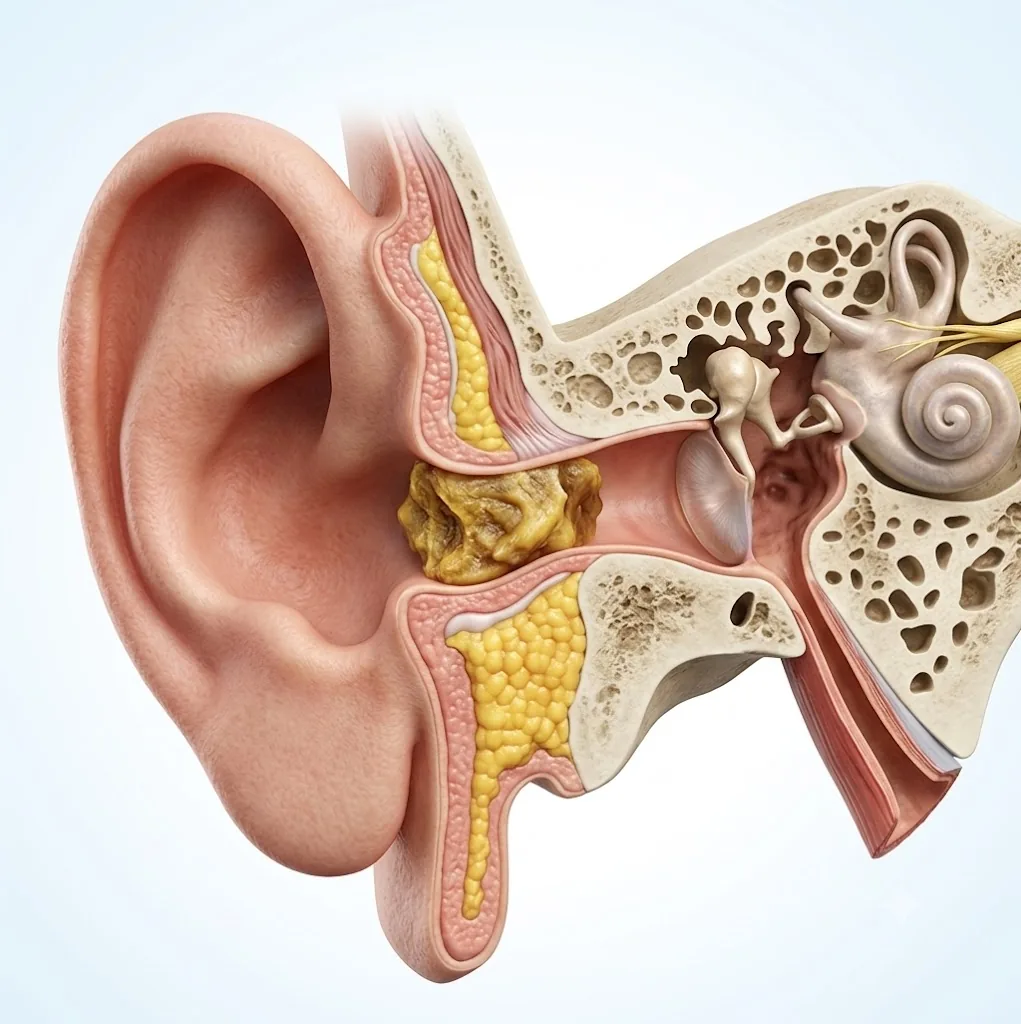
Ear wax buildup occurs when the ear's natural cleaning mechanism is disrupted or when more wax is produced than the ear can remove.
Several factors can contribute to excessive ear wax accumulation.
Natural Overproduction
Some people naturally produce more ear wax than others. This variation is influenced by genetics and is one of the most common reasons for recurring ear wax buildup.
Narrow or Curved Ear Canals
People with naturally narrow, curved, or unusually shaped ear canals may have difficulty clearing ear wax naturally. As a result, wax is more likely to accumulate and become impacted.
Using Cotton Buds
Cotton buds are one of the leading causes of impacted ear wax. Instead of removing wax, they often push it deeper into the ear canal, making it harder to come out naturally.
Frequent Use of Earbuds or Hearing Aids
Devices that sit inside the ear, such as earphones, hearing aids, or earplugs, can prevent ear wax from moving outward. Regular use may also stimulate the ear canal to produce more wax.
Ageing
As people grow older, ear wax often becomes drier and harder, making it less likely to move out of the ear naturally. Older adults are therefore more likely to develop impacted ear wax.
Excess Hair in the Ear Canal
In some individuals, especially older men, increased hair growth inside the ear canal can interfere with the natural movement of ear wax and contribute to blockage.
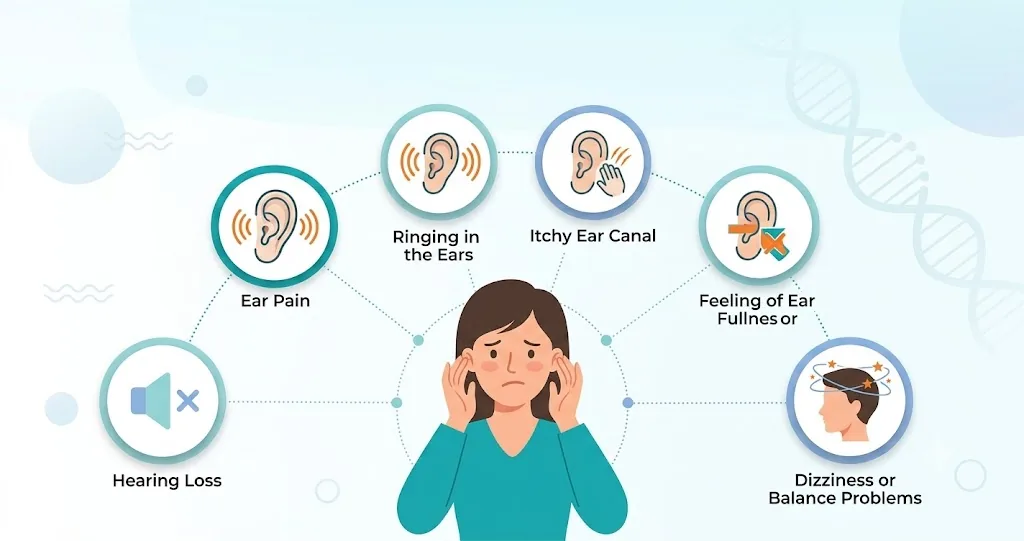
What is the Symptoms of Ear Wax Buildup
Many people with ear wax buildup have no symptoms at all. However, when wax completely or partially blocks the ear canal, it can affect hearing and cause a range of uncomfortable symptoms.
Hearing Loss
Temporary hearing loss is one of the most common signs of impacted ear wax. Sounds may seem muffled or distant because the wax blocks sound waves from reaching the eardrum effectively.
Ear Fullness or Blockage
Many people describe the sensation as having a blocked or plugged ear. The affected ear may feel full, heavy, or under pressure.
Earache
Although ear wax itself is not usually painful, impacted wax can press against the ear canal or eardrum, causing discomfort or mild pain.
Tinnitus
Some people experience ringing, buzzing, or humming sounds in the affected ear. This type of tinnitus often improves once the ear wax is safely removed.
Dizziness
In some cases, impacted ear wax may interfere with the normal function of the ear and contribute to dizziness or a feeling of imbalance.
Itching
Excess ear wax can irritate the skin inside the ear canal, leading to persistent itching or discomfort.
Cough
Although uncommon, a large plug of ear wax can stimulate a nerve within the ear canal that triggers a persistent cough in some individuals.
Who Is More Likely to Develop Ear Wax Buildup?
While anyone can develop impacted ear wax, certain groups are more susceptible than others.
You may be at a higher risk if you:
- Frequently use cotton buds or other objects to clean your ears.
- Wear hearing aids, earbuds, or earplugs for long periods.
- Have narrow or unusually shaped ear canals.
- Produce excessive ear wax naturally.
- Are an older adult.
- Have excessive hair growth inside the ear canal.
- Have certain skin conditions such as eczema that affect the ear canal.
Identifying these risk factors can help reduce the likelihood of recurring ear wax problems through appropriate ear care and preventive measures.
Safe Ways to Remove Ear Wax
Although ear wax usually clears on its own, excessive buildup may require treatment if it causes symptoms or blocks the ear canal. The safest approach depends on the amount of wax, its consistency, and whether you have an underlying ear condition.
Ear Wax Softening Drops
For mild ear wax buildup, wax-softening drops are often the first treatment recommended. These drops help soften hardened wax, allowing it to move out naturally over time.
Common ingredients include:
- Mineral oil
- Olive oil
- Glycerin
- Hydrogen peroxide-based solutions
- Carbamide peroxide
It is important to use these products only as directed. Ear drops should not be used if you have ear pain, ear discharge, a perforated eardrum, or have recently undergone ear surgery unless advised by a healthcare professional.
Microsuction
Microsuction is one of the safest and most effective methods for removing impacted ear wax. During the procedure, a healthcare professional uses a microscope or magnifying device along with a gentle suction instrument to remove the wax under direct vision.
Microsuction offers several advantages:
- Immediate improvement in hearing
- No water enters the ear canal
- Suitable for many people with ear infections or perforated eardrums
- Precise and minimally uncomfortable
Because it allows controlled removal, microsuction is widely preferred for stubborn or impacted ear wax.
Manual Ear Wax Removal: When Is It Recommended?
In some situations, ear wax is removed manually using specialised instruments under direct visual guidance. This method is particularly useful when the wax is very hard or when microsuction is not appropriate.
Manual removal should always be performed by a trained healthcare professional to minimise the risk of injury.
Ear Irrigation
Ear irrigation involves gently flushing the ear canal with warm water to remove softened ear wax. While this technique can be effective, it is not suitable for everyone.
Ear irrigation should generally be avoided if you have:
- A perforated eardrum
- Active ear infection
- Previous ear surgery
- Chronic ear disease
Your healthcare provider will determine whether irrigation is appropriate for your situation.
Common Ear Wax Removal Mistakes to Avoid Why?
Many people attempt to clean their ears at home using objects that can actually make the problem worse. These methods may push wax deeper into the ear canal or damage the delicate structures of the ear.
Avoid inserting:
- Cotton buds
- Hairpins
- Keys
- Matchsticks
- Fingernails
- Ear candles
Contrary to popular belief, ear candles have not been proven to remove ear wax and may cause burns, ear canal injuries, or blockage from candle wax. They are not recommended as a treatment for ear wax buildup.
Remember, never insert anything smaller than your elbow into your ear.
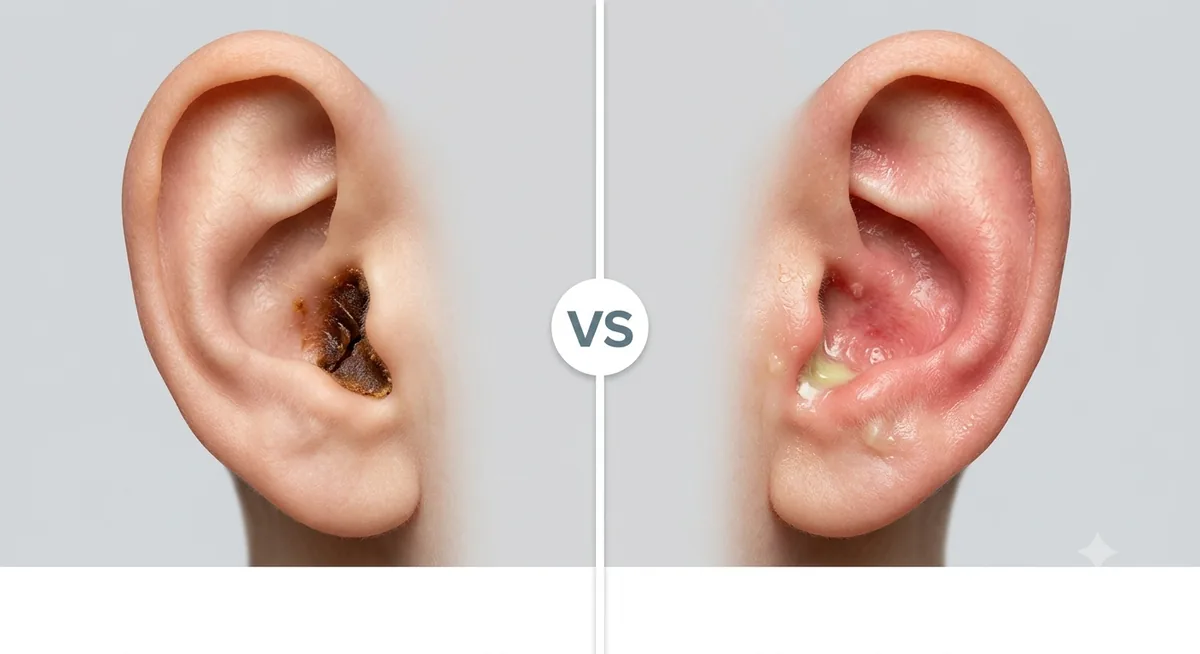
Ear Wax vs. Ear Infection: Understanding the Difference
Although both conditions can cause discomfort and hearing problems, ear wax buildup and ear infections are very different.
|
Ear Wax Buildup |
Ear Infection |
|
Caused by accumulated ear wax |
Caused by bacteria or viruses |
|
Hearing loss is usually gradual |
Hearing loss may occur suddenly |
|
Ear feels blocked or full |
Ear is often painful and inflamed |
|
Usually no fever |
Fever may be present |
|
No pus or fluid discharge |
Ear discharge may occur |
|
Often painless unless severely impacted |
Pain is usually significant |
Understanding the difference helps ensure appropriate treatment and prevents unnecessary use of antibiotics.
Can Ear Wax Cause Temporary Hearing Loss?
Yes. Impacted ear wax is one of the most common causes of temporary conductive hearing loss.
When wax blocks the ear canal, sound waves cannot reach the eardrum effectively. As a result, hearing becomes muffled or reduced. Fortunately, hearing usually returns to normal once the blockage is safely removed.
However, if hearing does not improve after ear wax removal, further evaluation may be required to identify another underlying cause.
How Can You Prevent Ear Wax Buildup?
Although ear wax cannot always be prevented, a few simple habits can reduce the risk of excessive buildup.
- Avoid inserting cotton buds or sharp objects into your ears.
- Let the ears clean themselves naturally.
- Use hearing aids and earbuds according to the manufacturer's instructions and keep them clean.
- If you produce excessive ear wax regularly, discuss preventive ear care with your healthcare provider.
- Seek professional cleaning if you experience recurrent ear wax blockage.
Routine ear cleaning is usually unnecessary for most people.
When Should You Seek Medical Care?
Most cases of ear wax buildup are harmless, but medical evaluation is recommended if symptoms persist or worsen.
Seek medical care if you experience:
- Sudden or significant hearing loss
- Severe ear pain
- Persistent ear blockage
- Ringing in the ears that does not improve
- Dizziness or balance problems
- Ear discharge or bleeding
- Symptoms that continue despite using wax-softening drops
- Recurrent ear wax buildup affecting daily life
Prompt assessment helps rule out other ear conditions and ensures the most appropriate treatment.
H2: Common Myths About Ear Wax
Myth: Ear wax is dirty and should be removed regularly.
Fact: Ear wax is a natural protective substance that helps keep the ear clean and prevents infection.
Myth: Cotton buds are the safest way to clean your ears.
Fact: Cotton buds often push wax deeper into the ear canal, increasing the risk of impaction.
Myth: Ear candles safely remove ear wax.
Fact: There is no reliable scientific evidence that ear candles remove ear wax. They may cause burns or injuries.
Myth: If you have ear wax, you should always remove it.
Fact: Ear wax only requires treatment when it causes symptoms or blocks the ear canal.
Myth: Hearing loss caused by ear wax is permanent.
Fact: Hearing usually returns to normal once impacted ear wax is safely removed.
Most importantly, persistent hearing changes, severe pain, ear discharge, or recurring ear wax buildup should never be ignored. Early evaluation helps confirm the cause of your symptoms and ensures appropriate treatment while protecting your long-term hearing health.
Frequently Asked Questions About Ear Wax Buildup
Can wearing earbuds or headphones increase ear wax buildup?
Yes. Earbuds, earphones, and hearing aids can reduce natural airflow within the ear canal and prevent ear wax from moving out naturally. Long-term use may also encourage wax to accumulate, increasing the likelihood of ear blockage in some individuals.
Why does ear wax keep coming back after removal?
Some people naturally produce more ear wax than others due to genetics, narrow ear canals, or frequent use of hearing aids and earbuds. While professional removal clears the existing blockage, it does not stop the ear from producing new wax, so periodic cleaning may be required for some individuals.
Is it normal for ear wax to be different colours?
Yes. Ear wax can range from pale yellow to dark brown or even black, depending on its age and how long it has remained in the ear canal. Colour alone usually does not indicate a problem unless it is accompanied by pain, bleeding, or foul-smelling discharge.
Can swimming increase the risk of ear wax problems?
Swimming does not directly cause ear wax buildup, but water trapped behind impacted wax can create discomfort and increase the risk of irritation or infection. If you frequently swim and experience blocked ears, it is advisable to have your ears examined before attempting any home treatment.
How often should ear wax be professionally removed?
There is no fixed schedule for ear wax removal. Most people never need professional cleaning, while others with excessive wax production, hearing aids, or narrow ear canals may benefit from periodic assessment. Ear wax should only be removed when it causes symptoms or prevents proper examination of the ear.
Can ear wax affect hearing test results?
Yes. Impacted ear wax can temporarily reduce hearing and may interfere with hearing test results. If significant wax is present, it is usually removed before audiological testing to ensure the results accurately reflect your hearing ability.