
A child may need ear grommets if glue ear persists for more than three months, hearing loss is affecting speech or learning, or ear infections keep recurring despite appropriate treatment. A specialist will only recommend surgery after assessing hearing, ear health, and the child's overall development – not every child with fluid in the ear needs an operation.
Key Takeaways
- Ear grommets restore middle ear ventilation and improve hearing.
- Persistent glue ear and recurrent infections are the two most common reasons for surgery.
- Most glue ear resolves on its own – surgery is the exception, not the default.
- Untreated hearing loss in early childhood can affect speech, language, and learning.
- Only an ENT specialist, after proper assessment, can confirm whether grommets are appropriate.
Hearing is the foundation of early speech and language development. In the first few years of life, a child's brain is rapidly building the neural pathways it needs to understand and produce language – and even mild, ongoing hearing loss during this window can have a knock-on effect on communication and learning.
Most children will have at least one ear infection before school age, and in most cases it clears up without lasting effect. But when fluid lingers behind the eardrum for months, or infections keep coming back, hearing can be quietly affected without an obvious "alarm bell" moment for parents to notice. This guide covers when ear grommets are typically recommended, the warning signs to watch for, and what to expect before and after the procedure.
This article is for general information only and is not a substitute for individual assessment by a qualified ENT specialist or pediatrician. If you're concerned about your child's hearing, speak to your doctor.
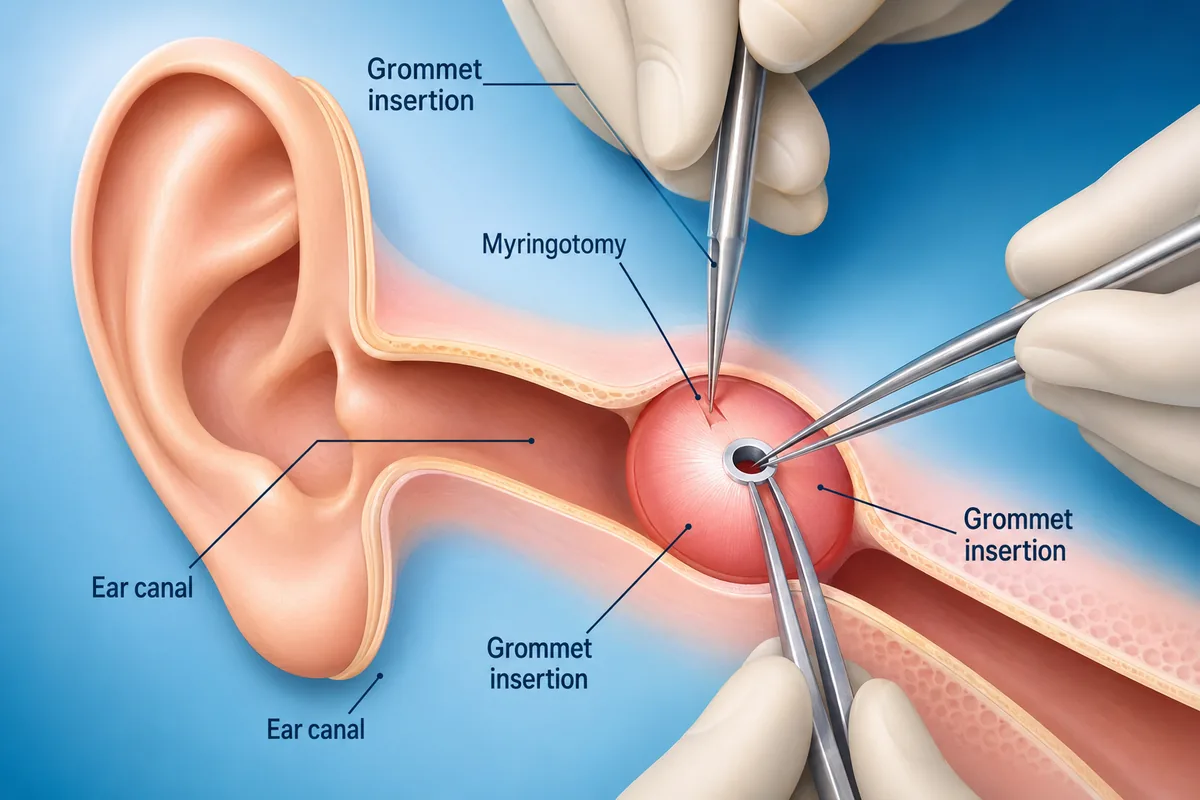
What Are Ear Grommets?
Ear grommets – also called ventilation tubes or tympanostomy tubes – are tiny tubes inserted into the eardrum during a short surgical procedure. They serve two purposes: letting air into the middle ear, and giving trapped fluid a route to drain instead of sitting behind the eardrum, where it muffles sound and creates conditions for infection.
Glue ear (otitis media with effusion) is extremely common in early childhood – most children will have at least one episode by school age, though only a minority go on to need surgical treatment.
Why Might a Child Need Ear Grommets?
Fluid behind the eardrum acts like a wall between the outer world and the inner ear – sound has to pass through it before it can be properly heard, which is why glue ear often causes a mild-to-moderate, muffled hearing loss rather than total deafness. That's also why it's easy for parents to miss: children often adapt to the change gradually rather than reporting a sudden problem.
Grommets tend to be considered when:
- Glue ear doesn't clear on its own after an appropriate period of monitoring
- Hearing loss is measurable and is affecting communication or learning
- Infections keep recurring despite antibiotics or other appropriate medical treatment
- Middle ear ventilation stays poor even after a period of watchful waiting
None of these alone is an automatic ticket to surgery. An ENT specialist weighs them together, alongside how the child is actually functioning day to day – at home, in nursery or school, and socially.
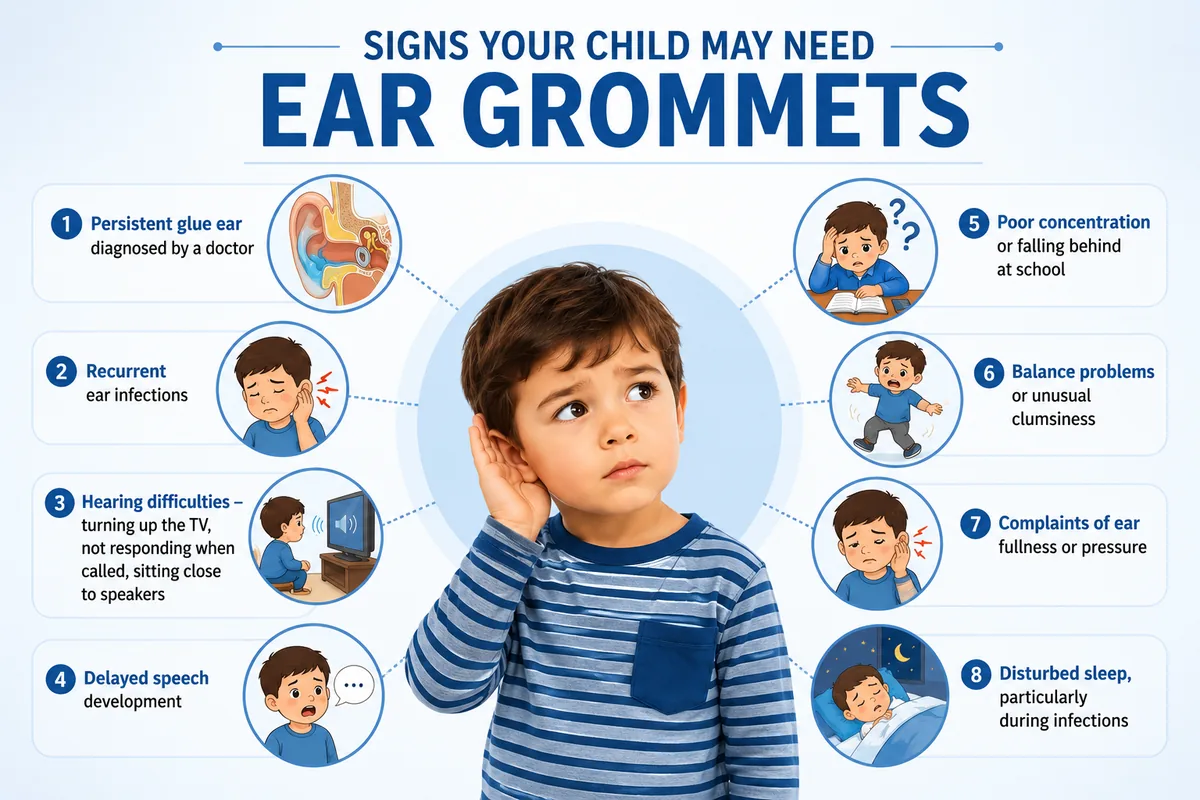
Signs Your Child May Need Ear Grommets
Some signs are easy to miss, especially in children too young to describe what they're experiencing. Watch for:
- Persistent glue ear diagnosed by a doctor
- Recurrent ear infections
- Hearing difficulties – turning up the TV, not responding when called, sitting close to speakers
- Delayed speech development
- Poor concentration or falling behind at school
- Balance problems or unusual clumsiness
- Complaints of ear fullness or pressure
- Disturbed sleep, particularly during infections
If several of these appear together, it's worth raising them with a doctor rather than waiting to see if they resolve on their own.
When Is Ear Grommet Surgery Recommended?
Clinical guidelines from bodies such as the UK's National Institute for Health and Care Excellence (NICE) and the American Academy of Otolaryngology–Head and Neck Surgery (AAO-HNS) broadly agree that surgery is considered when:
- Glue ear has lasted longer than three months, confirmed on repeat assessment
- Hearing loss is confirmed through age-appropriate hearing tests
- Speech, language, or learning is being noticeably affected
- Infections keep recurring despite appropriate medical management
Can Glue Ear Improve Without Ear Grommets?
Yes – and often it does. Many children improve naturally through a period of watchful waiting, typically with a repeat hearing check after six to twelve weeks. Treatment decisions depend on how long symptoms have lasted, what hearing tests actually show, and how much the fluid is affecting the child's development – not on the presence of fluid alone.
What Happens During Ear Grommet Surgery?
The procedure – a myringotomy with grommet insertion – is usually done under general anaesthesia and is typically quick, often well under 30 minutes. The surgeon makes a tiny opening in the eardrum, gently removes any trapped fluid, and inserts a small tube to keep the middle ear ventilated. Most children go home the same day.
Risks and Recovery of Ear Grommets?
Most children recover quickly and return to normal activities within a day or two. Possible risks include ear discharge, tube blockage, or – after the tube eventually falls out – a small, usually temporary perforation in the eardrum. Serious complications are uncommon. Your ENT specialist will go through the specific risks relevant to your child before the procedure, and this should always be part of the informed consent conversation.
Ear Grommets vs. Watchful Waiting
|
Watchful Waiting |
Ear Grommets |
|
|
Best suited for |
Mild, short-term glue ear with no major hearing or developmental impact |
Persistent glue ear (3+ months), confirmed hearing loss, or recurrent infections |
|
Approach |
Regular monitoring and repeat hearing checks |
Minor surgical procedure under general anaesthesia |
|
Timeframe to see results |
Weeks to a few months, as fluid clears naturally |
Improvement often noticeable within days |
|
Risk level |
Very low – no procedure involved |
Low overall, with uncommon but possible minor complications |
|
Reconsidered if |
Symptoms persist past 3 months or worsen |
Symptoms return after tubes fall out early |
Myths and Facts
Myth: Every child with glue ear needs surgery. Fact: Most cases resolve on their own with time and monitoring; surgery is reserved for persistent or impactful cases.
Myth: Ear grommets are a permanent fix. Fact: Grommets are designed to be temporary – they're typically pushed out naturally within 6–12 months as the eardrum heals.
Myth: Surgery guarantees no more ear infections. Fact: Grommets significantly reduce how often infections happen, but they don't eliminate the risk entirely.
A Quick Checklist Before You See a Doctor
It can help to jot down what you've noticed before your appointment. Consider flagging it for assessment if, over the last 4–6 weeks or more, your child has shown:
- Two or more signs from the list above happening together
- No improvement despite a course of appropriate treatment
- A change in speech, behavior, or school performance that a teacher or caregiver has also noticed
- A previous episode of glue ear or ear infection that seemed to resolve, then returned
Bringing specific examples – dates, what you noticed, how long it's lasted – helps your doctor assess the situation faster and more accurately than a general "their hearing seems off."
Questions to Ask Your ENT Specialist
- How long has fluid been present, and has it been confirmed by testing rather than just examination?
- What do the hearing test results actually show, in terms my child's daily function is affected?
- Is watchful waiting still a reasonable option, or has that window passed?
- What would we expect if we waited another 6–8 weeks?
- What are the specific risks and recovery expectations for my child?
When Should You See an ENT Specialist?
Seek an ENT assessment if:
- Hearing loss persists
- Ear infections keep returning
- Glue ear lasts more than three months
- Speech is delayed
- School performance is affected
Most children do not need ear grommets immediately, and a "wait and see" approach is often entirely appropriate. But persistent hearing problems and recurrent infections should never simply be ignored. Early assessment helps protect a child's hearing, speech, and overall development at a stage of life when those foundations matter most.
Frequently Asked Questions
Is ear grommet surgery painful for my child?
No. It's done under general anaesthesia, so children feel nothing during the procedure. Afterward, most experience only mild discomfort, if any, and are back to normal activity within a day or two.
How common is glue ear in children?
Very common — most children experience it at least once before age 10, often after a cold. The large majority resolve on their own without needing surgery.
How long do grommets stay in before falling out?
Typically 6 to 12 months, though this varies by grommet type and child. They're pushed out naturally as the eardrum grows and heals — most parents don't even notice when it happens.
Can my child swim and bathe with grommets in?
Yes, generally. Most children can swim and bathe normally, though your ENT may recommend simple precautions like earplugs to keep water out of the ear canal.
Will grommets damage my child's hearing long-term?
No — they're designed to protect and improve hearing, not harm it. Used appropriately, they don't cause long-term hearing damage.
What's the difference between glue ear and an ear infection?
Glue ear (otitis media with effusion) is fluid buildup without active infection. An ear infection (acute otitis media) involves the same fluid plus infection, often with pain and fever.
Can my child fly on a plane with grommets?
Yes. It's considered safe to fly with grommets in place — in fact, they can help equalize pressure changes during takeoff and landing rather than trap it.
What happens if grommets are needed but not treated?
Untreated, significant glue ear can lead to ongoing hearing loss, and in some cases contribute to speech delay, behavioral changes, or (rarely) more serious middle ear complications.
Are grommets always the first treatment option?
No. Doctors usually start with a period of monitoring ("watchful waiting"), since most glue ear clears on its own. Grommets are considered when it persists or hearing/development is affected.
How do I know if my child's hearing loss is from glue ear?
Signs include turning up the TV, asking "what?" often, not responding when called, or falling behind in speech. A hearing test and ear exam confirm the diagnosis.