
Sudden hearing loss is a rapid reduction in hearing that develops over a few hours or within three days. It may affect one ear or, less commonly, both ears. If your hearing suddenly becomes muffled, sounds seem unusually distant, or you struggle to hear through one ear, seek urgent medical assessment rather than waiting for the problem to resolve.
One important cause is sudden sensorineural hearing loss (SSNHL), which involves the inner ear or the hearing pathway. Early diagnosis matters because some forms of sudden hearing loss can be treated, and delaying treatment may reduce the chance of recovery.
Sudden hearing loss requires prompt medical assessment. Do not assume it is caused by earwax, a cold, sinus congestion, or a blocked-ear sensation. Seek urgent medical care if you experience these symptoms.
Key Takeaways
- Sudden hearing loss requires urgent medical attention.
- Symptoms include muffled hearing, tinnitus, ear fullness and dizziness.
- Early diagnosis and treatment may increase the likelihood of hearing recovery.
- Seek medical attention within 24 hours for unexplained sudden hearing loss.
- Avoid home remedies and unprescribed ear drops; seek prompt medical care.
What Causes Sudden Hearing Loss?
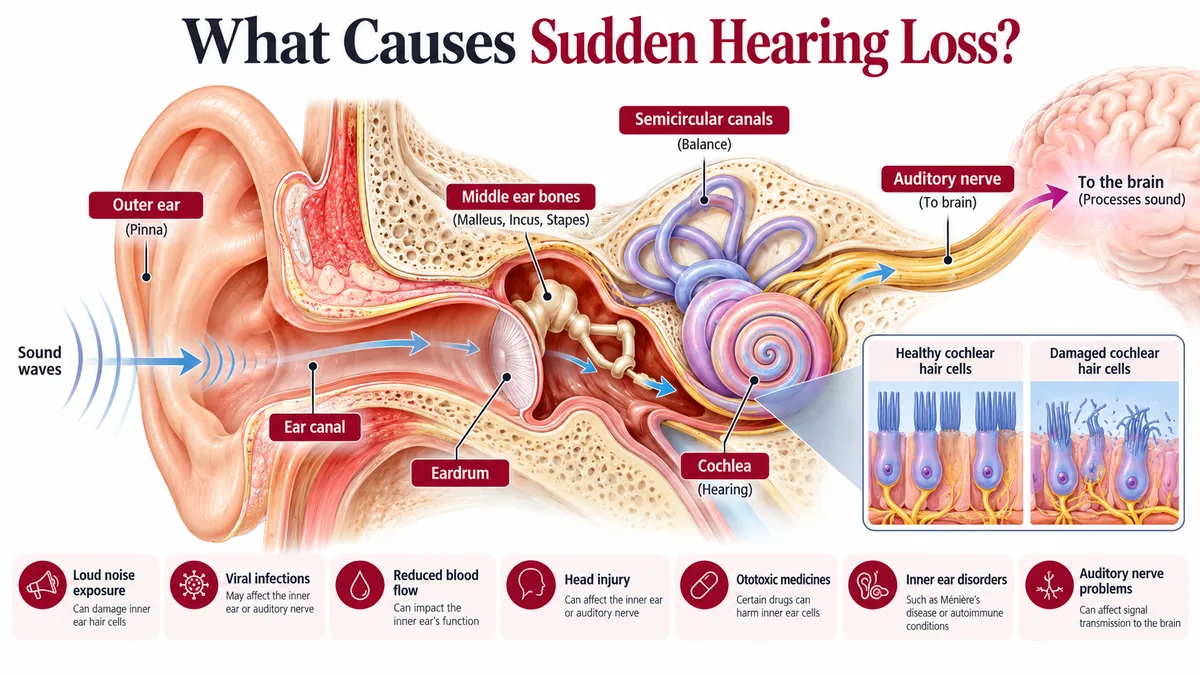
The cause depends on which part of the hearing system is affected. Sometimes, an identifiable problem explains the change; in other cases, the exact cause remains unknown even after investigation.
1. Sudden Sensorineural Hearing Loss
This type occurs when the inner ear or the auditory pathway is affected. Many cases develop without an obvious warning or identifiable cause. Researchers have investigated possible roles of inflammation, viral infections and changes in blood supply to the inner ear, but a specific cause cannot always be established.
SSNHL frequently affects one ear. It can occur alongside tinnitus, dizziness or a feeling of pressure inside the ear.
2. Earwax or Middle Ear Problems
A blockage in the ear canal, fluid behind the eardrum or certain middle-ear conditions can interfere with sound transmission. These problems may cause reduced hearing or a blocked sensation.
Although some conductive problems are less serious than SSNHL, the symptoms can overlap. It is not safe to assume that sudden hearing loss is caused by earwax without an examination.
3. Infections and Inflammatory Conditions
Certain infections and inflammatory disorders can affect hearing. The likelihood depends on the infection, the part of the ear involved and other symptoms. Ear pain, fever or discharge may provide useful clues, but their absence does not rule out a serious hearing problem.
4. Head or Ear Injury
Head trauma, sudden pressure changes, or injury to the eardrum or inner ear can lead to an abrupt loss of hearing.
Hearing loss following an accident, a blow to the head or a significant pressure change needs urgent assessment.
5. Medicines That Can Affect Hearing
Some medicines, including certain drugs used to treat severe infections or cancer, can damage the inner ear. The risk varies by medication, dose and individual circumstances. Tell your doctor about all medicines you take, including recent treatments. Do not stop prescribed medication without medical advice.
6. Other Inner Ear or Neurological Conditions
Conditions such as Ménière’s disease and, less commonly, disorders affecting the hearing nerve or nervous system may be associated with hearing changes. The history, examination and test results help guide further investigation.
Important: The cause of sudden sensorineural hearing loss often remains unknown, even after medical evaluation. The priority is to recognise the hearing change, rule out other causes and begin appropriate assessment promptly.
When Does Sudden Hearing Loss Require Emergency Care?
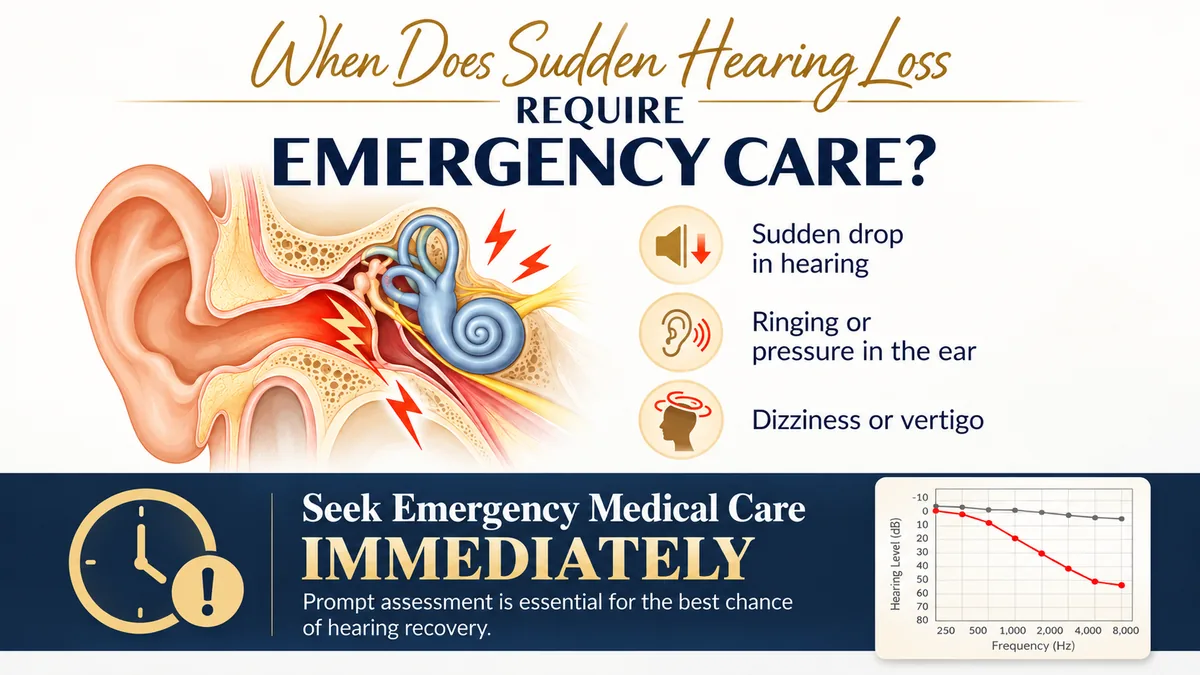
Sudden hearing loss does not always cause pain. Some people notice the problem immediately, while others discover it when using a telephone or waking up in the morning.
Watch for these warning signs:
- Hearing may become noticeably weaker over a short period, affecting either ear or both.
- Speech sounding muffled, distant or unclear.
- A new ringing, buzzing or humming sound in the ear.
- A sensation of pressure, blockage, or fullness in the ear.
- Difficulty understanding conversations despite hearing some sounds.
- Dizziness, vertigo or problems with balance accompanying the hearing change.
When Should You Seek Emergency Care?
If hearing suddenly decreases over three days or less and there is no clear explanation, seek urgent medical assessment. NICE guidance recommends assessment within 24 hours for adults whose unexplained sudden hearing loss began within the previous 30 days.
Do not wait for pain to develop or for your hearing to return on its own. If you cannot see a specialist promptly, seek immediate medical attention at the nearest emergency department.
Seek emergency medical care if sudden hearing loss occurs alongside facial drooping, weakness, numbness, difficulty speaking, severe balance problems, or any other new neurological symptoms. These symptoms can indicate a serious neurological condition, including stroke.
How Is Sudden Hearing Loss Diagnosed?
A specialist evaluates the symptoms, examines the ear, and determines whether the problem involves sound transmission or the inner ear. The assessment may include the following steps.
Ear Examination
The doctor checks the ear canal and eardrum for ear wax buildup, infection, fluid, or injury. This examination helps determine whether the hearing problem originates in the outer or middle ear or the inner ear.
Pure-Tone Audiometry
A pure-tone audiometry test measures the quietest sounds a person can hear at different frequencies. It helps confirm hearing loss, determine its severity and identify the pattern of hearing impairment.
Testing should be arranged as soon as possible. It should not be used as a reason to postpone urgent medical assessment.
Additional Investigations
Depending on the findings, the doctor may recommend an MRI or another appropriate investigation to assess the hearing nerve and surrounding structures. Blood tests or other investigations are selected when the medical history suggests a specific underlying condition; routine testing is not necessary for every patient.
What Is the Treatment for Sudden Hearing Loss?
Treatment varies according to the cause and type of hearing loss. There is no single medicine or home remedy suitable for every patient.
1. Corticosteroid Treatment
Steroid medicines may be considered to help manage sudden sensorineural hearing loss, which affects the inner ear. However, the response to treatment differs between patients, and hearing may not return completely.
According to the American Academy of Otolaryngology–Head and Neck Surgery Foundation’s clinical practice guideline, doctors may offer corticosteroids within two weeks of the onset of symptoms. Medical assessment should take place as soon as possible, rather than waiting until this period has nearly passed.
Steroids are not suitable for everyone. Before recommending treatment, the doctor considers the patient’s medical history, possible side effects and the potential benefits and risks.
2. Steroid Injections Through the Eardrum
If hearing recovery is incomplete, steroid injections into the middle ear may be recommended for selected patients. In this procedure, medication is delivered through the eardrum to help treat the condition.
Clinical guidelines recommend offering or referring patients for this treatment when recovery remains incomplete between two and six weeks after symptom onset. The exact approach depends on the individual case.
3. Treatment of the Underlying Cause
Once the underlying problem is identified, care is tailored to address that specific condition. For example, a confirmed ear canal blockage may require professional removal, while a diagnosed infection may need specific treatment.
Antibiotics, antivirals or other medicines should not be taken automatically for every sudden hearing change. Their use depends on the diagnosis.
4. Follow-Up and Hearing Rehabilitation
A repeat hearing test helps the doctor evaluate recovery after treatment. Some people regain much or all of their hearing, while others have residual hearing loss or tinnitus.
If hearing remains reduced, hearing aids, communication strategies or other rehabilitation options may improve daily functioning. The doctor can discuss appropriate support based on the remaining hearing ability.
Can Sudden Hearing Loss Be Reversed?
Sudden hearing loss can sometimes improve, but the outcome depends on its cause, severity, the patient’s circumstances and the response to treatment. Some people recover spontaneously, while others need treatment or continue to experience hearing difficulties.
There is no reliable way to predict recovery from symptoms alone. Even if hearing improves slightly, an assessment remains important because the underlying cause may still require attention.
The most useful step is to seek medical care promptly rather than relying on home remedies or waiting to see whether the hearing returns.
What Should You Do If Your Hearing Suddenly Decreases in Nashik?
If you experience a sudden change in hearing, seek urgent medical assessment at a hospital or clinic in Nashik. Explain when the symptoms began, whether one or both ears are affected, and whether you have tinnitus, dizziness, pain, discharge, or a recent head injury.
Bring a list of your current medicines and details of any recent illness or injury. Avoid inserting cotton buds or other objects into the ear, using unprescribed ear drops, or attempting home treatments before the cause is known.
If you have facial weakness, speech difficulty or other possible stroke symptoms, seek emergency care immediately rather than waiting for a routine clinic appointment.
Early assessment does not guarantee complete hearing recovery, but it helps identify treatable causes and reduces avoidable delays in care.
Frequently Asked Questions About Sudden Hearing Loss
1. Why did I suddenly lose hearing in one ear after waking up?
Sudden hearing loss may first become noticeable on waking because the change occurred during sleep. Possible causes include sudden sensorineural hearing loss and conductive problems. The timing alone cannot identify the cause, so seek urgent medical assessment.
2. Can sudden hearing loss happen without ear pain?
Sudden inner-ear hearing loss can develop without any earache or discomfort. A person may notice muffled hearing, ringing or ear fullness instead. The absence of pain does not mean the problem is harmless.
3. Can stress cause sudden hearing loss?
Stress may affect how a person experiences tinnitus or other symptoms, but it should not be assumed to be the cause of a sudden hearing change. An ENT assessment is needed to identify or rule out medical causes.
4. Should I wait a few days to see whether my hearing improves?
No. Unexplained hearing loss that develops suddenly over three days or less needs urgent assessment. Waiting may delay diagnosis and time-sensitive treatment. Seek care even if the ear only feels blocked.
5. Which test confirms sudden sensorineural hearing loss?
Pure-tone audiometry is a key test used to measure hearing and confirm the type and severity of loss. An ear examination is also important, and an MRI or other investigation may be recommended when clinically indicated.
6. Can ear drops treat sudden hearing loss?
Ear drops can help manage specific ear canal problems, but their effectiveness depends on the underlying cause. They are not suitable for all types of sudden hearing loss, especially when the problem originates in the inner ear.
7. Is sudden hearing loss permanent?
It can be temporary or permanent, depending on the cause and the response to treatment. Some patients recover partially or completely, while others have lasting hearing difficulties. Early assessment is important, but no treatment can guarantee full recovery.