
Tonsil stones form when food particles, bacteria and dead cells accumulate in the tonsil pockets and harden. They can cause persistent bad breath, an unpleasant taste and throat irritation.
Small tonsil stones may clear naturally. Good oral hygiene, hydration and warm saltwater gargles can help manage symptoms. If stones recur or cause persistent discomfort, consult an ENT specialist for appropriate treatment.
Key Takeaways
- Tonsil stones are hardened deposits that form in tonsil pockets and may cause bad breath.
- Maintain oral hygiene and try warm saltwater gargles to manage symptoms.
- Avoid removing tonsil stones with sharp objects.
- Consult an ENT specialist in Nashik for persistent symptoms or swallowing difficulties.
- Seek urgent medical care for breathing difficulties or severe throat swelling.
What Are Tonsil Stones?
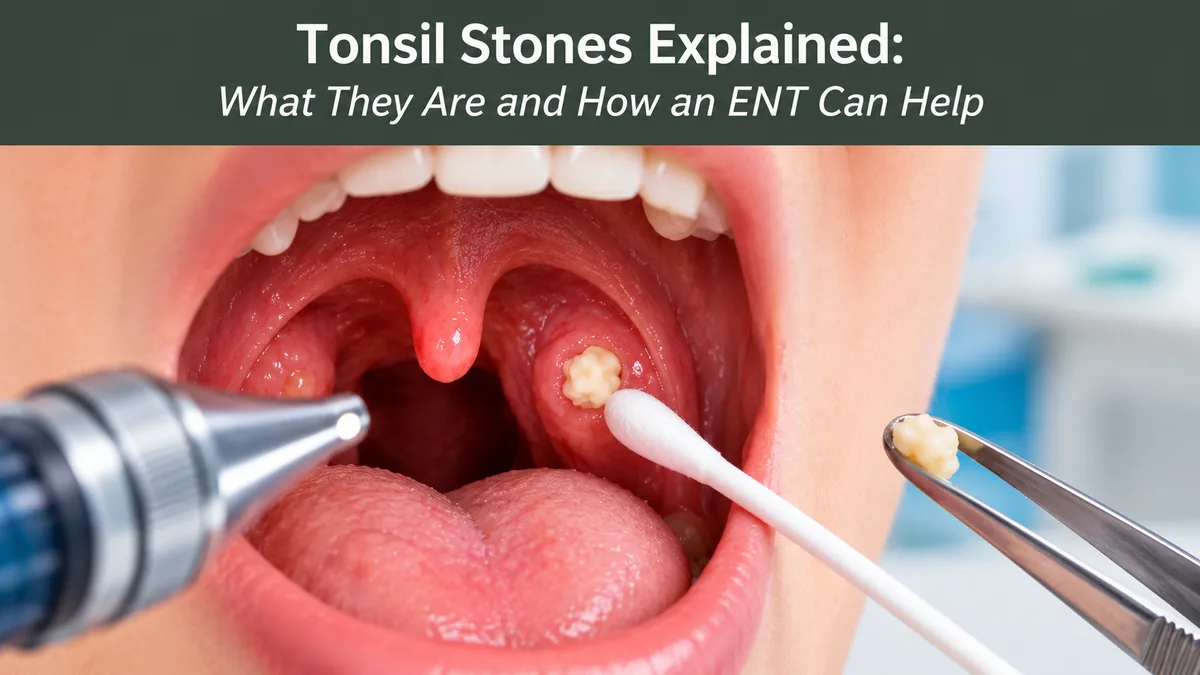
Tonsil stones are small, hardened deposits that develop in the natural pockets and crevices of the tonsils. Their medical name is tonsilloliths. They may appear as white or yellow spots at the back of the throat and can range from tiny particles to larger, more noticeable lumps.
The tonsils are two soft tissue structures located on either side of the back of the throat. Their surface contains small folds and pockets called tonsillar crypts. These pockets can trap food particles, dead cells, mucus and bacteria. Over time, the trapped material may harden as minerals accumulate, forming a tonsil stone.
Tonsil stones are usually harmless and do not always cause symptoms. However, some people experience persistent bad breath, an unpleasant taste in the mouth, throat irritation or the sensation that something is stuck in the throat.
If you repeatedly notice white or yellow deposits on your tonsils or experience bad breath despite maintaining good oral hygiene, an ENT evaluation can help identify the underlying cause.
What Causes Tonsil Stones?
Tonsil stones develop when debris collects in the tonsillar crypts and gradually hardens. Several factors may make this more likely.
1. Food Particles and Bacterial Accumulation
Tiny food particles and dead cells can become trapped in the pockets of the tonsils. Bacteria act on this material and contribute to the formation of deposits.
Some bacteria produce sulphur-containing compounds that have an unpleasant smell. This is one reason tonsil stones can cause persistent bad breath, even when a person brushes their teeth regularly.
2. Deep Tonsil Crypts
Some people naturally have deeper or more prominent tonsillar crypts. These pockets can trap more debris, making tonsil stones more likely to form repeatedly.
The shape and structure of the tonsils vary from person to person, so recurrent tonsil stones do not necessarily indicate poor oral hygiene.
3. Previous or Recurrent Tonsil Infections
Repeated episodes of tonsillitis may contribute to changes in the tonsil surface and the accumulation of debris. However, tonsil stones are not the same as an active tonsil infection, and the two conditions do not always occur together.
If you experience frequent sore throats, fever or swollen tonsils along with white deposits, a medical examination can help distinguish tonsil stones from tonsillitis or another throat condition.
4. Inadequate Oral Hygiene
Plaque, food debris and bacteria can accumulate around the teeth, gums and tongue when oral hygiene is inconsistent. This may contribute to bad breath and can increase the amount of debris entering the throat.
Brushing twice daily, cleaning between the teeth and gently cleaning the tongue can help improve oral health and may reduce factors associated with tonsil stone formation.
5. Dry Mouth and Reduced Saliva
Saliva helps wash away food particles and maintain a healthy balance of bacteria in the mouth. Dry mouth can allow debris and odour-producing compounds to accumulate more easily.
Dehydration, certain medications and mouth breathing may contribute to dryness. Drinking adequate water and addressing persistent dry mouth may help manage bad breath, although these measures cannot guarantee that tonsil stones will not return.
6. Postnasal Drip and Nasal Problems
Postnasal drip occurs when mucus from the nose or sinuses flows down the back of the throat. It can accompany allergies, nasal inflammation and some sinus conditions.
Mucus may contribute to throat irritation and debris accumulation, although postnasal drip is not necessarily the cause of every tonsil stone.
If you also experience nasal congestion, frequent sneezing or persistent mucus in the throat, an ENT specialist can assess whether a nasal condition is contributing to your symptoms.
What Are the Signs and Symptoms of Tonsil Stones?
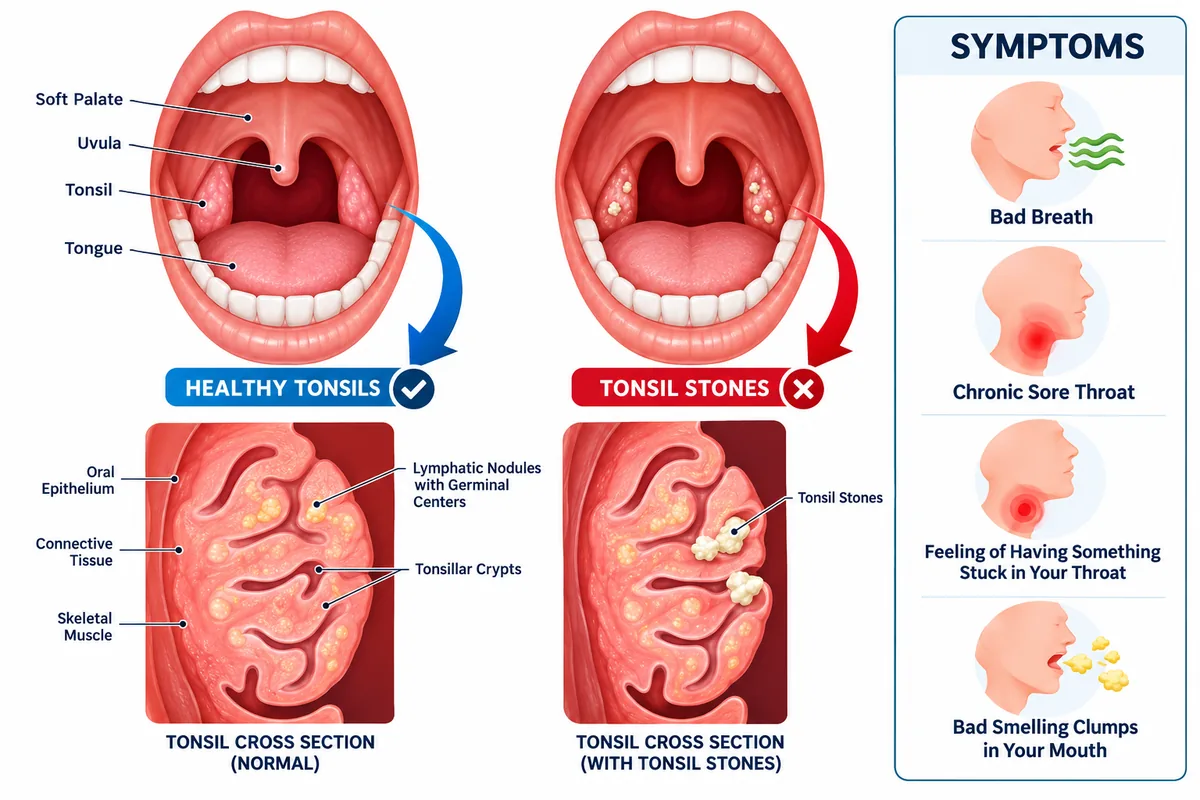
Some people have tonsil stones without realizing it. Others notice symptoms when a stone becomes larger or causes irritation.
Common symptoms include:
- Persistent bad breath: An unpleasant smell that may continue despite brushing and mouthwash.
- White or yellow spots: Small deposits visible in the tonsil pockets.
- Bad taste in the mouth: An unpleasant or metallic taste that keeps returning.
- Throat irritation: Mild soreness, discomfort or a scratchy sensation.
- Feeling of something stuck: A sensation of a foreign object at the back of the throat.
- Coughing or throat clearing: Occasional coughing or the urge to clear the throat.
- Ear discomfort: Some people experience discomfort around the ear.
These symptoms are not exclusive to tonsil stones. Persistent bad breath can also be associated with gum disease, tooth decay, dry mouth or other oral and medical conditions.
If symptoms continue despite good oral hygiene, a dentist or ENT specialist can help determine the likely source.
How Can Tonsil Stones Be Removed Safely?
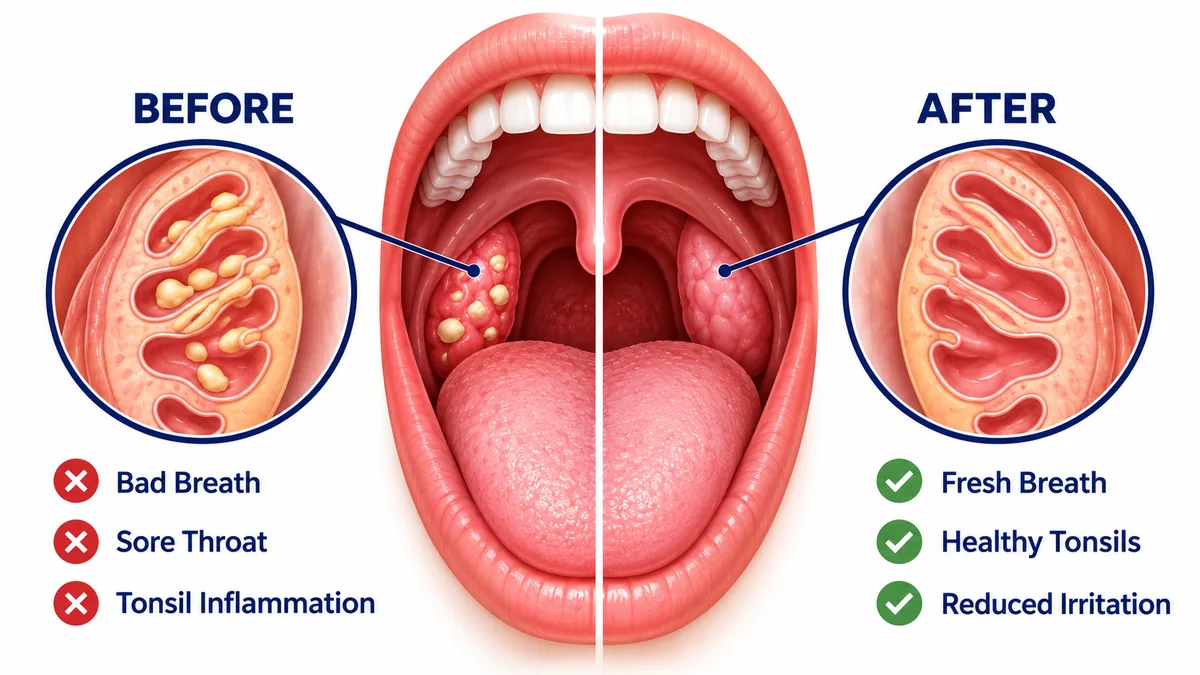
Treatment depends on the size of the stone, the symptoms it causes and how frequently it returns. Small, uncomplicated tonsil stones often come out naturally without any intervention.
1. Warm Saltwater Gargles
Gargling with warm saltwater may help loosen debris and soothe mild throat irritation.
Mix approximately half a teaspoon of salt into a glass of warm water, gargle gently and spit it out. Do not swallow the mixture. Avoid gargling if you cannot do so safely.
Saltwater gargling may help manage symptoms, but it does not reliably prevent every tonsil stone from forming.
2. Maintain Consistent Oral Hygiene
Good oral hygiene can reduce food debris and bacteria in the mouth. Brush your teeth twice daily with fluoride toothpaste, clean between your teeth daily and gently clean your tongue.
If bad breath persists despite these measures, a dental examination may be useful to rule out gum disease, tooth decay or other oral causes.
3. Stay Hydrated
Drinking adequate water supports saliva production and helps reduce dry mouth. If you frequently wake up with a dry mouth, consider whether mouth breathing, nasal congestion or medication could be contributing.
Persistent dryness should be discussed with a healthcare professional, particularly if it affects eating, swallowing or oral comfort.
4. Avoid Forceful Home Removal
It can be tempting to push a visible tonsil stone out with a fingernail, cotton bud, toothbrush or another object. However, the tonsils contain delicate tissue and blood vessels, and forceful manipulation can cause injury, bleeding or infection.
Avoid sharp objects, high-pressure water devices and forceful squeezing. If a stone is deeply lodged, painful or difficult to remove, consult an ENT specialist rather than repeatedly attempting removal at home.
When Should You Consult an ENT Specialist?
Occasional, painless tonsil stones may not require medical treatment. However, specialist assessment is appropriate when symptoms are persistent, recurrent or affecting daily life.
Consider consulting an ENT specialist if you experience:
- Recurrent tonsil stones that continue to return.
- Persistent bad breath despite good dental and oral hygiene.
- Repeated throat irritation or discomfort.
- A continuing sensation of something stuck in the throat.
- Difficulty swallowing or pain when swallowing.
- Frequent episodes of tonsillitis.
- Uncertainty about whether white spots are tonsil stones or signs of an infection.
Seek urgent medical assessment for severe or rapidly worsening throat pain, significant swelling, difficulty opening your mouth, a muffled voice or difficulty swallowing saliva. Breathing difficulty is an emergency.
A persistent one-sided throat problem, an enlarging lump in the neck, unexplained bleeding or an unusually enlarged tonsil also needs prompt medical evaluation.
If you are experiencing recurrent tonsil stones or persistent bad breath in Nashik, an ENT consultation can help establish the diagnosis and determine whether treatment is necessary.
How Does an ENT Specialist Diagnose Tonsil Stones?
Diagnosis usually begins with a review of your symptoms and an examination of your mouth and throat.
The ENT specialist may:
- Review your symptoms: Discuss bad breath, throat discomfort, the frequency of stone formation and any history of tonsil infections.
- Examine the tonsils: Look for visible white or yellow deposits, deep crypts, redness or swelling.
- Assess other possible causes: Consider dental problems, oral dryness, nasal symptoms or signs of tonsillitis.
- Recommend further tests when needed: Additional investigation may be appropriate if the diagnosis is unclear or symptoms suggest another condition.
Most uncomplicated tonsil stones can be diagnosed through a clinical examination. Imaging is not routinely required.
If the white deposits are associated with fever, significant throat pain or swollen tonsils, the doctor may consider whether an infection is also present.
What ENT Treatments Are Available for Tonsil Stones?
Most tonsil stones do not require surgery. Treatment is guided by symptom severity, recurrence and the findings of the examination.
1. Professional Tonsil Stone Removal
When a stone causes discomfort or cannot be managed with simple measures, a clinician may remove it safely during an examination or outpatient procedure, depending on the situation.
Professional removal can reduce symptoms from the existing stone, but it may not prevent new stones from forming.
2. Treatment of Associated Conditions
If bad breath is related to gum disease, dental decay, dry mouth, nasal inflammation or another condition, treating that problem may improve symptoms.
Antibiotics are not routinely needed for tonsil stones alone. They may be prescribed when a clinician diagnoses an appropriate bacterial infection.
3. Tonsillectomy in Selected Cases
Tonsillectomy is surgery to remove the tonsils. It may be discussed in selected patients with substantial, persistent symptoms or other established indications, such as recurrent tonsillitis.
However, tonsil stones alone do not automatically mean that surgery is necessary. The potential benefits, risks, recovery period and alternative options should be discussed with an ENT specialist.
Surgery has risks, including postoperative pain and bleeding, so the decision should be made after an individual clinical assessment.
How Can You Help Prevent Tonsil Stones From Returning?
Although no method can guarantee prevention, certain habits may reduce debris accumulation and help manage bad breath.
- Brush your teeth twice daily and clean between your teeth.
- Clean your tongue gently as part of your oral hygiene routine.
- Drink enough water throughout the day.
- Gargle with warm saltwater if it is comfortable and safe for you.
- Avoid smoking and other irritants that can affect oral and throat health.
- Address persistent nasal congestion or postnasal drip with appropriate medical advice.
- Visit your dentist regularly to identify and treat oral causes of bad breath.
If tonsil stones continue to return despite these measures, seek an assessment rather than repeatedly trying to remove them yourself.
Frequently Asked Questions About Tonsil Stones
1. Can tonsil stones cause bad breath even if I brush my teeth daily?
Yes. Bacteria and trapped debris inside tonsillar crypts can produce unpleasant-smelling compounds. However, bad breath can also result from gum disease, tooth decay, dry mouth or other conditions. Persistent symptoms deserve an assessment.
2. Do tonsil stones go away on their own?
Small tonsil stones often loosen and come out naturally. If they are painless and do not cause other symptoms, treatment may not be necessary. Recurrent or uncomfortable stones should be discussed with an ENT specialist.
3. Can I remove tonsil stones at home?
Gentle saltwater gargling and good oral hygiene may help manage small stones. Avoid forceful squeezing, sharp objects and high-pressure water devices because they can injure the tonsils. Seek professional help if a stone is painful, deeply lodged or difficult to manage.
4. Are tonsil stones a sign of tonsillitis?
Not necessarily. Tonsil stones are hardened deposits of trapped material, whereas tonsillitis is inflammation of the tonsils, usually due to an infection. Both conditions can occur together. Fever, significant throat pain and swollen tonsils warrant medical assessment.
5. Do tonsil stones mean I need my tonsils removed?
No. Most tonsil stones do not require surgery. Tonsillectomy may be considered in selected cases involving significant persistent symptoms or another established medical indication. An ENT specialist can discuss whether its potential benefits outweigh the risks.
6. When should I see an ENT specialist in Nashik for tonsil stones?
Consider an ENT consultation if stones recur frequently, bad breath persists despite good oral hygiene, or you experience ongoing throat discomfort or swallowing problems. Severe pain, rapidly worsening swelling or difficulty swallowing saliva needs urgent assessment, while breathing difficulty is an emergency.