
If your nose has been blocked for months, your sense of smell has faded, and nasal sprays only help for a short time, nasal polyps could be the reason. They are very common, they are not cancer, and they can be treated. But they are often missed, because the symptoms look like a long-lasting cold or sinus problem.
This guide explains what nasal polyps are, why they form, how they are diagnosed, and what treatment options an ENT specialist in Nashik can offer.
Key Takeaways
- Nasal polyps are soft, noncancerous growths that develop in the lining of the nose or sinuses, usually due to chronic inflammation.
- Common symptoms include persistent nasal blockage, reduced sense of smell, runny nose, postnasal drip and facial pressure.
- Allergic rhinitis, chronic rhinosinusitis and asthma may be associated with nasal polyps.
- Treatment may include corticosteroid nasal sprays, saline rinses, selected oral medicines, biologic therapies or surgery, depending on the severity of the condition.
- Nasal polyps can return after surgery, so ongoing treatment and follow-up may be necessary.
- A growth affecting only one side of the nose, especially with bleeding, requires medical assessment to rule out other causes.
What Are Nasal Polyps?
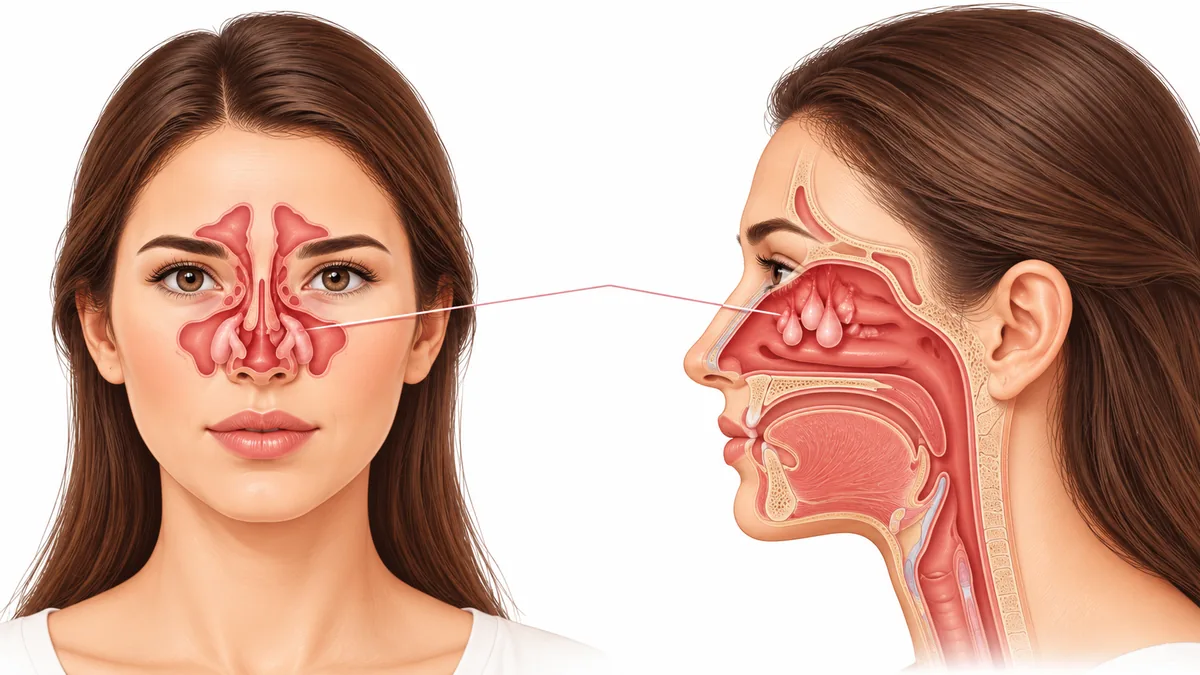
Nasal polyps are soft, usually painless growths that develop from the inflamed lining of the nasal cavity or paranasal sinuses. They may look like smooth, pale or greyish swellings and can vary in size.
They are not cancerous. However, their size and location can affect breathing, mucus drainage and the ability to smell.
Small polyps may not cause noticeable symptoms. Larger polyps or clusters of growths can block the nasal passages, contribute to persistent congestion and interfere with normal sinus drainage.
Nasal polyps are often associated with chronic rhinosinusitis, a condition involving inflammation of the nose and sinuses that lasts for at least 12 weeks. Treatment focuses on reducing inflammation, relieving symptoms and managing the underlying condition.
What Are the Common Symptoms of Nasal Polyps?
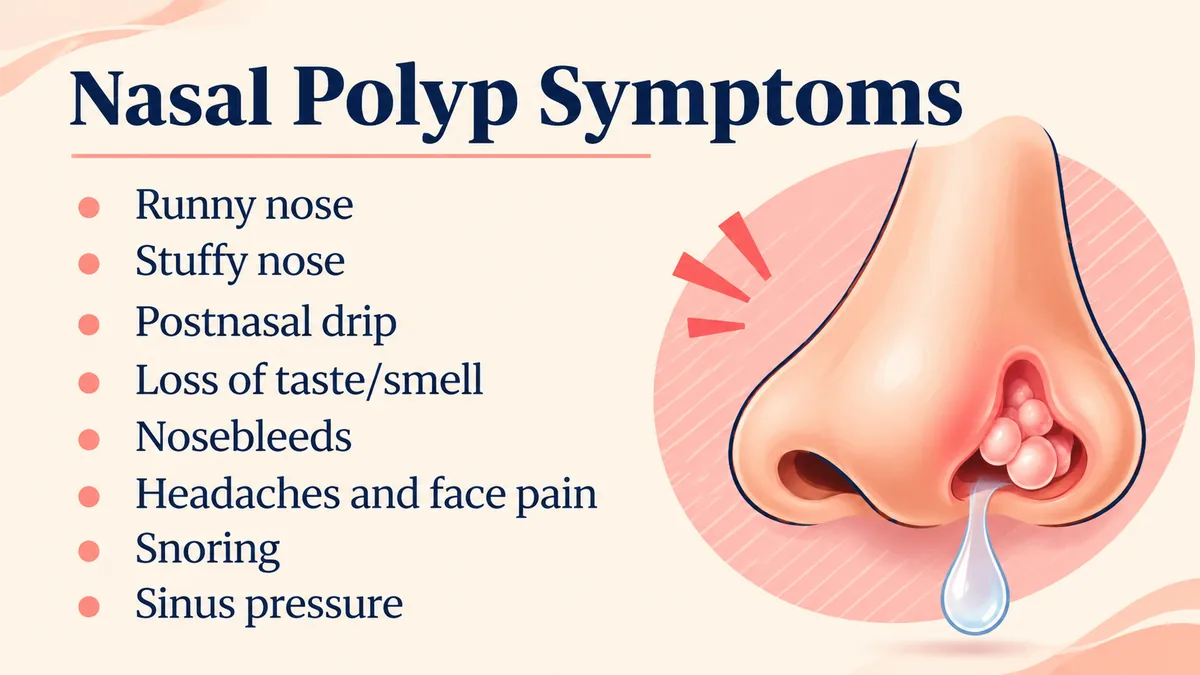
The symptoms depend on the size, number and location of the polyps, as well as the degree of inflammation.
1. Persistent Nasal Blockage
One of the most common symptoms is a blocked or stuffy nose that does not clear completely. You may feel that airflow through your nose is restricted even when you are not experiencing a cold.
Unlike congestion caused by a short-lived viral infection, nasal obstruction associated with polyps may continue for weeks or months.
2. Reduced Sense of Smell and Taste
Nasal polyps can interfere with the movement of air towards the smell receptors inside the nose. Chronic inflammation may also affect the smell pathway.
As a result, you may find it difficult to recognise familiar smells or notice that food has lost some of its flavour. A reduced sense of smell is an important symptom that deserves assessment, particularly when it develops gradually or persists.
3. Runny Nose and Postnasal Drip
Nasal polyps may occur alongside chronic inflammation that increases mucus production. This can cause a persistent runny nose or postnasal drip, in which mucus flows down the back of the throat.
Some people experience frequent throat clearing, coughing or irritation, particularly when lying down.
4. Facial Pressure and Sinus Discomfort
When polyps and inflammation interfere with sinus drainage, you may experience pressure around the cheeks, forehead or eyes.
However, significant facial pain is not always caused by nasal polyps themselves. It may indicate associated sinus inflammation or another condition that requires evaluation.
5. Snoring and Mouth Breathing
A persistently blocked nose can make breathing through the nose difficult, especially during sleep. You may start breathing through your mouth, snore more frequently or wake up with a dry mouth.
If nasal obstruction is affecting your sleep or daytime functioning, an ENT assessment can help identify the cause.
6. Recurrent Sinus Symptoms
Nasal polyps may occur with chronic rhinosinusitis and can contribute to obstruction of normal sinus drainage. Some people experience recurring episodes of congestion, nasal discharge and reduced smell.
Not every repeated sinus infection is caused by polyps, so the underlying problem should be evaluated rather than assumed.
What Causes Nasal Polyps?
The exact cause of nasal polyps is not fully understood. They are strongly associated with persistent inflammation of the nasal and sinus lining.
Several conditions may contribute to their development or increase the likelihood of having them.
Chronic Rhinosinusitis
Chronic rhinosinusitis involves inflammation of the nasal passages and sinuses lasting at least 12 weeks. In some people, ongoing inflammation causes swelling and the formation of nasal polyps.
The condition may lead to congestion, nasal discharge, facial pressure and reduced smell.
Allergic Rhinitis
Allergic rhinitis occurs when the immune system reacts to allergens such as dust mites, pollen or animal dander. Symptoms include sneezing, itching, a runny nose and congestion.
Although allergic rhinitis and nasal polyps are different conditions, they may occur together. Managing allergy symptoms can help improve overall nasal comfort.
Asthma
Asthma and nasal polyps frequently occur together, particularly in people with chronic inflammatory airway disease.
If you have asthma and persistent nasal blockage or a reduced sense of smell, tell your ENT specialist. Coordinated management of nasal and respiratory symptoms may be beneficial.
Sensitivity to Aspirin or Other NSAIDs
Some people with nasal polyps also have asthma and develop respiratory symptoms after taking aspirin or certain nonsteroidal anti-inflammatory drugs (NSAIDs). This pattern is known as NSAID-exacerbated respiratory disease.
If you have experienced wheezing, nasal symptoms or breathing difficulties after taking these medicines, inform your doctor. Do not deliberately test your reaction or change prescribed medicines without medical advice.
Other Factors
Chronic inflammation may involve several interacting factors, including immune responses, individual susceptibility and other respiratory conditions. A family history may be relevant in some cases.
Nasal polyps are uncommon in children. A child with suspected nasal polyps should receive specialist assessment to confirm the diagnosis and investigate possible underlying causes.
When Should You See an ENT Specialist in Nashik?
Occasional nasal congestion from a cold usually improves within a short period. Persistent symptoms, particularly those affecting smell or breathing, may require a more detailed examination.
- Nasal blockage that persists for several weeks.
- A reduced or lost sense of smell that does not improve.
- Persistent runny nose or postnasal drip.
- Recurrent sinus symptoms or ongoing facial pressure.
- Snoring or poor sleep caused by nasal obstruction.
- Symptoms that continue despite appropriate treatment.
- Suspected nasal polyps in a child.
Seek prompt medical assessment if you have a growth or blockage on only one side of the nose, particularly if it is accompanied by bleeding or blood-stained discharge. Many nasal conditions are noncancerous, but a one-sided mass should not automatically be assumed to be a typical nasal polyp.
Swelling around the eye, changes in vision, double vision, severe headache with fever or other rapidly worsening symptoms require urgent medical evaluation.
How Are Nasal Polyps Diagnosed?
Diagnosis usually involves reviewing your symptoms, examining the nose and determining whether further investigations are necessary.
1. Medical History and Nasal Examination
The doctor will ask about the duration of nasal blockage, changes in smell, allergies, asthma, previous sinus problems and treatments you have tried.
A physical examination may reveal visible polyps or signs of nasal inflammation.
2. Nasal Endoscopy
Nasal endoscopy uses a thin instrument with a light and camera to examine the inside of the nasal passages. It allows the specialist to assess the location of polyps, the degree of obstruction and other abnormalities that may not be visible during a basic examination.
The procedure may be performed in an outpatient setting, depending on the clinical situation.
3. CT Scan of the Sinuses
A CT scan may be recommended when the extent of sinus disease needs to be assessed, the diagnosis is uncertain or surgery is being considered.
It provides detailed images of the sinuses and helps the ENT specialist understand which areas are affected.
4. Additional Tests
Depending on your history and examination, the doctor may recommend allergy testing or further assessment for associated conditions such as asthma.
A biopsy may be needed when a growth has unusual features or the diagnosis is uncertain. It is not routinely required for every typical nasal polyp.
What Are the Treatment Options for Nasal Polyps?
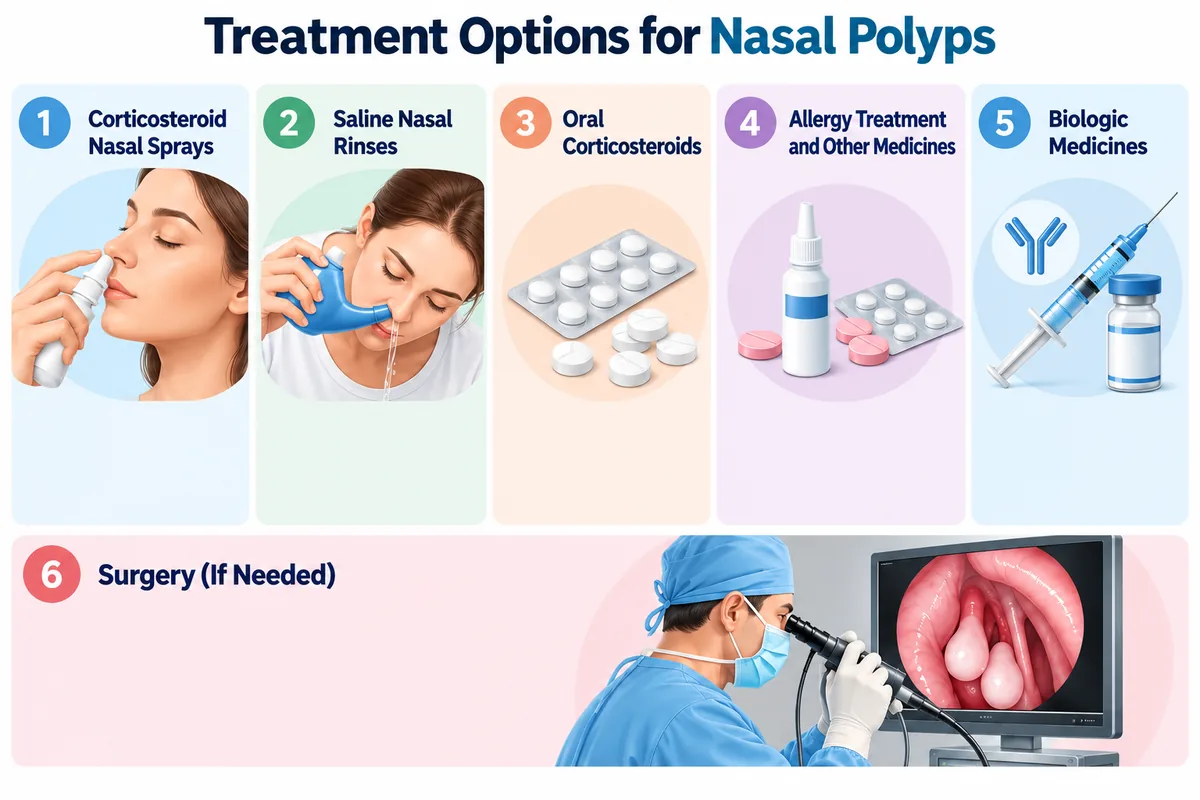
Treatment aims to reduce inflammation, improve nasal breathing, restore the sense of smell where possible and reduce the likelihood of recurrence.
The appropriate approach depends on the size and location of the polyps, symptom severity, associated conditions and response to previous treatment.
1. Corticosteroid Nasal Sprays
Corticosteroid nasal sprays are commonly used to reduce inflammation in people with nasal polyps. With regular use, they may shrink the polyps and improve symptoms.
They usually need to be used consistently as prescribed, and improvement may take several weeks.
Correct technique matters. Directing the spray away from the nasal septum may help reduce irritation and nosebleeds. Follow your clinician’s instructions regarding the medicine, dose and duration.
2. Saline Nasal Rinses
Saline rinses help clear mucus, allergens and other debris from the nasal passages. They may improve nasal comfort and can be used alongside prescribed nasal medication.
For nasal irrigation, use sterile or distilled water, or water that has been boiled and then cooled. Follow the instructions for the irrigation device and keep it clean.
Saline rinses may relieve symptoms, but they do not replace anti-inflammatory treatment when medication is needed.
3. Oral Corticosteroids
In selected cases, a doctor may prescribe a short course of oral corticosteroids to reduce significant inflammation or shrink larger polyps.
These medicines can have important side effects, particularly with repeated or prolonged use. They should only be taken under medical supervision and should not be used as a long-term self-treatment.
4. Allergy Treatment and Other Medicines
If allergic rhinitis is also present, appropriate allergy treatment may help control sneezing, itching and nasal discharge.
Antihistamines can help allergy symptoms, but they do not reliably shrink nasal polyps on their own. Antibiotics are not routinely required for nasal polyps; they may be prescribed when a bacterial infection is diagnosed and treatment is indicated.
5. Biologic Medicines
For selected patients with severe chronic rhinosinusitis and nasal polyps that remain uncontrolled despite standard treatment, biologic medicines may be considered.
These treatments target specific pathways involved in inflammation. They are not necessary for everyone and may involve substantial cost, eligibility requirements and ongoing monitoring.
When Is Surgery Needed for Nasal Polyps?
Surgery may be considered when nasal polyps cause substantial obstruction or persistent symptoms despite appropriate medical treatment.
Endoscopic Sinus Surgery
Endoscopic sinus surgery is performed through the nostrils using a camera and specialised instruments. The surgeon removes obstructing polyp tissue and, where appropriate, improves access to the affected sinus openings.
There are generally no external facial incisions for routine endoscopic sinus surgery.
The procedure is intended to improve nasal airflow, sinus drainage and access for ongoing topical treatment. The expected benefit depends on the extent of disease and the individual patient’s condition.
What to Expect After Surgery
Recovery varies depending on the extent of the procedure and your general health. Temporary congestion, mild discomfort, crusting or discharge may occur during healing.
Your surgeon may recommend saline rinses, prescribed nasal medication and follow-up examinations to monitor healing.
Follow your surgeon’s instructions about returning to work, exercise and normal activities. Contact your medical team if you develop heavy bleeding, fever, worsening pain or symptoms that concern you.
Can Nasal Polyps Return After Surgery?
Yes. Nasal polyps can recur because surgery removes the obstructing tissue but does not necessarily eliminate the underlying inflammation.
Regular use of prescribed nasal sprays or other maintenance treatment, saline rinses when advised and scheduled follow-up can help manage the condition and reduce the risk of recurrence.
People with severe chronic inflammation, asthma or certain medication sensitivities may need a more individualised long-term plan.
How Can You Manage Nasal Polyps at Home?
Home care can support prescribed treatment, but it cannot reliably remove established polyps.
- Use prescribed nasal sprays consistently and follow the recommended technique.
- Consider saline rinses using safe water and a properly cleaned device.
- Avoid tobacco smoke, dust and other irritants that worsen your symptoms.
- Manage allergic rhinitis and asthma with appropriate medical guidance.
- Avoid overusing decongestant nasal drops, as prolonged use can worsen congestion.
- Do not start oral steroids, antibiotics or other prescription medicines without medical advice.
- Attend follow-up appointments if you have recurrent symptoms or have undergone surgery.
If your sense of smell continues to decline or your nasal blockage worsens despite treatment, return to your ENT specialist for reassessment.
Frequently Asked Questions About Nasal Polyps
1. Are nasal polyps cancerous?
Typical nasal polyps are noncancerous growths associated with inflammation. However, not every growth inside the nose is a polyp. A one-sided mass, particularly with bleeding or blood-stained discharge, needs medical examination to rule out other causes.
2. Can nasal polyps go away without treatment?
Nasal polyps do not usually disappear permanently without treatment. Corticosteroid nasal sprays may reduce their size and symptoms, while selected patients may need other medical treatment or surgery. The appropriate plan depends on the severity of the condition.
3. Do nasal polyps cause loss of smell?
Yes. Nasal polyps and associated inflammation can interfere with the sense of smell. Smell may improve when inflammation and obstruction are treated, although the degree of recovery varies between individuals.
4. Is surgery always necessary for nasal polyps?
No. Many patients can manage their symptoms with medical treatment. Surgery may be considered when symptoms remain significant despite appropriate medication or when the polyps cause substantial obstruction.
5. Can nasal polyps return after surgery?
Yes. Recurrence is possible because the underlying inflammatory condition may continue after the polyps are removed. Ongoing treatment and follow-up help manage inflammation and monitor for recurrence.
6. Which doctor treats nasal polyps in Nashik?
An ENT specialist can assess nasal blockage, reduced smell and other symptoms associated with suspected nasal polyps. The specialist may perform nasal endoscopy, recommend appropriate medication and discuss endoscopic sinus surgery when clinically indicated.