
Loss of smell, medically called anosmia when the sense of smell is completely absent and hyposmia when it is reduced, can have many causes. Common causes include colds and other infections, allergies, chronic sinus disease, nasal polyps, nasal blockage, head injury, certain medications, smoking, and aging. Treatment depends on the underlying cause. Persistent, sudden, or unexplained loss of smell should be evaluated by a healthcare professional.
Key Takeaways
- Loss of smell can be temporary or persistent.
- Colds, allergies, sinus disease, and nasal polyps are common causes.
- Loss of smell can also affect how food tastes.
- Diagnosis may involve an ENT examination, nasal endoscopy, smell testing, and selected imaging.
- Treatment depends on the cause and may include medical treatment or smell training.
- Sudden or unexplained smell loss should not be ignored.
The sense of smell plays an important role in everyday life. It helps us enjoy food, recognise familiar scents, detect smoke or spoiled food, and experience memories and emotions associated with particular smells.
When the sense of smell becomes weaker or disappears, it can be frustrating and may sometimes indicate an underlying medical condition. Loss of smell can develop gradually or appear suddenly. A blocked nose caused by a cold or allergy may temporarily prevent odours from reaching the smell receptors. Other causes, including chronic sinus disease, nasal polyps, head injury, certain medications, and age-related changes, may require further evaluation.
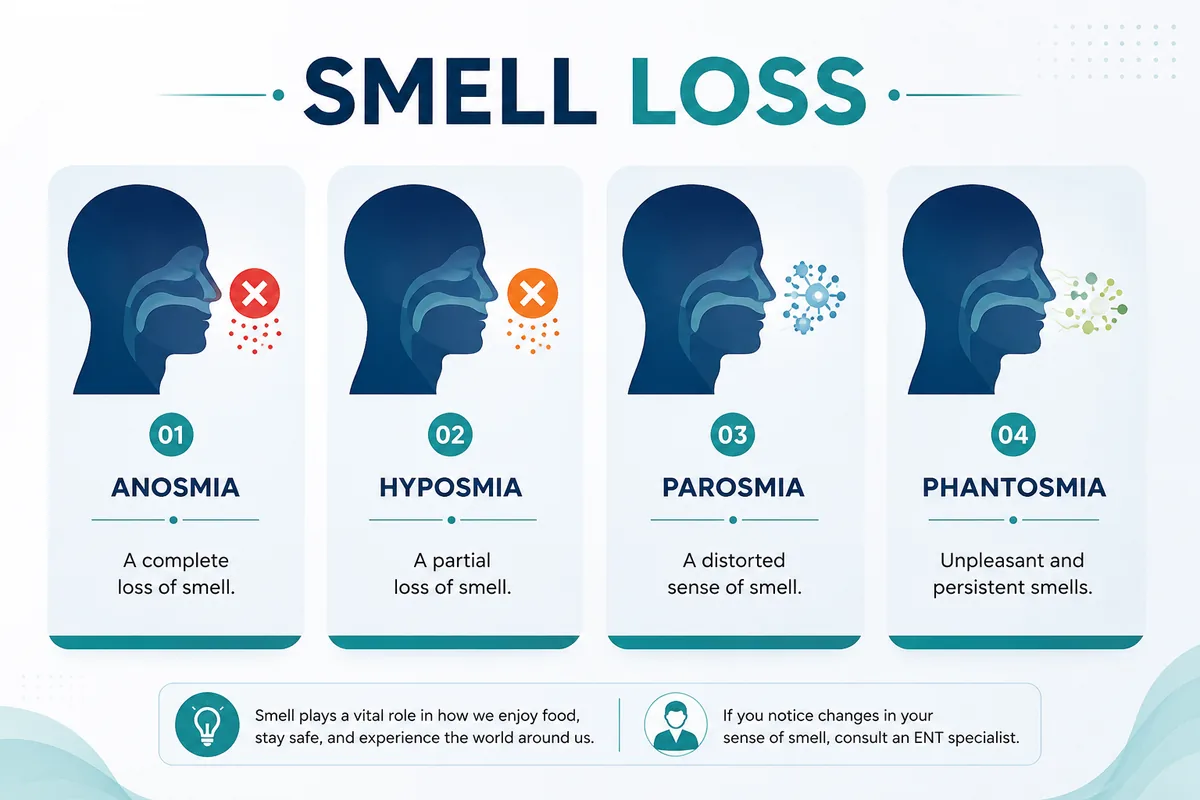
The medical terms used depend on how much smell has been affected. Anosmia means a complete loss of smell, while hyposmia means a reduced ability to detect smells.
Some causes are temporary and treatable, while others may require longer-term management. Identifying the underlying cause is therefore an important first step.
What Does Loss of Smell Mean?
Loss of smell occurs when the normal pathway responsible for detecting and processing odours is disrupted.
Normally, odour molecules enter through the nose and reach specialised smell receptors located in the upper part of the nasal cavity. These receptors send signals through the olfactory nerve to the brain, where the smell is recognised and interpreted.
A problem anywhere along this pathway can affect the ability to smell.
Anosmia vs Hyposmia
Anosmia refers to a complete inability to smell.
Hyposmia means the sense of smell is reduced but not completely absent.
Some people may also experience changes in how smells are perceived. Familiar smells may seem different, unpleasant, or distorted. These changes can occur during or after certain infections and other conditions affecting the smell system.
Why Is the Sense of Smell Important?
Smell contributes significantly to the way we experience flavour. When the sense of smell is reduced, food may seem bland even when the basic taste sensations remain intact.
Smell also has an important protective role. It helps us recognise potentially dangerous odours such as smoke, gas, or spoiled food.
What Causes Loss of Smell?
There are many possible causes of reduced or absent smell. The underlying cause often determines whether the problem is temporary or persistent.
Common Causes of Loss of Smell: Quick Comparison
|
Cause |
How It Affects Smell |
Other Common Symptoms |
Usually Temporary? |
|
Cold or viral infection |
Nasal inflammation can prevent odours from reaching the smell receptors |
Congestion, runny nose, sore throat |
Often |
|
Allergic rhinitis |
Nasal swelling and mucus can reduce airflow |
Sneezing, itching, runny or blocked nose |
Often |
|
Chronic sinusitis |
Ongoing inflammation can interfere with normal smell function |
Facial pressure, congestion, nasal discharge |
Depends on the cause |
|
Nasal polyps |
Polyps can obstruct airflow to the smell receptors |
Blocked nose, post-nasal drip, reduced smell |
May persist without treatment |
|
Deviated nasal septum |
Structural narrowing can reduce airflow |
One-sided blockage, difficulty breathing |
Usually persistent |
|
Head injury |
Trauma may affect the olfactory nerves |
Headache, dizziness, other injury-related symptoms |
Variable |
|
Certain medications |
Some medicines may alter smell perception |
Depends on the medication |
Often, depending on the cause |
|
Age-related changes |
Smell sensitivity may gradually decline |
Reduced ability to detect odours and flavours |
Usually gradual |
Viral Infections and Respiratory Illnesses
Colds and other respiratory infections can temporarily reduce the sense of smell by causing inflammation and congestion inside the nose.
Some infections can also affect the smell system more directly, resulting in smell loss that continues even after other symptoms have improved.
Allergic Rhinitis
Allergic rhinitis can cause nasal swelling, sneezing, itching, and increased mucus production. This can interfere with airflow and prevent odour molecules from reaching the smell receptors normally.
People with allergies may notice that their sense of smell improves when nasal inflammation is controlled.
Chronic Sinusitis
Long-term inflammation of the nose and sinuses can affect smell function. People with chronic sinus problems may also experience nasal congestion, facial pressure, headache, nasal discharge, and post-nasal drip.
Treating the underlying sinus condition may help improve smell in appropriate cases.
Nasal Polyps
Nasal polyps are soft, non-cancerous growths that develop from the lining of the nose or sinuses. Larger or multiple polyps can obstruct airflow and prevent odour molecules from reaching the smell receptors.
Loss of smell is therefore a common symptom associated with significant nasal polyps.
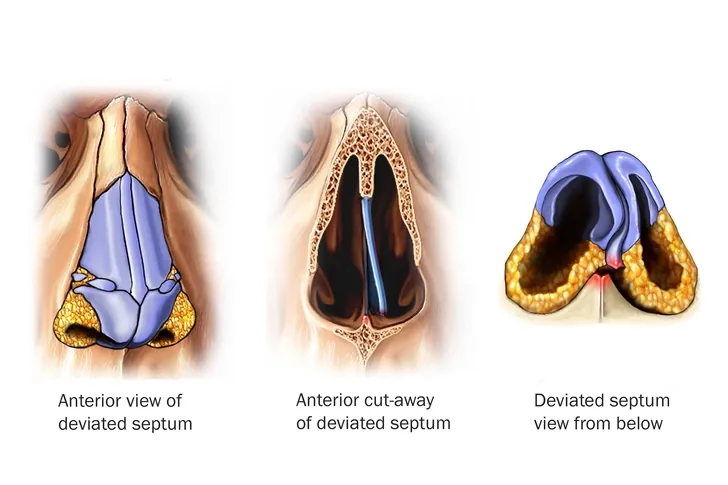
Deviated Nasal Septum and Nasal Blockage
A deviated nasal septum, enlarged nasal tissues, or other structural problems can narrow the nasal passages.
When airflow through the nose is significantly restricted, fewer odour molecules may reach the smell receptors, potentially reducing the sense of smell.
Head Injury
Head trauma can sometimes damage the delicate olfactory nerves responsible for carrying smell signals from the nose to the brain.
Loss of smell following a significant head injury should be medically assessed, particularly when it occurs suddenly or is accompanied by other symptoms.
Certain Medications
Some medicines may affect smell perception in certain individuals. If a change in smell begins after starting a new medication, discuss it with the prescribing healthcare professional.
Do not stop a prescribed medication without medical advice.
Smoking
Smoking can affect the lining of the nose and may reduce the ability to detect and distinguish different smells. Long-term exposure to tobacco smoke can also contribute to other conditions affecting nasal and respiratory health.
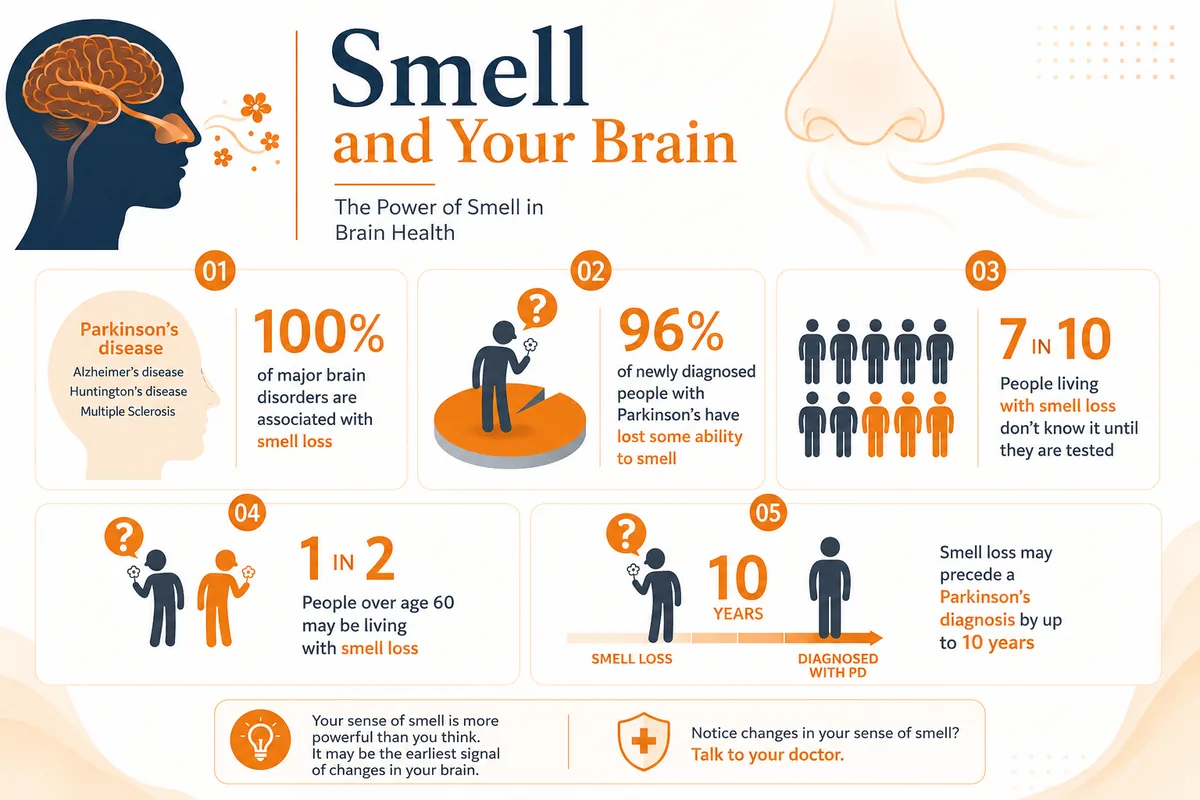
Neurological Conditions
Less commonly, changes in smell can occur in association with neurological conditions.
Loss of smell alone does not mean that a neurological disorder is present. However, unexplained, progressive, or persistent symptoms may require further evaluation, particularly when other neurological symptoms occur.
Age-Related Changes
The ability to detect smells can gradually decline with age. Changes in the nasal lining, smell receptors, and the way sensory information is processed can all contribute to a reduced sense of smell.
Is Loss of Smell Always Permanent?
No. Loss of smell is not always permanent.
When the problem is caused by temporary nasal congestion, allergies, or an acute respiratory infection, smell may return as inflammation settles and normal nasal airflow improves.
Recovery can be slower when the smell receptors or olfactory nerves have been affected. The extent and timing of recovery depend on the underlying cause and individual circumstances.
If the sense of smell remains reduced after the original condition has resolved, further evaluation can help determine whether additional treatment may be useful.
What Symptoms Can Occur With Loss of Smell?
Loss of smell can occur by itself or alongside other symptoms. Associated symptoms can provide useful clues about the underlying cause.
You may notice:
- Blocked or congested nose
- Sneezing
- Nasal itching
- Runny nose
- Facial pressure
- Headache
- Reduced ability to taste food
- Nasal discharge
- Post-nasal drip
- Distorted smells
- Recent respiratory infection
- History of head injury
The duration, severity, and combination of symptoms are important when deciding what evaluation may be appropriate.
How Is Loss of Smell Diagnosed?
Diagnosis begins with a detailed history and examination. The aim is to determine whether the problem is related to nasal airflow, inflammation, the smell receptors, the olfactory nerves, or another condition.
Medical History
Your doctor may ask when the smell loss began, whether it developed suddenly or gradually, whether you recently had an infection, and whether you have allergies, sinus problems, nasal blockage, or a history of head injury.
ENT Examination
An examination of the nose, throat, and ears can identify nasal inflammation, discharge, structural abnormalities, or other conditions that may contribute to smell loss.
Nasal Endoscopy
Nasal endoscopy may be recommended when a more detailed examination of the nasal passages is needed.
A small camera allows an ENT specialist to examine areas that cannot always be seen during a routine examination. It can help identify nasal polyps, chronic inflammation, structural blockage, or other abnormalities.
Smell Testing
Formal smell testing can assess a person's ability to detect and identify different odours.
This can be useful when symptoms are persistent, the degree of smell loss needs to be measured, or recovery needs to be monitored over time.
Imaging Tests
Not everyone with loss of smell needs an imaging scan.
A CT scan may be considered when chronic sinus disease or a structural nasal problem is suspected. MRI may be considered in selected cases where there is concern about the olfactory pathways or other neurological causes.
The decision to perform imaging depends on the symptoms and findings during the clinical evaluation.
How Is Loss of Smell Treated?
There is no single treatment for loss of smell. Management depends on the underlying cause.
Treating Nasal Congestion and Inflammation
When nasal inflammation or blockage is responsible, treatment focuses on improving nasal airflow and reducing inflammation.
Depending on the cause, this may include saline nasal care or appropriate nasal medication recommended by a healthcare professional.
Managing Allergies
If allergic rhinitis is contributing to smell loss, controlling the allergy can reduce nasal inflammation and improve airflow.
Treatment may involve avoiding known triggers and using appropriate medication under medical guidance.
Treating Sinus Disease
Chronic sinus disease may require medical treatment to control inflammation and improve sinus drainage.
When symptoms persist despite appropriate medical management, an ENT specialist may consider additional investigations or surgical options in selected patients.
Treating Nasal Polyps
Nasal polyps may be treated with medication aimed at reducing inflammation. Larger or persistent polyps may require specialist assessment and, in selected cases, surgical treatment.
Reviewing Medications
If a medication is suspected to be contributing to smell changes, the prescribing clinician can determine whether the treatment should be adjusted or changed.
Medication should never be stopped independently.
Treatment After Head Injury
Smell loss following head trauma requires assessment based on the severity of the injury and any associated symptoms.
Recovery varies considerably between individuals, and follow-up may be recommended when symptoms persist.
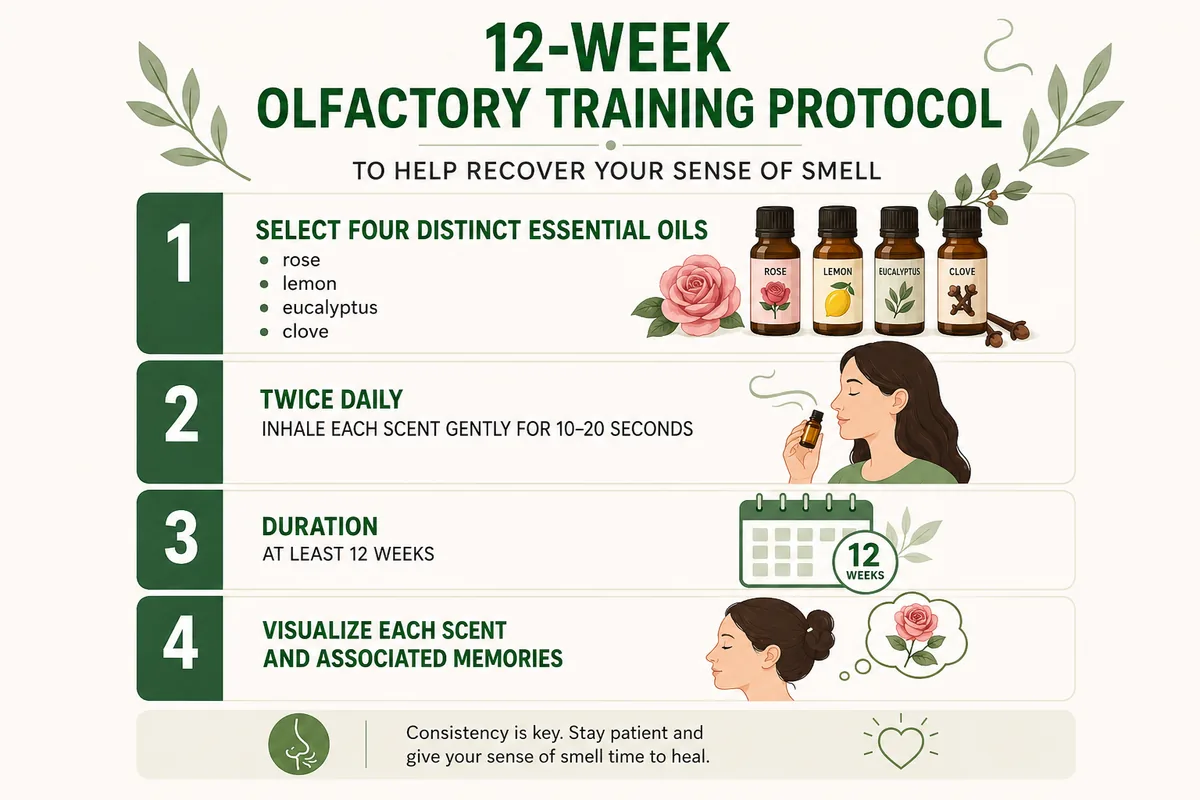
Can Smell Training Help Restore the Sense of Smell?
Smell training is a structured form of smell rehabilitation in which a person repeatedly smells selected familiar odours over a period of time.
The goal is to provide repeated stimulation to the smell system. It may be considered for certain people with persistent smell disorders, particularly after some infections.
Smell training is relatively simple, but consistency is important. A healthcare professional can advise whether it is appropriate and explain how it should be performed.
When Should You See an ENT Specialist for Loss of Smell?
A temporary reduction in smell during a cold may improve as the infection settles. However, an ENT evaluation is advisable when the change is persistent, unexplained, or accompanied by other concerning symptoms.
You should seek medical evaluation if:
- Your sense of smell disappears suddenly without an obvious cause.
- Smell remains reduced after a respiratory infection has resolved.
- Symptoms persist for several weeks.
- You have persistent nasal blockage.
- You experience recurrent sinus symptoms.
- Loss of smell follows a significant head injury.
- Smell loss is progressively worsening.
- Nasal symptoms are mainly present on one side.
- You develop neurological symptoms such as weakness, numbness, confusion, severe headache, or changes in vision.
Early assessment can help identify treatable causes and determine whether further testing is necessary.
Common Myths About Loss of Smell
Myth: If I can taste food, my sense of smell is normal.
Fact: Taste and smell are closely connected but are separate senses. A person can retain basic taste while having significantly reduced smell.
Myth: Loss of smell is always permanent.
Fact: Some causes are temporary and reversible. Recovery depends on the underlying cause and whether the smell receptors, olfactory nerves, or nasal airflow have been affected.
Myth: A blocked nose is the only cause of smell loss.
Fact: Nasal blockage is one common cause, but smell loss can also occur because of changes affecting the smell receptors, olfactory nerves, medications, head injury, or neurological conditions.
Frequently Asked Questions About Loss of Smell
Can loss of smell affect my sense of taste?
Yes. Smell contributes significantly to flavour perception. When the sense of smell is reduced, food may seem less flavourful even though the basic taste sensations of sweet, salty, sour, bitter, and umami remain intact.
How long does loss of smell usually last after a viral infection?
Recovery varies depending on the infection and the individual. Some people recover their sense of smell within days or weeks, while others may experience symptoms for longer. Persistent loss after the infection has resolved should be evaluated to determine whether further treatment is appropriate.
Can stress cause loss of smell?
Stress is not usually a direct cause of complete loss of smell. However, stress may influence how sensory symptoms are experienced and can occur alongside other conditions that affect smell. Persistent or unexplained smell loss should be medically evaluated rather than attributed to stress alone.
Can a blocked nose permanently damage the sense of smell?
A temporary blocked nose generally causes temporary reduction in smell because odour molecules cannot reach the smell receptors effectively. If the sense of smell does not return after the nasal blockage improves, an ENT assessment can help identify whether another problem is contributing.
Is smell training safe to try at home?
Smell training is generally considered a low-risk approach to smell rehabilitation when performed correctly. It involves repeatedly smelling selected familiar odours. However, unexplained or persistent smell loss should be assessed first, particularly when it occurs with other concerning symptoms.
Can loss of smell be an early sign of a neurological condition?
It can occur with some neurological conditions, but more common causes include infections, allergies, sinus disease, nasal polyps, and nasal obstruction. Persistent unexplained smell loss, particularly when accompanied by neurological symptoms, should be assessed by a medical professional.