
Head and neck cancer can affect the mouth, tongue, throat, tonsils, voice box and other nearby structures. In its early stages, the symptoms may resemble common problems such as mouth ulcers, a sore throat or voice changes. However, persistent or unexplained symptoms should not be ignored, especially when they do not improve with routine care. Recognising these warning signs and seeking timely evaluation from an ENT specialist can help identify the cause and determine whether further investigation is necessary.
Key Takeaways
- Early signs of head and neck cancer include persistent mouth ulcers, red or white patches, neck lumps, difficulty swallowing and ongoing voice changes.
- Symptoms lasting around two weeks or worsening should be medically evaluated.
- Tobacco, alcohol and HPV can increase the risk of certain head and neck cancers.
- These symptoms do not always indicate cancer, but timely medical evaluation can help identify the cause.
- Do not ignore persistent symptoms, even if they are painless.
What Is Head and Neck Cancer?
Head and neck cancers are tumours that can develop in several areas, including the mouth, tongue, gums, throat, tonsils, voice box, nasal cavity, sinuses and salivary glands. The symptoms vary depending on the location and how the cancer affects nearby tissues.
In the early stages, symptoms may resemble common conditions such as mouth ulcers, throat infections or voice strain, making warning signs easy to overlook.
However, symptoms that persist, repeatedly return or gradually worsen should not be ignored. Timely medical evaluation can help identify the cause and determine whether further investigation is needed.
What Are the Early Signs of Head and Neck Cancer?
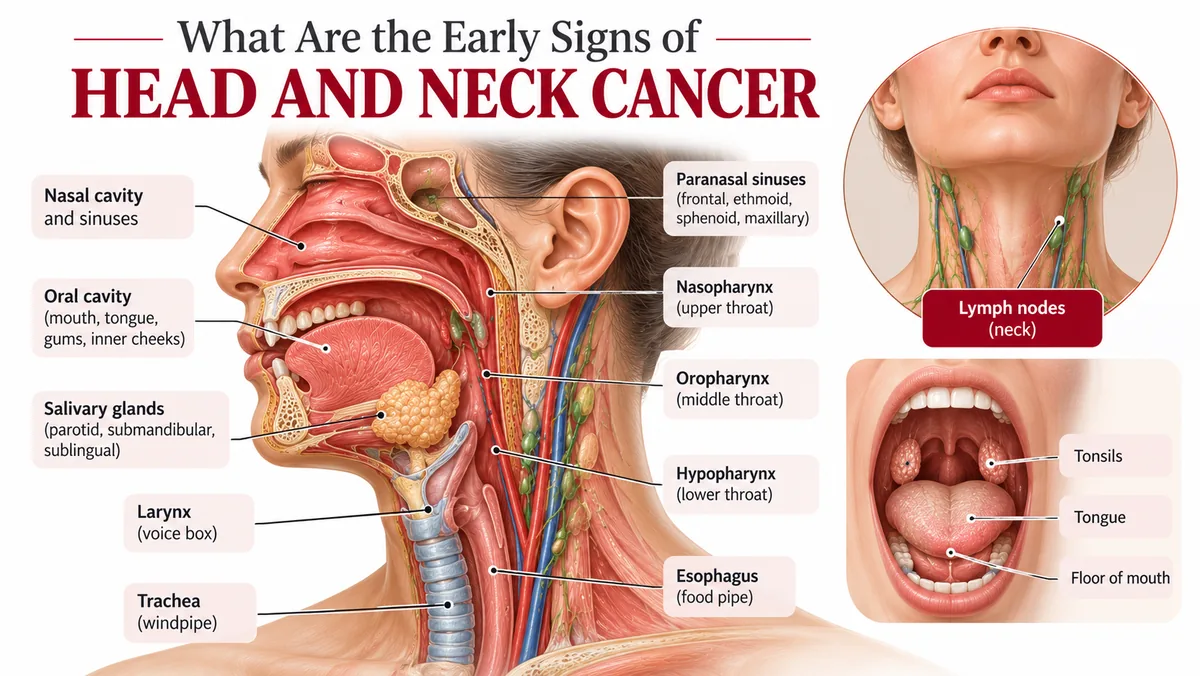
The symptoms of head and neck cancer vary depending on where the tumour develops. Some signs, such as a persistent mouth ulcer, an unusual lump in the neck or a red or white patch inside the mouth, may be visible. Other symptoms can include ongoing hoarseness, difficulty swallowing, persistent throat discomfort or breathing problems. These symptoms can also occur with non-cancerous conditions, but if they persist or worsen, medical evaluation is important to identify the cause and determine whether further tests are needed.
1. A Mouth Ulcer That Does Not Heal
An occasional mouth ulcer usually heals within a short period. However, a sore that remains for around two weeks, repeatedly develops in the same area or becomes progressively larger should be examined.
A concerning ulcer may appear as a persistent sore on the tongue, gums, inner cheek, lips or floor of the mouth. It may be painful or painless, and its appearance alone cannot establish the diagnosis.
Do not assume that a persistent ulcer is caused by accidental biting, a sharp tooth or irritation from dentures without having it checked if it fails to heal.
2. Red or White Patches Inside the Mouth
Persistent red patches, white patches or mixed red-and-white areas on the tongue, gums or inner cheek can sometimes indicate a potentially precancerous change or oral cancer.
Many patches have other causes, including irritation, inflammation or infection. Nevertheless, an unexplained patch that does not disappear should be examined by a dentist, doctor or appropriate specialist.
Avoid trying to diagnose the cause by colour alone. A clinical examination is needed to determine whether further testing is appropriate.
3. A Lump or Swelling in the Neck
A new lump in the neck may develop because of an infection, an enlarged lymph node, a thyroid condition or another medical problem. In some cases, however, a neck lump can be an early sign of head and neck cancer.
Seek medical evaluation if a lump:
- Persists or gradually increases in size.
- Feels unusually firm or does not move easily.
- Appears without an obvious infection.
- Occurs alongside persistent throat symptoms, voice changes or unexplained weight loss.
Do not wait for a neck lump to become painful before seeking advice. A painless lump can still require investigation.
4. Persistent Hoarseness or Changes in the Voice
Hoarseness can result from a common cold, voice overuse, acid reflux or irritation of the vocal cords. Most short-lived episodes improve as the underlying cause settles.
However, a voice that remains hoarse or becomes progressively weaker without a clear explanation should be assessed. Persistent voice changes can sometimes indicate a problem affecting the voice box, also known as the larynx.
If hoarseness lasts for more than two to three weeks, arrange a medical assessment rather than repeatedly treating it as a routine throat infection.
5. Difficulty or Pain While Swallowing
Persistent difficulty swallowing, a sensation that food is sticking in the throat or pain when swallowing can have several causes, including inflammation, reflux and structural problems.
However, these symptoms may also occur with cancers of the throat or nearby structures.
Pay particular attention if swallowing becomes progressively more difficult, symptoms affect solid foods or liquids, or the problem occurs alongside a neck lump, persistent ear pain or unexplained weight loss.
Seek emergency care if you cannot swallow saliva, are choking or have difficulty breathing. These symptoms should not wait for a routine ENT appointment.
6. A Persistent Sore Throat
A sore throat commonly occurs with viral infections, allergies, dryness and acid reflux. It usually improves as the underlying problem resolves.
A sore throat that continues for several weeks, repeatedly returns without a clear cause or occurs with other warning signs should be investigated.
Symptoms such as persistent one-sided throat discomfort, difficulty swallowing, a neck lump or ongoing voice changes deserve particular attention.
The aim is not to assume the worst, but to establish the cause rather than allowing a persistent problem to go unchecked.
7. Unexplained Ear Pain
Ear pain does not always originate in the ear itself. The nerves supplying the throat, mouth and ear overlap, so a problem in the throat or nearby structures can sometimes cause pain that is felt in the ear.
Persistent ear pain, particularly on one side when the ear examination does not reveal an obvious cause, may require examination of the throat and surrounding areas.
If ear pain occurs with difficulty swallowing, a persistent sore throat, a neck lump or unexplained weight loss, seek prompt medical assessment.
8. A Lump, Thickening or Numbness in the Mouth
An unusual lump, thickened area or persistent numbness involving the tongue, lip, cheek or jaw should not be ignored.
Other possible warning signs include unexplained bleeding from the mouth, difficulty moving the tongue or jaw, loosening of teeth without an obvious dental explanation, or dentures that suddenly fit poorly.
These symptoms may arise from dental or other non-cancerous conditions. A dentist or doctor can examine the area and decide whether specialist assessment is needed.
9. Unexplained Weight Loss
Losing weight without changing your diet, physical activity or usual routine can have many causes. Persistent swallowing difficulties, pain while eating or reduced appetite may contribute to weight loss in some people.
Unexplained weight loss becomes more concerning when it occurs alongside a persistent mouth ulcer, neck lump, swallowing difficulty or other ongoing symptoms.
Arrange a medical assessment rather than relying on weight changes alone to determine whether something is wrong.
What Increases the Risk of Head and Neck Cancer?
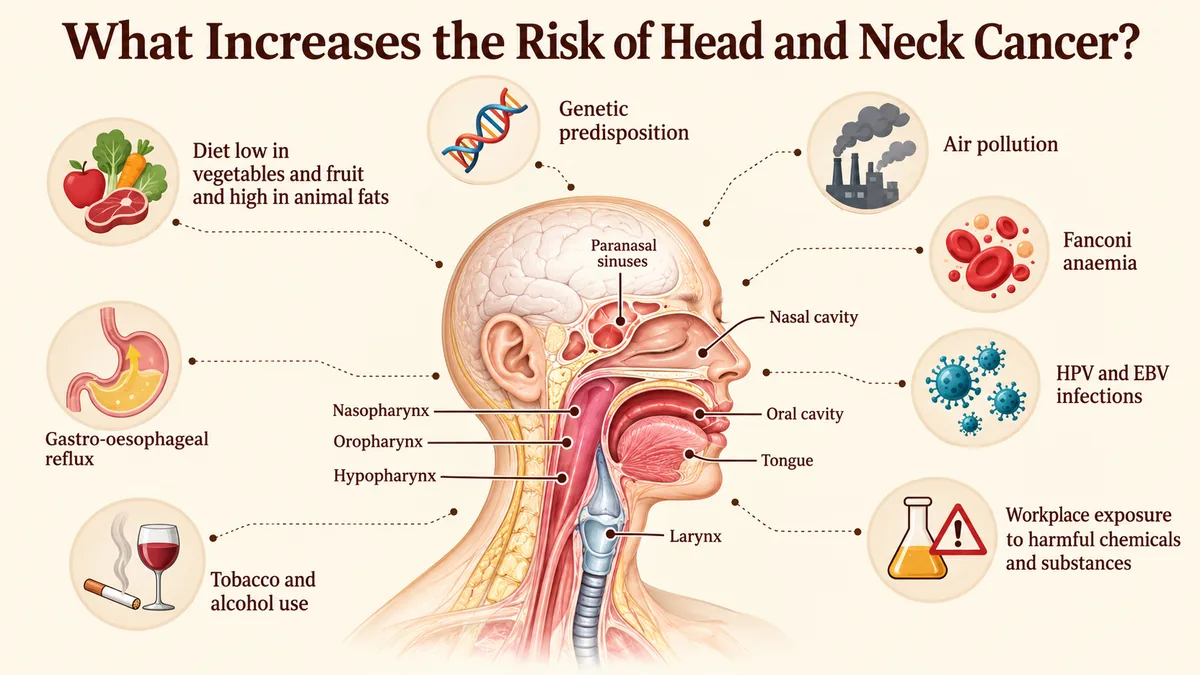
Not everyone who develops head and neck cancer has an identifiable risk factor. Similarly, having a risk factor does not mean that a person will definitely develop cancer.
However, certain exposures are known to increase the risk of particular types of head and neck cancer.
Tobacco Use
Tobacco is an important risk factor for cancers of the mouth, throat and voice box. In India, exposure can include cigarettes, bidis and smokeless products such as gutka, khaini and other chewing tobacco preparations.
Regular tobacco exposure increases risk, and using smokeless tobacco does not make the practice safe.
Alcohol Consumption
Alcohol is associated with an increased risk of several head and neck cancers. The risk is particularly concerning when alcohol use is combined with tobacco exposure.
Reducing risk includes avoiding tobacco and limiting or avoiding alcohol.
Human Papillomavirus (HPV)
Certain types of HPV are associated with cancers of the oropharynx, which includes the tonsils and the back of the tongue.
HPV-associated cancers may occur in people without the traditional history of heavy tobacco or alcohol use. Therefore, the absence of these exposures does not rule out cancer.
Other Factors
Risk can also vary with age, previous medical history, certain infections, occupational exposures and other individual circumstances. The relevant factors differ according to the specific cancer site.
Regardless of risk profile, persistent warning signs should be evaluated. A person should not postpone medical care simply because they do not smoke or use tobacco.
When Should You See an ENT Specialist in Nashik?
You should arrange a medical assessment if you notice a symptom that persists, worsens or repeatedly returns without a clear explanation.
Consider consulting an ENT specialist for:
- A mouth ulcer that has not healed after around two weeks.
- An unexplained red or white patch inside the mouth.
- A new or persistent lump in the neck.
- Hoarseness that continues for more than two to three weeks.
- Persistent difficulty or pain while swallowing.
- Ongoing one-sided throat discomfort or unexplained ear pain.
- Unexplained weight loss or unusual bleeding from the mouth.
These timeframes are practical warning points, not diagnostic rules. If a symptom is severe, rapidly worsening or accompanied by several other concerning changes, seek medical attention sooner.
Get emergency care for difficulty breathing, inability to swallow saliva, significant bleeding or rapidly increasing swelling that affects the airway.
An ENT specialist in Nashik can examine the relevant areas, assess possible causes and determine whether additional tests or referral to a head and neck cancer team are necessary.
How Is Head and Neck Cancer Diagnosed?
A symptom alone cannot confirm cancer. Diagnosis requires an appropriate clinical assessment and, when indicated, further investigations.
Depending on the location and findings, the evaluation may include:
1. Medical History and Physical Examination
The doctor will ask about the duration of symptoms, tobacco and alcohol exposure, previous illnesses and any relevant medical history.
The examination may include looking inside the mouth and throat, checking the tongue and tonsils, feeling the neck for lumps and assessing the voice.
2. Endoscopic Examination
If symptoms suggest a problem deeper inside the nose, throat or voice box, an ENT specialist may use a small flexible or rigid scope to examine the area.
The type of examination depends on the symptoms and suspected location. Not every patient needs an endoscopic procedure.
3. Imaging Tests
If a suspicious lesion or neck lump is identified, the doctor may recommend imaging such as ultrasound, CT or MRI. These tests can help assess the size and location of an abnormality and whether nearby structures may be involved.
The choice of test depends on the clinical findings.
4. Biopsy
When cancer is suspected, a biopsy may be required. During this procedure, a small tissue sample is collected and examined under a microscope.
For many suspicious lesions in the mouth or throat, biopsy is the key test used to establish a diagnosis. Imaging and other investigations may then help determine the extent of the disease.
Not every ulcer, patch or neck lump requires a biopsy. The clinician will decide based on the examination and the level of concern.
Can Head and Neck Cancer Be Prevented?
Not all cases can be prevented, but several measures can reduce risk:
- Avoid smoking, chewing tobacco and other tobacco products.
- Avoid alcohol or discuss reducing consumption if you drink.
- Maintain regular dental check-ups and seek assessment for persistent oral changes.
- Ask a healthcare professional about HPV vaccination according to current recommendations and your eligibility.
- Seek medical attention for persistent symptoms rather than repeatedly self-treating them.
Regular dental examinations can help identify suspicious changes in the mouth, especially in people with tobacco exposure. However, no self-examination or routine check can guarantee that every cancer will be detected early.
The most important practical step is to take persistent changes seriously and obtain an appropriate medical assessment.
Frequently Asked Questions About Early Signs of Head and Neck Cancer
1. What is usually the first sign of head and neck cancer?
There is no single first sign. Depending on the location, symptoms may include a persistent mouth ulcer, a red or white patch, a neck lump, ongoing hoarseness, difficulty swallowing or unexplained ear pain.
2. How long should a mouth ulcer last before I see a doctor?
Many ordinary mouth ulcers heal within one to two weeks. If an ulcer has not healed after around two weeks, is enlarging or keeps returning in the same area, arrange an assessment. Do not wait if it is accompanied by a lump, unexplained bleeding or other concerning symptoms.
3. Does a painless neck lump mean cancer?
No. Neck lumps commonly occur with infections and other non-cancerous conditions. However, a persistent or unexplained lump should be examined, even if it does not hurt.
4. Can head and neck cancer occur in people who do not smoke?
Yes. Tobacco is an important risk factor, but it is not the only one. Certain throat cancers are associated with HPV, and some cancers occur in people without a recognised risk factor.
5. Can an ENT specialist detect head and neck cancer during an examination?
An ENT specialist can examine the mouth, throat, neck and, when indicated, the voice box to identify suspicious changes. A clinical examination may lead to further tests, imaging or a biopsy. Examination alone does not confirm every suspected cancer.
6. When should I consult an ENT specialist in Nashik?
Seek an assessment for a persistent mouth ulcer, unexplained neck lump, ongoing hoarseness, difficulty swallowing or other symptoms that do not improve. Severe breathing or swallowing problems require emergency care.